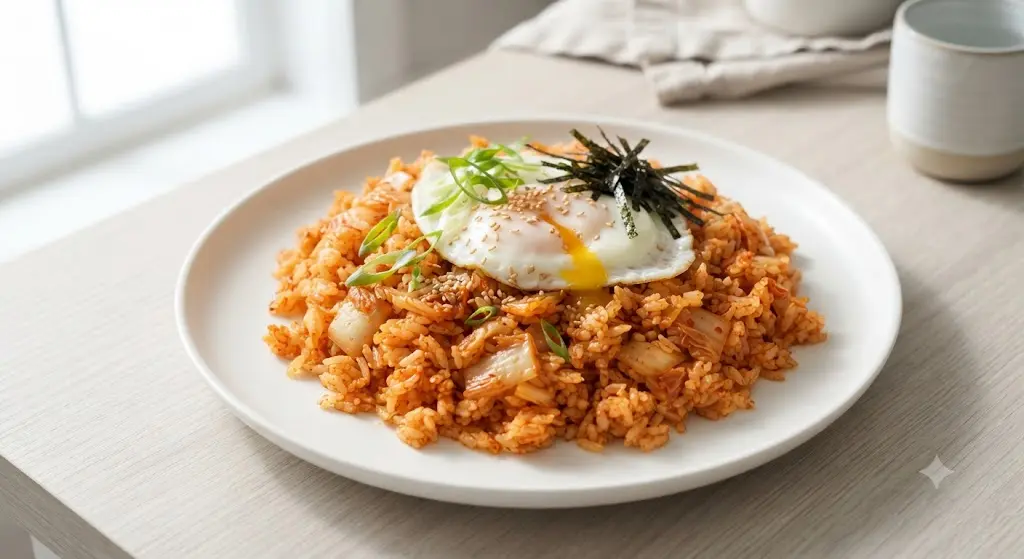
This kimchi fried rice recipe is one of those meals that proves you do not need a long ingredient list to make something deeply flavorful. Cooked rice is stir-fried with chopped kimchi, kimchi juice, gochujang, and sesame oil until every grain is coated with a spicy, tangy seasoning.
It is also a smart way to use leftover rice and kimchi that has become more sour with fermentation. That sharper kimchi flavor works especially well in the pan, where it mellows slightly while seasoning the rice.
Known as kimchi bokkeumbap (김치볶음밥) in Korean, this is a flexible dish. Keep it simple, add a fried egg, or turn it into a heartier meal with Spam, tofu, vegetables, or another protein.
Why This Kimchi Fried Rice Works
The key is not simply adding kimchi to cooked rice. The order of cooking makes a noticeable difference.
The kimchi is cooked first so its flavor becomes deeper before the rice goes in. Kimchi juice then helps season the grains from the inside, while a little gochujang adds savory chili flavor. Sesame oil goes in at the end because its toasted aroma is easiest to notice when it is not cooked for a long time.
You also want the rice to stay fairly dry and separate. Chilled leftover rice is especially convenient because it does not clump as easily in the skillet.
Ingredients You’ll Need
Main Ingredients
- 3 cups cooked white rice, preferably chilled
- 1 cup well-fermented kimchi, finely chopped
- 3 tablespoons kimchi juice
- 1 tablespoon neutral cooking oil
- 1 tablespoon gochujang
- 1 teaspoon toasted sesame oil
- 2 green onions, finely chopped
- 1 tablespoon toasted sesame seeds
- 1 sheet roasted seaweed, finely sliced or crumbled
Optional
- 1–2 fried eggs
- ½ cup diced Spam
- ½ cup cooked tofu
- 1 small garlic clove, finely minced
- A pinch of gochugaru for additional heat
The Best Kimchi to Use
For this recipe, well-fermented kimchi is usually more useful than very fresh kimchi.
As kimchi ferments, its flavor becomes more sour and pronounced. That acidity gives fried rice some of its characteristic depth instead of leaving the dish tasting like plain rice with cabbage mixed through it.
You do not need to throw away kimchi simply because it has become too sour to enjoy on its own. That stronger flavor can be exactly what you want for fried rice.
Fresh kimchi will still work, but the result will generally have a milder, less tangy flavor.
Do You Need Leftover Rice?
Leftover rice is ideal because refrigerated rice tends to be firmer and easier to separate.
That said, you can make kimchi fried rice with freshly cooked rice. If using fresh rice, spread it out briefly so excess steam can escape and allow it to cool before frying.
The goal is not necessarily “old rice.” The goal is rice that is not excessively wet.
How to Make Kimchi Fried Rice
Chop the Kimchi
Cut the kimchi into small, manageable pieces.
Keep a few tablespoons of the kimchi juice from the container. It contains plenty of the seasoning that makes this dish taste like kimchi fried rice rather than ordinary fried rice.
Start With a Hot Skillet
Place a wide skillet over medium-high heat and add the neutral cooking oil.
A wide pan gives the rice enough room to make contact with the hot surface instead of sitting in a thick pile.
Cook the Kimchi First
Add the chopped kimchi and stir-fry for about 2 minutes.
Let it soften and become fragrant. If you are adding minced garlic, add it during this stage and cook briefly so it flavors the oil without burning.
This small step makes the finished dish taste more developed.
Add the Rice
Add the cooked rice and use a spatula to break apart any clumps.
Toss everything together until the kimchi is distributed throughout the rice.
Do not worry if the rice looks uneven at first. Once the seasoning is added and the mixture continues cooking, the grains will become more uniformly coated.
Season With Kimchi Juice and Gochujang
Add the kimchi juice and gochujang.
Stir thoroughly so the paste dissolves and coats the rice instead of remaining in concentrated spots.
Start with the amount given in the recipe and taste near the end. Kimchi varies in saltiness and intensity, so adding more seasoning before tasting can easily push the dish too far.
Give the Rice Time to Fry
Once everything is combined, spread the rice across the skillet.
Let it cook for short periods without constantly moving it. This allows some grains to make direct contact with the pan and develop lightly toasted edges.
Then toss the rice and repeat.
You are looking for a mixture that is hot, well seasoned, and slightly toasted in places—not completely dry or crunchy.
Finish With Sesame Oil
Turn off the heat and add the toasted sesame oil.
Toss once more, then add the green onions and sesame seeds.
Adding sesame oil at the end keeps its nutty fragrance much more noticeable.
Serve Immediately
Transfer the kimchi rice to a bowl or plate.
Finish with roasted seaweed and, if you like, a fried egg with a soft yolk.
The egg is optional, but its richness works particularly well with the spicy and acidic rice.
How to Make Kimchi Fried Rice With an Egg
A fried egg is one of the easiest ways to turn this into a more substantial meal.
Cook the egg separately while the rice is finishing. Keep the yolk soft if you like a richer texture, then place the egg directly over the hot rice.
When you break the yolk, it mixes with the spicy kimchi seasoning and adds a creamy contrast.
You can also scramble the egg directly into the rice, although a separately fried egg gives a more distinct texture.
Vegetarian Kimchi Fried Rice
For a kimchi fried rice recipe vegetarian version, leave out meat and choose kimchi that fits your dietary requirements.
This point is easy to overlook: traditional kimchi can contain fish sauce, shrimp paste, or other seafood ingredients. Check the ingredient label if you need the finished dish to be vegetarian or vegan.
To make the bowl more filling, add sautéed mushrooms, tofu, spinach, carrots, or corn.
Kimchi Fried Rice With Spam
For kimchi fried rice recipe Spam, dice the Spam into small cubes and brown it in the skillet before adding the kimchi.
Let the edges become lightly crisp, then continue with the recipe.
Because Spam can be quite salty, taste the finished rice before adding any extra salt or salty sauce.
The crisp meat and sour kimchi make a particularly satisfying combination.
Kimchi Fried Rice Without Gochujang
You can absolutely make kimchi fried rice recipe without gochujang.
Simply leave it out and use the kimchi and kimchi juice as the primary seasoning.
If you want additional heat, add a small amount of gochugaru instead. The final flavor will be less sweet and rounded than a gochujang version, but the fermented kimchi will remain the main character.
Kimchi Fried Rice With Gochujang
For a kimchi fried rice recipe with gochujang, add the paste together with the kimchi juice after the rice enters the skillet.
Gochujang contributes chili heat, savory depth, and a subtle sweetness. A little goes a long way, especially when your kimchi is already strongly seasoned.
Easy 3-Ingredient Version
A simple 3 ingredient kimchi fried rice is possible when you only have:
- Cooked rice
- Kimchi
- Cooking oil
Cook the kimchi in oil until fragrant, add the rice, and stir-fry until hot and well mixed.
This stripped-down version is not as layered as the full recipe, but it is useful when you need a quick meal from what is already in the refrigerator.
Common Mistakes
Using Very Wet Rice
Excess moisture can cause the rice to steam instead of fry.
If using fresh rice, let it cool and release steam before adding it to the skillet.
Adding Too Much Kimchi Juice
Kimchi juice brings acidity and seasoning, but too much liquid can make the rice wet.
Add it gradually rather than pouring in a large amount at once.
Adding Too Much Gochujang
Gochujang should support the kimchi, not completely cover its flavor.
Start with a modest amount and adjust after tasting.
Keeping the Heat Too Low
The pan needs enough heat to fry the rice rather than simply warm it.
A wide skillet over medium-high heat works well, especially once the rice is added.
Stirring Every Second
Constant movement prevents the rice from developing toasted spots.
Give it a little uninterrupted contact with the pan before tossing.
Cooking Sesame Oil for Too Long
Toasted sesame oil is primarily a finishing ingredient here. Adding it near the end preserves its aroma.
What Makes Good Kimchi Fried Rice?
The best balance comes from four things: flavorful fermented kimchi, rice that is not overly wet, controlled seasoning, and enough pan time for the rice to develop a little toastiness.
You do not need to chase an extremely dark red color or make the rice aggressively spicy. Good kimchi bokkeumbap should still taste clearly of fermented kimchi.
Can You Use Fresh Kimchi?
Yes. Fresh kimchi will produce a lighter and less sour result.
If you have older, more fermented kimchi available, it is usually the better choice for this particular dish because its stronger acidity stands up well to the rice.
Can You Use Freshly Cooked Rice?
Yes. Cool the rice first and allow excess moisture to escape.
If possible, chilled leftover rice is easier to work with because the grains tend to separate more readily.
Also Read: Gluten Free Rice Pilaf Recipe
What Can You Add to Kimchi Fried Rice?
Popular additions include fried egg, Spam, ham, beef, chicken, tofu, mushrooms, garlic, green onion, and vegetables.
The basic recipe is flexible enough to accommodate whatever protein or vegetables you already have.
What Should You Serve With It?
You can serve kimchi rice on its own as a one-bowl meal.
A fried egg, roasted seaweed, sliced cucumber, or a simple vegetable side can add contrast without competing with the kimchi.
Storage and Reheating
Allow leftover rice to cool and refrigerate it in a covered container.
When reheating, a skillet works particularly well because it can bring back some of the toasted texture. If the rice has dried out, add a very small splash of water while reheating.
Heat leftovers thoroughly before serving.
Kimchi Fried Rice Recipe
Ingredients
Equipment
Method
- Prepare the rice: Break apart any large clumps of chilled cooked rice and set it aside.
- Cook the kimchi: Heat the cooking oil in a wide skillet over medium-high heat. Add chopped kimchi and stir-fry for about 2 minutes until softened and fragrant.
- Add the rice: Add the cooked rice and toss with the kimchi until the ingredients are evenly combined.
- Season the rice: Add kimchi juice and gochujang, then stir until the seasoning coats the rice evenly.
- Fry the rice: Spread the rice across the skillet and let it cook briefly without stirring so some grains can develop lightly toasted edges.
- Toss and continue: Stir the rice, spread it out again, and cook for another short period until hot and lightly toasted.
- Add sesame oil: Turn off the heat and mix in the toasted sesame oil and chopped green onions.
- Garnish: Sprinkle with toasted sesame seeds and roasted seaweed.
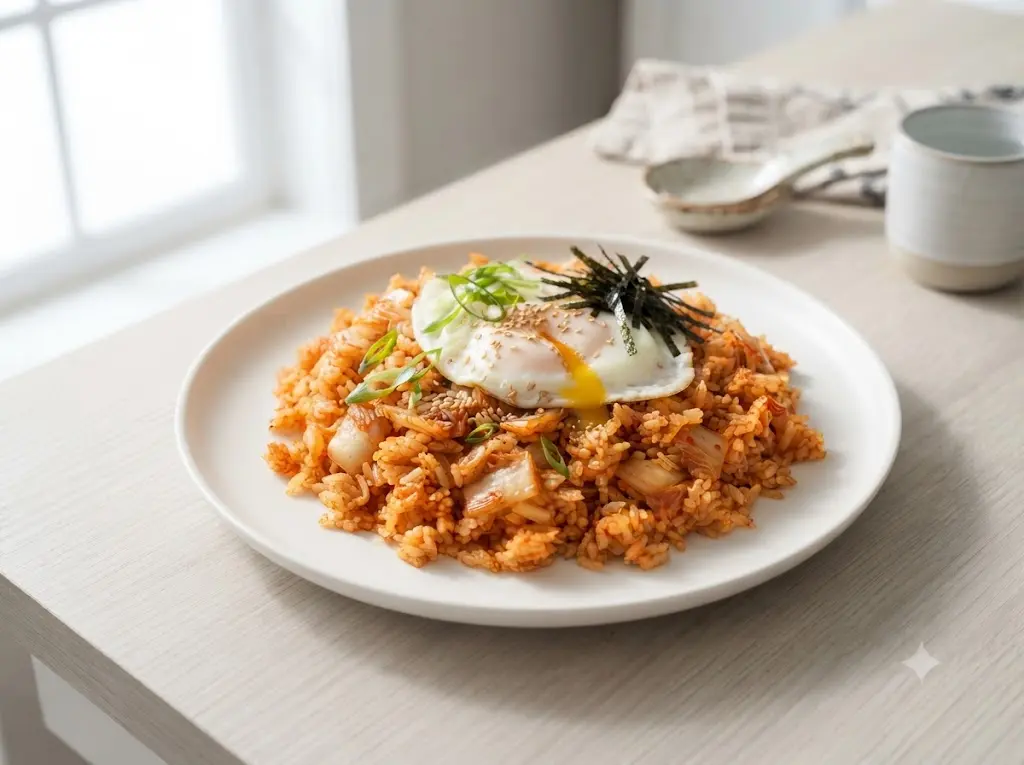
- Serve: Transfer the kimchi fried rice recipe to serving plates and top with a fried egg if desired.
Notes
- Use chilled rice: It separates more easily and helps prevent a soft texture.
- Choose fermented kimchi: Older, tangier kimchi gives the rice more depth.
- Add kimchi juice gradually: The amount of liquid and saltiness can vary between kimchi brands.
- Taste before adding salt: Kimchi, kimchi juice, and gochujang may already provide enough seasoning.
- For vegetarian rice: Check the kimchi label because some varieties contain fish sauce or seafood ingredients.
- For extra richness: Serve with a fried egg and soft yolk.
Storage
Cool leftovers and refrigerate them in an airtight container. Reheat thoroughly in a skillet or microwave before serving.Frequently Asked Questions
What’s the secret to the best kimchi fried rice?
Use well-fermented kimchi, relatively dry rice, balanced seasoning, and enough pan time to lightly toast the grains.
What are the ingredients for kimchi fried rice?
You need cooked rice, kimchi, kimchi juice, cooking oil, gochujang, sesame oil, and green onion.
What are some common mistakes when making kimchi fried rice?
Wet rice, excessive kimchi juice, too much gochujang, and constant stirring can make the dish overly soft or unbalanced.
Is kimchi good with fried rice?
Yes, kimchi adds spicy, tangy, savory flavor that works naturally with fried rice.
Can I make kimchi fried rice with fresh rice?
Yes, but cool it first and let excess steam escape before stir-frying.
Can I make kimchi fried rice without gochujang?
Yes, leave out the gochujang and let the kimchi and kimchi juice provide most of the seasoning.
Is kimchi fried rice vegetarian?
It can be, but check the kimchi ingredients because some varieties contain seafood-based ingredients.
Can I add Spam?
Yes, brown diced Spam first, then add the kimchi and continue with the recipe.
What rice is best?
Chilled cooked white rice works especially well because the grains separate easily in the skillet.
Can I put an egg on top?
Yes, a fried egg with a soft yolk adds richness and pairs well with the spicy rice.