This gluten free rice pilaf recipe is the kind of side dish that can quietly become a regular at dinner. The rice stays fluffy, the garlic and onion build a savory base, and lemon gives the finished dish just enough brightness without making it taste too sharp.
Instead of using wheat-based orzo or vermicelli, this version keeps things simple with rice, vegetables, herbs, and gluten-free broth. That makes it easy to prepare at home when you want a flavorful pilaf without wondering what is hiding in the mix.
The best part is the texture. The rice should be separate and tender, with just enough toasted flavor around the edges to make every spoonful taste more interesting.
Is Rice Pilaf Gluten Free?
Rice itself is naturally gluten-free, but rice pilaf is not automatically gluten-free.
Traditional pilaf mixes can contain orzo or other small pasta made from wheat. Broths, seasoning blends, sauces, and packaged rice mixes can also contain gluten or have cross-contact concerns.
That is why this homemade gluten free rice pilaf uses plain rice and carefully selected gluten-free ingredients.
For a medically necessary gluten-free diet, check the label on packaged broth, spices, and other processed ingredients rather than assuming they are safe.
Why This Mediterranean Rice Pilaf Works
A good Mediterranean rice pilaf recipe does not need a long ingredient list.
The flavor comes in layers.
First, onion and garlic are gently cooked in olive oil. Then the dry rice gets a short toast in the pan. That little step gives the finished dish a deeper, nuttier base instead of tasting like plain boiled rice.
Vegetable broth brings savory flavor, while oregano, turmeric, black pepper, and lemon keep the rice lively.
Fresh parsley at the end adds a clean finish.
It is simple cooking, but each step has a reason.
Ingredients You’ll Need
For about 4 servings:
| Ingredient | Amount |
|---|---|
| Long-grain white rice or basmati | 1½ cups |
| Olive oil | 2 tbsp |
| Yellow onion, finely diced | ½ medium |
| Garlic, minced | 3 cloves |
| Gluten-free vegetable broth | 3 cups |
| Dried oregano | ½ tsp |
| Turmeric | ¼ tsp |
| Black pepper | ¼ tsp |
| Salt | ½ tsp, plus more to taste |
| Lemon juice | 1 tbsp |
| Fresh parsley, chopped | 2 tbsp |
| Lemon zest | ½ tsp |
| Optional red pepper flakes | Pinch |
For extra texture, toasted sliced almonds or chickpeas can be added after cooking.
How to Make This Gluten Free Rice Pilaf Recipe
1. Rinse the rice
Place the rice in a fine-mesh strainer and rinse it under cool water until the water looks much clearer.
Drain it well.
You do not want a lot of extra water going into the pan because the liquid ratio is important for fluffy rice.
2. Build the flavor base
Heat olive oil in a wide saucepan over medium heat.
Add the onion and a small pinch of salt. Cook for about 3 to 4 minutes, stirring occasionally, until the onion softens.
Add the garlic and cook for another 30 seconds.
You should smell the garlic, but it should not turn dark.
3. Toast the rice
Add the drained rice to the pan.
Stir it through the onion and garlic mixture for about 1 to 2 minutes.
The grains will become lightly coated with oil and may look slightly translucent around the edges.
Do not skip this little step. It gives the pilaf more flavor and helps the final dish taste less like ordinary steamed rice.
4. Add broth and seasoning
Pour in the gluten-free vegetable broth.
Add oregano, turmeric, black pepper, and the remaining salt.
Stir once, then bring the liquid to a gentle boil.
5. Cover and cook
Once the broth is simmering, reduce the heat to low and cover the pan tightly.
Cook for about 15 to 18 minutes, or until the rice is tender and the liquid has been absorbed.
Try not to keep lifting the lid. Every time you do, steam escapes and the cooking environment changes.
6. Let the rice rest
Turn off the heat but leave the lid on.
Let the rice rest for 5 to 10 minutes.
This gives the remaining moisture time to settle into the grains and makes the texture much easier to fluff.
7. Finish with lemon and herbs
Remove the lid and gently fluff the rice with a fork.
Add lemon juice, lemon zest, and fresh parsley.
Taste before serving.
A little more salt may be needed depending on how salty your broth was.
What Gives Rice Pilaf Its Flavor?
The biggest flavor difference comes from the steps before the rice is covered.
Toasting the rice gives it a lightly nutty taste. Onion and garlic create the savory base, while broth adds more depth than plain water.
Then the finishing ingredients wake everything up.
For this Mediterranean rice pilaf, lemon and parsley are especially useful because they keep the dish from feeling heavy.
A small amount of turmeric also gives the rice a warm golden color without overpowering the other flavors.
Common Mistakes When Making Rice Pilaf
Using too much liquid
Extra broth does not mean fluffier rice. It can leave you with soft, wet grains.
Skipping the toast
Rice can still cook without toasting, but you lose some of the deeper flavor that makes pilaf different from basic rice.
Stirring constantly
Once the liquid is added and the rice starts simmering, excessive stirring can disturb the texture.
Opening the lid repeatedly
The trapped steam helps the rice cook evenly. Keep the lid closed as much as possible.
Serving immediately
Give the cooked rice a few minutes to rest. That short pause makes a noticeable difference.
Forgetting to check the broth
A broth can contain ingredients you were not expecting. For a gluten-free dish, always check the package before adding it.
Simple Ways to Change the Recipe
This recipe is easy to adjust without changing its basic character.
For a vegan version, use vegetable broth and keep the recipe as written.
For more protein, fold in drained chickpeas after the rice has cooked.
For extra vegetables, add finely diced bell pepper with the onion or stir in spinach near the end.
For more Mediterranean character, finish with toasted almonds, chopped parsley, and a little extra lemon.
You can also use brown rice, but do not expect it to cook in exactly the same time as white rice. Follow the liquid and cooking directions appropriate for the rice you choose.
Is Wild Rice Pilaf Gluten Free?
Plain wild rice is naturally gluten-free, but a prepared wild rice pilaf is only gluten-free when its other ingredients and preparation are also gluten-free.
The same rule applies to brown rice pilaf.
Brown rice itself is gluten-free, but a packaged blend can contain wheat-based pasta, seasoning, or other ingredients.
So the safest question is not simply “Is rice gluten-free?” but rather “Are all the ingredients in this particular pilaf gluten-free?”
Are Store-Bought Rice Pilaf Brands Gluten Free?
This is where reading the package really matters.
For example, Near East Original Rice Pilaf lists orzo made from wheat flour, so that traditional mix is not gluten-free.
Rice-A-Roni also states that its products combine rice with pasta such as orzo or vermicelli and that it cannot guarantee its products are entirely free of gluten.
Product formulas can change, so check the current package rather than relying on an old list found online.
Serving Ideas for Mediterranean Rice Pilaf
This Mediterranean rice pilaf works with almost any meal that needs a flavorful side.
Serve it with grilled chicken, roasted vegetables, baked fish, or chickpeas.
It also works nicely under a spoonful of hummus or alongside a simple cucumber and tomato salad.
For lunch, turn it into a bowl with chickpeas, greens, cucumber, olives, and a little lemon dressing.
The rice has enough flavor to stand on its own, but it is mild enough to work with stronger main dishes.
Storage and Reheating
Let leftover rice cool promptly and store it in a covered container in the refrigerator.
When reheating, add a small splash of water or broth before warming. This helps replace some of the moisture the rice loses in the refrigerator.
Reheat until thoroughly hot, and avoid repeatedly cooling and reheating the same batch.
Why This Recipe Is Worth Keeping
A good weeknight recipe should not make you search for ten specialty ingredients.
This one uses familiar pantry staples and gives you a dependable base that can change with the meal.
Use basmati for a fragrant result. Add chickpeas when you want more substance. Keep it lemony and light for grilled foods, or add roasted vegetables for a fuller bowl.
Once you understand the basic method, the recipe becomes flexible rather than fragile.
That is what makes a homemade gluten free rice pilaf recipe useful: you get a flavorful side dish while still having control over every ingredient that goes into the pot.
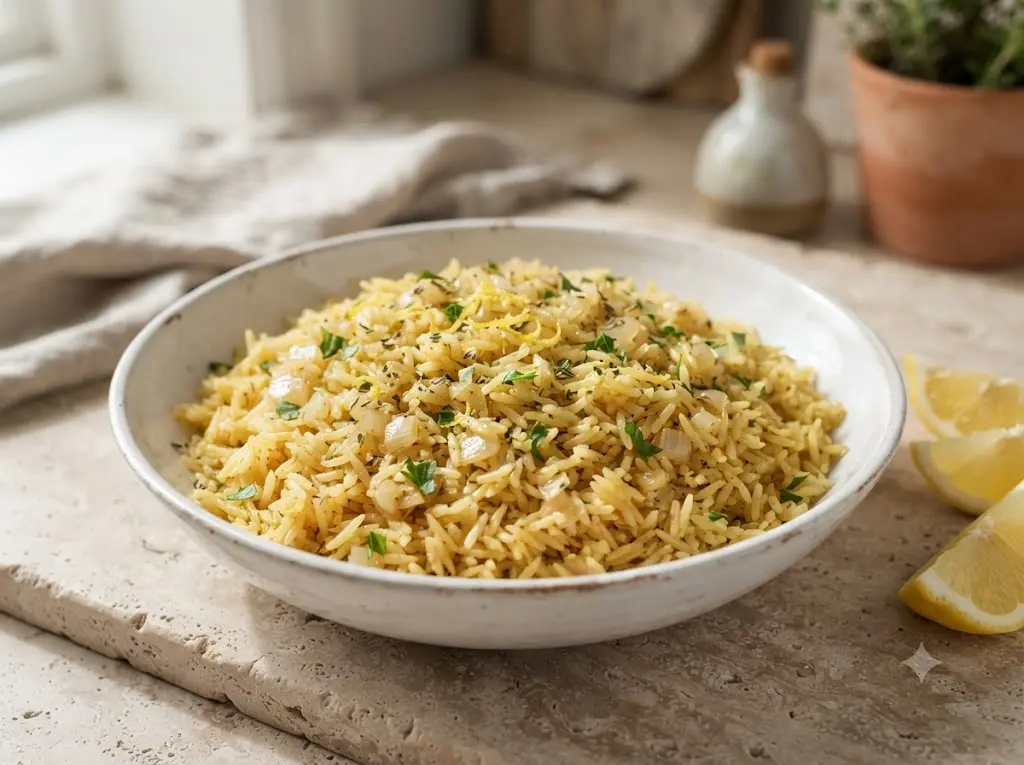
Gluten Free Rice Pilaf Recipe
Ingredients
Equipment
Method
- Rinse the rice: Place the rice in a fine-mesh strainer and rinse under cool water until the water becomes much clearer. Drain the rice well.
- Cook the onion: Heat the olive oil in a wide saucepan over medium heat. Add the diced onion and a small pinch of salt. Cook for 3 to 4 minutes until softened.
- Add the garlic: Stir in the minced garlic and cook for about 30 seconds, just until fragrant. Avoid letting the garlic become dark.
- Toast the rice: Add the drained rice and stir it into the onion and garlic mixture. Toast for 1 to 2 minutes until the grains are coated with oil and slightly translucent around the edges.
- Add the broth and seasonings: Pour in the gluten-free vegetable broth. Add oregano, turmeric, black pepper, and the remaining salt. Stir once and bring the mixture to a gentle boil.
- Simmer the rice: Reduce the heat to low and cover the saucepan tightly. Cook for 15 to 18 minutes, or until the rice is tender and the broth has been absorbed. Keep the lid closed as much as possible while cooking.
- Rest the rice: Turn off the heat and leave the lid on for 5 to 10 minutes. This allows the remaining moisture to settle and helps create fluffy grains.
- Fluff and finish: Remove the lid and gently fluff the rice with a fork. Add lemon juice, lemon zest, and fresh parsley. Taste and adjust the salt if needed.
- Serve: Serve the Mediterranean rice pilaf warm with grilled chicken, baked fish, roasted vegetables, chickpeas, or a fresh cucumber and tomato salad.
Notes
Storage
Cool leftover rice promptly and store it in a covered container in the refrigerator. When reheating, add a small splash of water or gluten-free broth to help restore moisture. Reheat until thoroughly hot.FAQ
What gives rice pilaf its flavor?
Toasted rice, onion, garlic, broth, herbs, and a bright finishing ingredient such as lemon give pilaf its flavor.
What are common mistakes in making rice pilaf?
Too much liquid, skipping the rice toast, lifting the lid often, and serving without resting are common mistakes.
Can you give me a recipe for a healthy rice pilaf?
Yes—use rice, vegetables, olive oil, gluten-free broth, herbs, lemon, and optional chickpeas for a simple balanced version.
Why isn’t rice pilaf gluten-free?
Rice is naturally gluten-free, but traditional pilaf often contains wheat-based orzo or vermicelli.
Is Near East rice pilaf gluten free?
The current Near East Original Rice Pilaf contains wheat-based orzo, so it is not gluten-free.
Is Rice-A-Roni rice pilaf gluten free?
Rice-A-Roni says its products may contain gluten because many mixes use wheat-based pasta and shared manufacturing facilities.
Is wild rice pilaf gluten free?
Wild rice is naturally gluten-free, but the complete pilaf must also have gluten-free ingredients and preparation.
Is brown rice pilaf gluten free?
Brown rice is naturally gluten-free, but packaged pilaf mixes can contain gluten-containing ingredients.
Is this a vegan gluten free rice pilaf recipe?
Yes, use vegetable broth and the recipe is vegan as written.
Final Thoughts
This gluten free rice pilaf recipe keeps the classic idea of pilaf while removing the ingredients that can make traditional versions unsuitable for a gluten-free diet.
Toast the rice, build flavor with onion and garlic, use a verified gluten-free broth, keep the heat gentle, and let the finished rice rest before fluffing.
For a fresh Mediterranean finish, lemon and parsley are all you really need.
Once you make it this way, plain rice starts to feel a little less plain.