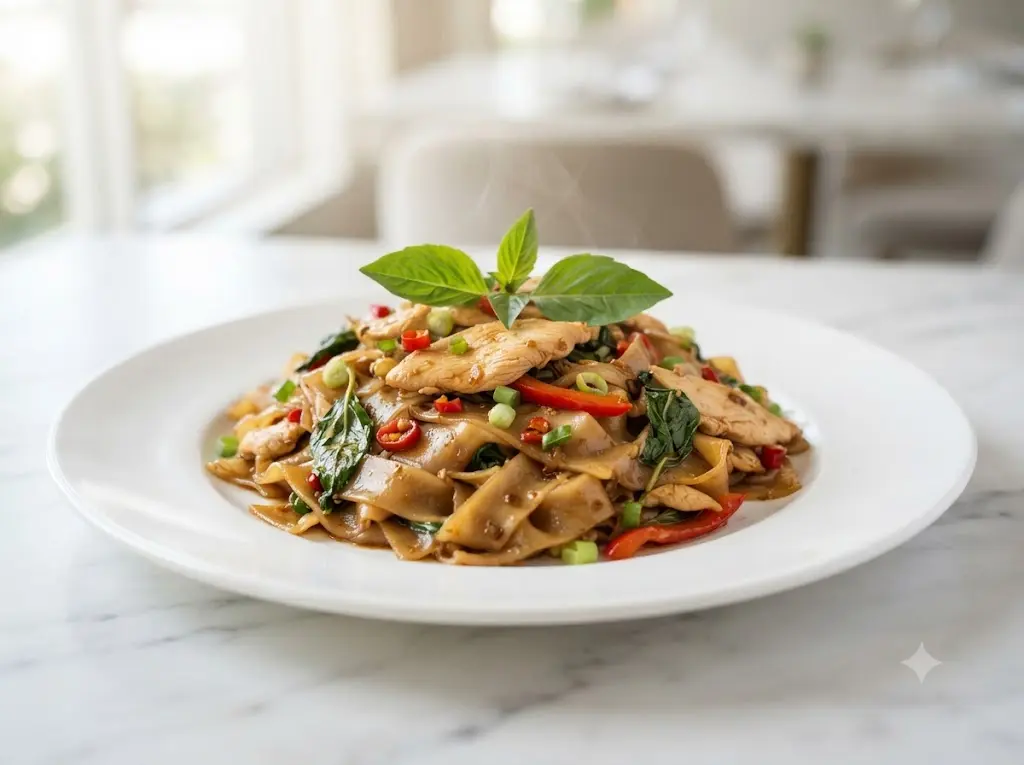
If you love noodles with plenty of garlic, fresh basil, savory sauce, and a noticeable kick of heat, this pad kee mao recipe is an easy Thai-style dinner to make at home. These noodles come together quickly in a very hot wok or skillet, so the best trick is to have every ingredient chopped and ready before the cooking starts.
Pad Kee Mao is commonly called Thai Drunken Noodles in the United States. Despite the name, the dish does not require alcohol. The nickname is associated with the idea of enjoying these spicy noodles with a cold drink, while the actual dish is a fast stir-fry built around wide rice noodles, aromatics, protein, vegetables, basil, and a salty-slightly sweet sauce.
This version keeps the cooking straightforward while giving the noodles enough sauce to coat every strand without turning them soggy.
What Is Pad Kee Mao?
Pad Kee Mao is a spicy Thai noodle stir-fry made with wide rice noodles, garlic, fresh chilies, basil, vegetables, and a savory sauce. Chicken is a convenient choice for a homemade version, although pork, beef, shrimp, or tofu can also work.
The important character of the dish comes from the combination of wide chewy noodles, aromatic garlic, chili heat, basil, and a savory sauce. It should taste bold rather than simply sweet.
Why This Pad Kee Mao Recipe Works
The cooking happens quickly, but the flavor does not have to feel complicated.
Wide rice noodles hold onto the sauce and give the dish its satisfying texture.
Garlic and Thai chilies create the sharp aromatic base that makes the noodles taste lively.
Thai basil adds a distinctive herbal note that separates Pad Kee Mao from many other stir-fried noodle dishes.
Light and dark soy sauce provide salty seasoning and color, while oyster sauce adds body and savory depth.
A small amount of sugar rounds out the sauce without making the noodles taste sweet.
The key is cooking everything over high heat and adding the noodles only after the protein and aromatics have developed some color.
Ingredients for Pad Kee Mao
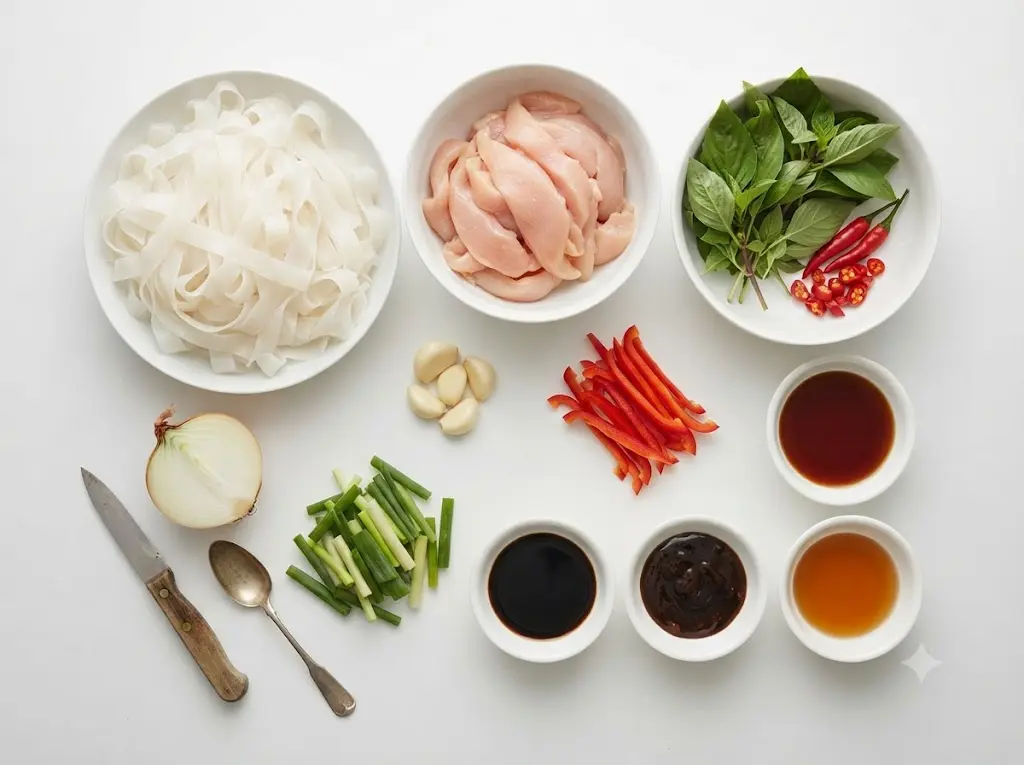
For the noodles
- 8 oz wide dried rice noodles
- 1 tablespoon neutral cooking oil
For the stir-fry
- 1 tablespoon neutral oil
- 1 tablespoon minced garlic
- 2–3 Thai chilies, finely sliced
- 1/2 small yellow onion, thinly sliced
- 1 small red bell pepper, thinly sliced
- 6 oz boneless chicken thigh, thinly sliced
- 1 cup Thai basil leaves
- 2 green onions, cut into short pieces
For the sauce
- 1 1/2 tablespoons light soy sauce
- 1 tablespoon dark soy sauce
- 2 tablespoons oyster sauce
- 1 teaspoon fish sauce
- 1 teaspoon brown sugar
- 2 tablespoons water
Optional additions
- Broccoli or Chinese broccoli
- Baby corn
- Sliced mushrooms
- Extra Thai chilies
- Lime wedges for serving
Choosing the Right Noodles
For this drunken noodle recipe, wide rice noodles are the easiest choice to find in many American grocery stores. Dried noodles labeled as wide rice noodles or Pad Thai noodles can work well.
Fresh wide rice noodles give a softer, chewier result and cook differently, so avoid treating them exactly like dried noodles.
The most important thing is not to overcook dried noodles before they reach the wok. They should be tender enough to bend but still have some firmness because they will finish cooking in the sauce.
How to Make Drunken Noodles
Prepare the noodles
Cook or soak the rice noodles according to the package directions. Drain them thoroughly once they are tender but still slightly firm.
Do not leave cooked noodles sitting in a large wet pile. A quick toss with a little oil can help prevent excessive sticking while you prepare the rest of the ingredients.
Mix the sauce
Add the light soy sauce, dark soy sauce, oyster sauce, fish sauce, brown sugar, and water to a small bowl.
Stir until the sugar is mostly dissolved.
Taste a tiny amount before cooking if you want to adjust the balance. More soy sauce increases saltiness, while a little extra sugar softens the sharp edges.
Heat the wok
Place a wok or large skillet over high heat and let it become properly hot before adding the oil.
This matters because Pad Kee Mao is a stir-fry. A hot cooking surface helps the chicken brown instead of releasing too much moisture.
Cook the aromatics
Add the oil, followed by garlic and Thai chilies.
Stir for about 15–20 seconds, just until the garlic becomes fragrant. Avoid letting it turn dark because burnt garlic can make the whole sauce bitter.
Add the chicken
Add the sliced chicken and stir-fry until the pieces are cooked through and lightly browned.
Chicken thighs are particularly useful here because they stay juicy during the short, high-heat cooking process.
Add the vegetables
Add the onion and bell pepper. Stir-fry briefly so the vegetables soften around the edges while retaining some bite.
If using broccoli or Chinese broccoli, add it at this stage as well.
Add the noodles and sauce
Add the prepared rice noodles to the wok.
Pour the sauce around the noodles rather than dumping everything into one spot. Toss continuously so the sauce reaches the noodles, chicken, and vegetables evenly.
Cook for about 1–2 minutes, allowing the sauce to reduce slightly and cling to the noodles.
If the noodles look dry before they are fully tender, add a tablespoon or two of water and continue tossing.
Finish with basil
Turn off the heat and immediately add the Thai basil and green onions.
Toss until the basil just wilts.
This final step keeps the basil fragrant instead of cooking it until the flavor disappears.
Serve the noodles immediately while they are hot and glossy.
The Secret to Better Pad Kee Mao
The biggest difference between flat-tasting noodles and flavorful drunken noodles recipes is usually the cooking temperature.
Keep the wok hot.
Have the ingredients prepared before starting.
Do not overcrowd the pan with too many cold ingredients at once.
Most importantly, avoid drowning the noodles in sauce. Pad Kee Mao should have enough sauce to coat the noodles while still tasting like a stir-fry rather than a noodle soup.
A final handful of fresh basil also makes a noticeable difference.
Pad Kee Mao vs Pad Thai
Pad Kee Mao and Pad Thai are both popular Thai noodle dishes, but their flavor profiles are different.
Pad Thai generally has a sweeter, tangier flavor with ingredients such as tamarind, peanuts, and egg playing important roles.
Pad Kee Mao is usually more savory and spicy, with garlic, chilies, basil, and soy-based seasoning giving it a stronger stir-fried character.
So if you prefer noodles with chili heat and a more aromatic savory profile, Pad Kee Mao offers a different experience from classic Pad Thai.
Pad Kee Mao vs Pad See Ew
Pad kee mao vs pad see ew is another common comparison because both dishes can use wide rice noodles and dark soy sauce.
Pad See Ew is generally milder and sweeter, with a simpler combination of noodles, protein, vegetables, egg, and soy-based sauce.
Pad Kee Mao is more aromatic and spicy, with fresh chilies and basil giving it a stronger herbal and fiery character.
The noodle texture can be similar, but the seasoning and aromatics make the two dishes noticeably different.
What Noodles Are Used for Pad Kee Mao?
Wide rice noodles are the most practical choice for homemade Pad Kee Mao. Fresh wide rice noodles can provide a particularly soft and chewy texture, while dried wide rice noodles are easier to store and prepare.
For a reliable home thai drunken noodles recipe, choose noodles that are wide enough to carry the sauce without becoming fragile during stir-frying.
Can You Make Vegetarian Pad Kee Mao?
Yes. For a Pad Kee Mao recipe vegetarian version, replace the chicken with firm tofu, mushrooms, or a combination of vegetables.
Use vegetarian oyster sauce or mushroom stir-fry sauce instead of regular oyster sauce, and replace fish sauce with additional soy sauce or a vegetarian seasoning sauce.
Keep the garlic, chilies, basil, and wide rice noodles because those ingredients provide much of the dish’s recognizable character.
Can You Use Beef for Pad Kee Mao?
Yes, thinly sliced beef works well in Pad Kee Mao.
Use a tender cut and slice it thinly against the grain. Cook it quickly over high heat so it browns without becoming tough.
For a pad kee mao beef variation, the same sauce can be used, although beef brings a deeper savory flavor than chicken.
Is Pad Kee Mao Healthy?
Pad Kee Mao can fit into a balanced meal, but its nutritional profile depends heavily on the amount of noodles, oil, protein, and salty sauces used.
Adding vegetables and using a moderate amount of oil can make the meal more balanced. Because soy sauce, oyster sauce, and fish sauce are naturally salty, portioning the sauce carefully is useful if you are watching sodium intake.
What to Serve With Pad Kee Mao
Pad Kee Mao is filling enough to serve as a complete meal.
For a lighter table, serve it with:
- Cucumber slices
- Fresh lime wedges
- A simple Thai-style salad
- Steamed vegetables
- Fresh herbs
Lime can add brightness to the finished noodles without changing the main flavor profile.
Storing and Reheating Leftovers
Let leftover noodles cool before transferring them to an airtight container and refrigerating.
They are best eaten within a few days.
When reheating, add a small splash of water before warming them in a skillet. This helps loosen the sauce and prevents the noodles from becoming overly dry.
A skillet generally gives better texture than reheating the noodles until very hot in the microwave.
Common Mistakes to Avoid
Overcooking the noodles: They can become soft and break apart during stir-frying.
Using a cold pan: The ingredients may steam instead of developing the roasted stir-fry flavor.
Adding too much sauce: Excess liquid can make the noodles heavy and soggy.
Burning the garlic: Garlic cooks quickly over high heat, so keep it moving.
Cooking the basil too early: Add it near the end to preserve its aroma.
Overloading the wok: Cook in batches if your pan is too small to let the ingredients move freely.
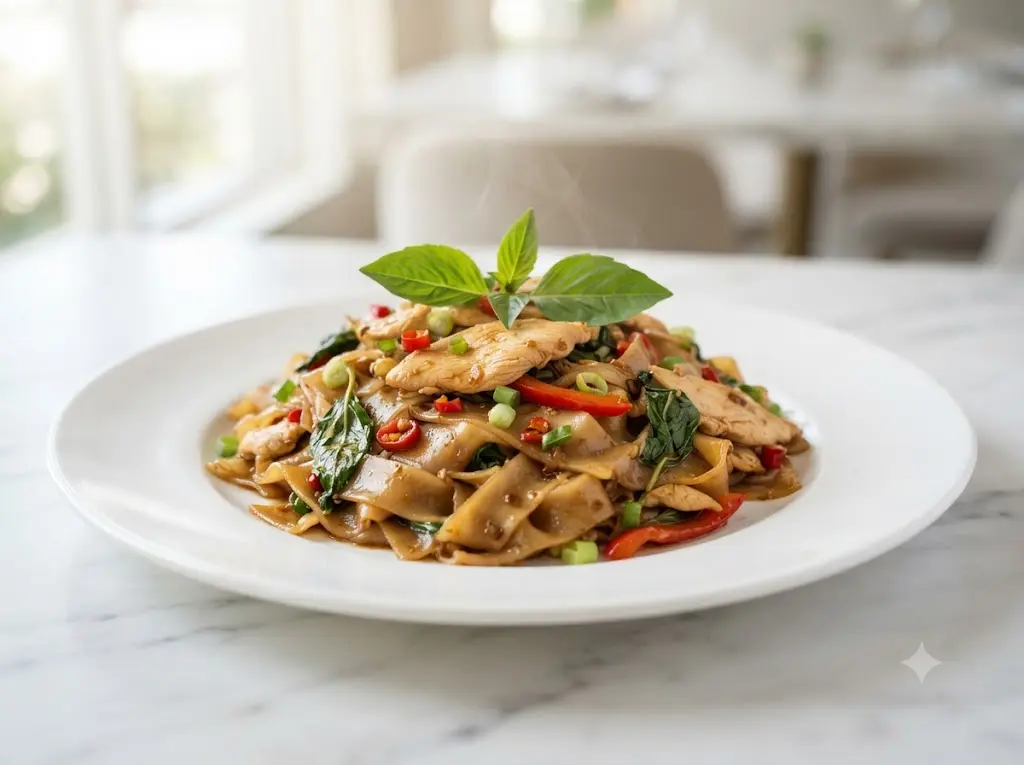
Pad Kee Mao Recipe
Ingredients
Equipment
Method
- Prepare the noodles: Cook or soak the wide rice noodles according to the package directions until just tender. Drain well and set aside.
- Mix the sauce: Combine light soy sauce, dark soy sauce, oyster sauce, fish sauce, brown sugar, and water in a small bowl. Stir until combined.
- Heat the wok: Place a large wok or heavy skillet over high heat and add the cooking oil.
- Cook the aromatics: Add the minced garlic and sliced Thai chilies. Stir-fry briefly until fragrant, taking care not to burn the garlic.
- Cook the chicken: Add the sliced chicken and stir-fry until it is cooked through and lightly browned.
- Add the vegetables: Add the onion and red bell pepper. Toss over high heat until slightly tender while keeping some crunch.
- Add the noodles: Add the drained noodles to the wok and toss gently with the chicken and vegetables.
- Add the sauce: Pour the prepared sauce over the noodles and continue tossing until the sauce evenly coats everything.
- Finish with basil: Turn off the heat and add Thai basil and green onions. Toss until the basil is just wilted.
- Serve immediately: Transfer the hot noodles to serving plates and enjoy while the noodles are glossy and fragrant.
Notes
Serving Suggestion
Serve this pad kee mao recipe immediately with fresh lime wedges and extra Thai basil if desired. Cucumber slices or lightly steamed vegetables also work well alongside the spicy noodles.Frequently Asked Questions
What are the ingredients in Pad Kee Mao?
Wide rice noodles, garlic, Thai chilies, basil, vegetables, protein, and a savory soy-based sauce are the main components.
What are the key differences between Pad Thai and Pad Kee Mao?
Pad Thai is typically sweeter and tangier, while Pad Kee Mao is more savory, spicy, garlicky, and basil-forward.
How healthy is Pad Kee Mao?
It can be balanced with vegetables and lean protein, but the dish can also be high in sodium depending on the sauces used.
What is the secret to perfect drunken noodles?
Use wide noodles, a very hot wok, properly prepared ingredients, and enough sauce to coat rather than soak the noodles.
What is Pad See Ew?
Pad See Ew is a Thai stir-fried noodle dish known for wide rice noodles and a sweeter, darker soy-based flavor.
What is the difference between Pad Kee Mao and Pad See Ew?
Pad Kee Mao is generally spicier and more aromatic, while Pad See Ew is milder and sweeter.
Can I make authentic Pad Kee Mao at home?
Yes. Using wide rice noodles, fresh chilies, basil, and a properly balanced stir-fry sauce creates the characteristic profile at home.
What type of noodles are best for Pad Kee Mao?
Wide rice noodles are the most suitable choice because they hold the savory sauce and provide a chewy texture.