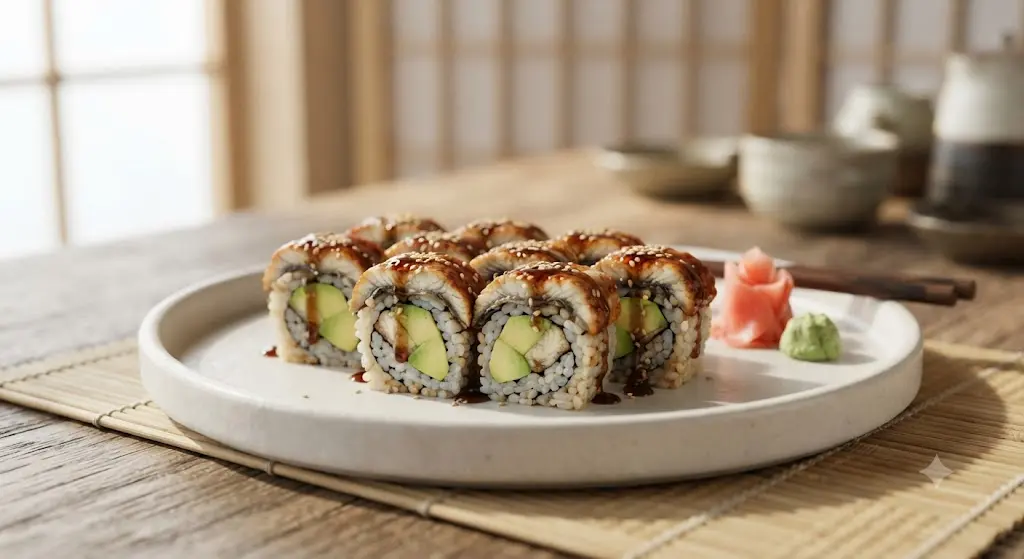
Eel avocado sushi roll is one of those homemade sushi recipes that feels special without requiring complicated ingredients. It combines tender cooked unagi, creamy avocado, seasoned sushi rice, and nori, then finishes everything with a sweet-savory drizzle of eel sauce.
The best part is that you do not need to work with raw eel for this recipe. Using cooked unagi kabayaki makes the process much easier, especially if this is your first time making sushi at home.
The texture is what makes this roll so good. The rice is soft and lightly seasoned, the eel is rich and glazed, and the avocado adds a cool, buttery contrast. Once you get the filling amount and rolling pressure right, you can make neat sushi pieces without much fuss.
What Is an Eel Avocado Sushi Roll?
An eel avocado sushi roll is a sushi roll made with cooked freshwater eel, avocado, sushi rice, and nori. It is commonly served with sweet unagi sauce and may be finished with sesame seeds.
You may also see it called an eel avocado roll, eel avocado roll sushi, or an unagi avocado roll.
The name can vary from one restaurant to another, but the idea is simple: rich grilled eel paired with creamy avocado and seasoned rice.
Unlike sushi made with raw fish, this version uses cooked eel, usually sold as prepared unagi kabayaki. The eel is typically grilled and coated with a sweet sauce before you buy it, so your main job at home is warming it gently and assembling the roll.
Why This Eel Avocado Roll Works
There are only a few main ingredients, so each one matters.
The unagi brings a deep, smoky and sweet-savory flavor.
The avocado softens that richness with its creamy texture.
The sushi rice gives the roll structure while adding a mild vinegar flavor.
The nori provides a roasted, slightly salty seaweed taste.
The result is flavorful without needing lots of extra toppings.
For homemade sushi, keeping the filling controlled is especially important. Home cooks often find that too much rice or filling makes a roll bulky or difficult to cut.
Ingredients You Need
Sushi Rice
Use Japanese short-grain sushi rice rather than long-grain rice.
The rice should be sticky enough to hold together but not wet or mushy. Season it while warm with rice vinegar, sugar, and salt, then let it cool before assembling the sushi.
Cooked Unagi
Look for unagi kabayaki, which is usually sold already cooked and seasoned.
Warm it gently according to the package directions. You want the eel tender and warm, not dried out.
Cut it into narrow strips that are easy to place inside the roll.
Avocado
Choose an avocado that is ripe but still firm.
If it is too hard, it will taste bland and be difficult to slice. If it is extremely soft, it can turn into a mash while you are rolling.
Thin slices work better than thick chunks because they sit more neatly inside the roll.
Nori
Use roasted nori sheets.
For four medium rolls, four half-sheets are enough if you are using standard full-size nori sheets.
Unagi Sauce
Unagi sauce, also called eel sauce or unagi tare, gives this sushi its familiar sweet-savory finish.
You only need a small amount. Too much sauce can make the outside messy and can overpower the eel and avocado.
Optional Sesame Seeds
Toasted sesame seeds add a pleasant nutty flavor and a little crunch.
White or black sesame seeds both work.
How to Make Eel Avocado Sushi Roll
1. Prepare the Sushi Rice
Rinse the short-grain rice several times until the water is considerably clearer.
Cook it according to the instructions for your particular rice.
While the rice is still warm, gently mix in the rice vinegar, sugar, and salt.
Use a cutting or folding motion with a rice paddle rather than aggressively stirring the rice. This keeps the grains from becoming mashed together.
Spread the rice into a shallow container and let it cool to room temperature.
You want the finished rice to feel sticky and cohesive, but not wet.
2. Warm the Unagi
Remove the cooked unagi from its packaging.
Warm it according to the package instructions, then let it cool enough to handle.
Cut the eel into long, narrow strips.
If your unagi already has plenty of sauce on it, do not add more at this stage. You can finish the completed roll with a small drizzle later.
3. Slice the Avocado
Cut the avocado in half and remove the pit.
Peel away the skin and slice the flesh lengthwise into thin strips.
Keep the slices relatively even.
A firm-ripe avocado is easier to handle because it holds its shape while you roll.
4. Prepare Your Sushi Mat
Cover a bamboo sushi mat with plastic wrap if you are making an inside-out roll.
This keeps sticky rice and sauce from getting deeply into the bamboo and makes cleanup much easier.
Place half a sheet of nori on the mat with the rough side facing upward.
5. Spread the Rice
Wet your hands lightly with water.
Take a portion of sushi rice and spread it across the nori in a thin, even layer.
Do not press the rice into a dense paste.
Leave a small strip of nori uncovered along the far edge. That exposed section helps the roll close properly.
This is one place where less really is better. A thick rice layer makes the finished roll oversized and can make the filling difficult to contain.
6. Add the Eel and Avocado
For an inside-out version, flip the rice-covered nori carefully so the rice faces downward.
Place the eel in a straight line near the center.
Add the avocado in a neat layer.
For a particularly stable roll, keep the avocado slices thin and organized rather than dropping large pieces into the center. A recent guide focused specifically on eel-and-avocado rolls also recommends controlled layering because both ingredients can shift while rolling.
You do not need a mountain of filling.
A moderate amount gives you a tighter roll and cleaner slices.
7. Roll the Sushi
Lift the edge of the bamboo mat closest to you.
Fold the nori and rice over the filling while using your fingers to keep the eel and avocado in place.
Continue rolling forward.
Apply firm but gentle pressure as you go. The goal is to compress the ingredients enough to create a compact cylinder without crushing the avocado.
Once the roll is closed, give it a final gentle squeeze through the mat to even out its shape.
8. Slice the Roll
Remove the roll from the mat.
Use a sharp knife and lightly wet the blade.
Cut the roll in half first. Then cut each half into equal pieces.
Avoid aggressively sawing back and forth.
A long, controlled motion gives cleaner cuts, and wiping or wetting the blade between cuts helps prevent sticky rice from dragging through the roll. Home sushi makers commonly recommend this technique for cleaner pieces.
9. Finish the Eel Avocado Roll
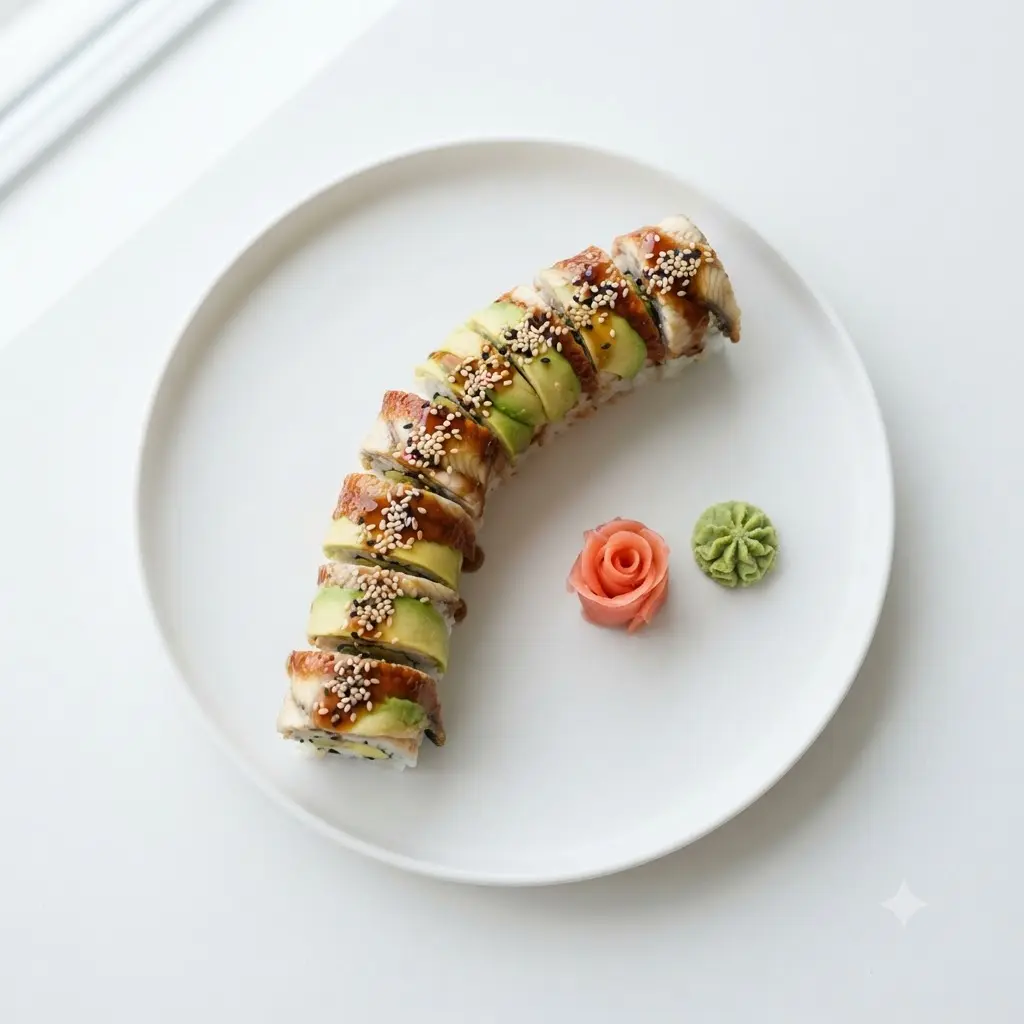
Arrange the pieces on a white plate.
Drizzle a small amount of unagi sauce over the top.
Add toasted sesame seeds if you like.
Serve immediately with soy sauce, pickled ginger, and wasabi.
The Most Important Rolling Tips
Making an eel avocado roll sushi at home becomes much easier when you stop trying to make it oversized.
Use less rice than you think
A thin rice layer leaves enough room for the filling and keeps each bite balanced.
Keep the filling centered
If the eel and avocado are scattered across the sheet, the roll becomes harder to close evenly.
Slice avocado thinly
Thick avocado pieces tend to move around when pressure is applied.
Do not overfill
This is probably the most important tip.
If the roll refuses to close, the problem is usually not your sushi mat. There may simply be too much filling.
Roll with steady pressure
Too little pressure leaves gaps. Too much pressure crushes the avocado and pushes filling out.
Keep your knife wet and clean
Rice sticking to the blade is one of the easiest ways to ruin otherwise neat sushi pieces.
Should the Eel or Avocado Go First?
For this recipe, I prefer placing the eel first and the avocado directly with it in a controlled layer.
The important part is not creating a large pile of filling. Keep both ingredients in a compact line so they move as one unit while you roll.
This is especially useful because avocado is soft and slippery. Home sushi makers have found that organized filling placement makes the finished roll easier to tighten and keeps soft ingredients from shifting.
Is Eel Avocado Sushi Roll Cooked?
Yes.
The eel used in this recipe is cooked unagi, usually sold as grilled and seasoned unagi kabayaki.
That makes this recipe different from sushi rolls that contain raw seafood.
If your package says the eel is fully cooked, simply warm it according to its instructions before slicing.
What Does an Eel Avocado Roll Taste Like?
An eel avocado roll has a rich but balanced flavor.
The unagi is savory, smoky, tender, and slightly sweet from its glaze. Avocado contributes a mild buttery flavor and creamy texture, while seasoned sushi rice adds a subtle tang.
The nori gives the roll a roasted seaweed flavor that ties everything together.
If you already enjoy sushi but prefer cooked seafood, this is a particularly approachable combination.
Eel Avocado Roll vs. Eel Cucumber Roll
The biggest difference is texture.
An eel avocado roll is soft, creamy, and rich because avocado is naturally buttery.
An eel cucumber roll is lighter and crunchier because cucumber adds fresh water-rich crispness.
| Roll | Main texture | Overall character |
|---|---|---|
| Eel avocado roll | Creamy and tender | Rich and smooth |
| Eel cucumber roll | Crisp and fresh | Lighter and refreshing |
| Eel avocado cucumber roll | Creamy + crunchy | More contrast |
You can also combine avocado and cucumber if you want the richness of avocado with some extra crunch.
Can I Add Cucumber?
Yes.
Thin cucumber sticks work very well with eel and avocado.
If using cucumber, remove the watery center if it has large seeds and cut the remaining flesh into thin matchsticks.
Keep the amount modest so it does not overwhelm the unagi.
Can I Use Salmon Instead of Eel?
You can, but then you are making a salmon avocado roll rather than an eel avocado roll.
For raw salmon, use seafood specifically sold and handled for raw consumption and follow appropriate food-safety practices.
If you want to keep this recipe simple and cooked, stick with prepared unagi.
Eel Avocado Roll vs. Dragon Roll
These are not necessarily the same sushi roll.
An eel avocado roll is generally built around cooked eel and avocado.
A dragon roll is a specialty sushi roll that can include additional fillings and toppings, with the exact combination varying by restaurant.
Some dragon rolls may contain eel and avocado, but adding extra ingredients does not automatically make an eel avocado roll a dragon roll.
Is Eel Avocado Roll Healthy?
It can be part of a balanced meal, but the answer depends on the portion and ingredients.
Avocado provides fiber and unsaturated fats, while eel provides protein. Sushi rice contributes carbohydrates, and eel sauce can add sugar and sodium.
If you want a lighter version, use a moderate amount of rice and sauce rather than removing the ingredients that make the roll enjoyable.
There is also no single answer for eel avocado roll calories because restaurant rolls can vary significantly in rice, eel, avocado, sauce, and serving size.
How Many Calories Are in an Eel Avocado Roll?
There is no universal calorie number for an eel avocado roll.
A homemade roll can have a very different calorie count from a restaurant roll depending on how much rice, unagi, avocado, and sauce is used.
For accurate nutrition information, calculate the ingredients used in your own batch and divide the total by the number of servings.
Can Pregnant People Eat an Eel Avocado Roll?
This recipe uses cooked eel rather than raw eel.
However, pregnancy food-safety decisions should follow current medical and food-safety guidance, particularly regarding seafood handling, storage, and restaurant preparation.
If making the roll at home, use properly cooked ingredients and maintain good food-safety practices.
Best Side Dishes for Eel Avocado Sushi
You do not need many sides because the roll is already rich.
Good options include:
- Miso soup
- Edamame
- Seaweed salad
- Japanese cucumber salad
- Pickled ginger
- Wasabi
- Green tea
A small serving of cucumber salad is especially nice if you want something crisp alongside the creamy avocado.
Make-Ahead and Storage
Sushi is best eaten soon after it is assembled.
If you have leftovers, refrigerate them promptly in a covered container rather than leaving them at room temperature.
Keep in mind that refrigerated sushi rice becomes firmer, and avocado can lose some of its fresh texture and color.
For the best result, prepare only as much as you expect to eat.
Common Mistakes to Avoid
Using Long-Grain Rice
Long-grain rice does not have the same sticky texture needed for sushi rolls.
Adding Too Much Rice
Too much rice makes the roll heavy and can hide the eel and avocado flavor.
Overfilling the Center
More filling does not automatically make better sushi.
A controlled amount produces a tighter, cleaner roll.
Using an Overripe Avocado
Very soft avocado can collapse during assembly.
Cutting With a Dry Knife
Sticky rice will cling to the blade and pull the roll apart.
Sawing Through the Roll
Use a sharp knife and controlled strokes instead of repeatedly sawing.
Eel Avocado Sushi Roll
Ingredients
Equipment
Method
- Prepare the sushi rice: Rinse the sushi rice, cook according to the package directions, then gently mix in rice vinegar, sugar, and salt while the rice is warm. Cool to room temperature.
- Warm the unagi: Heat the cooked unagi kabayaki according to the package directions. Let it cool slightly, then cut it into thin strips.
- Slice the avocado: Cut the avocado in half, remove the pit, peel it, and slice the flesh into thin, even strips.
- Prepare the sushi mat: Cover the bamboo mat with plastic wrap if making an inside-out eel avocado sushi roll.
- Spread the rice: Place half a sheet of nori on the mat and spread a thin, even layer of seasoned sushi rice across it.
- Add sesame seeds: Sprinkle toasted sesame seeds lightly over the rice if desired.
- Add the filling: Place the cooked unagi and avocado in a neat line across the center of the nori.
- Roll the sushi: Lift the edge of the mat and fold the rice and nori over the filling. Roll forward with firm but gentle pressure.
- Shape the roll: Give the finished eel avocado roll a gentle squeeze through the mat to create an even cylinder.
- Slice the sushi: Lightly wet a sharp knife and cut the roll into 6–8 pieces. Wipe the blade between cuts for cleaner slices.
- Finish the roll: Drizzle a small amount of unagi sauce over the sliced sushi and add sesame seeds if desired.
- Serve: Serve the unagi avocado roll immediately with soy sauce, pickled ginger, and wasabi.
Notes
- Use cooked unagi kabayaki: This recipe is designed around prepared, cooked eel.
- Keep the rice layer thin: Too much rice can make the roll bulky.
- Don’t overfill: Moderate amounts of eel and avocado make the roll easier to close.
- Use firm-ripe avocado: It should be creamy but still hold its shape when sliced.
- Keep the knife sharp: A clean, slightly wet blade helps produce neat sushi pieces.
Frequently Asked Questions
What does an eel avocado roll have in it?
It usually contains cooked unagi, avocado, seasoned sushi rice, and nori, often finished with eel sauce.
What is in an eel sushi roll?
A basic eel sushi roll contains cooked unagi, sushi rice, and nori.
What is the difference between an eel avocado roll and an eel cucumber roll?
Eel avocado is creamy and rich, while eel cucumber is crisp and refreshing.
Is eel avocado roll healthy?
It can fit into a balanced meal, but calories, sugar, and sodium depend on the ingredients and portion.
Is eel avocado sushi roll cooked?
Yes, this recipe uses cooked unagi rather than raw eel.
How many calories are in an eel avocado roll?
There is no fixed amount because rice, eel, avocado, sauce, and serving sizes vary.
Can I make an eel avocado roll with salmon?
Yes, but replacing eel with salmon turns it into a salmon avocado roll.
Can pregnant people eat eel avocado rolls?
This recipe uses cooked eel, but pregnant diners should follow current seafood and sushi food-safety guidance.
Final Tips for the Best Eel Avocado Sushi Roll
If this is your first attempt, focus on three things: thin rice, controlled filling, and a sharp wet knife.
You do not need to make the roll perfect on your first try. What matters most is keeping the filling centered and applying steady pressure while rolling.
Once you get that technique down, this eel avocado sushi roll becomes a surprisingly simple homemade dinner. The cooked unagi gives you the rich flavor you expect from an unagi roll, while avocado keeps the texture creamy and approachable.
Serve the sushi shortly after slicing, add just enough eel sauce for sweetness, and let the combination of warm-seasoned rice, tender eel, creamy avocado, and crisp nori do the work.
1 thought on “Eel Avocado Sushi Roll Recipe with Unagi”