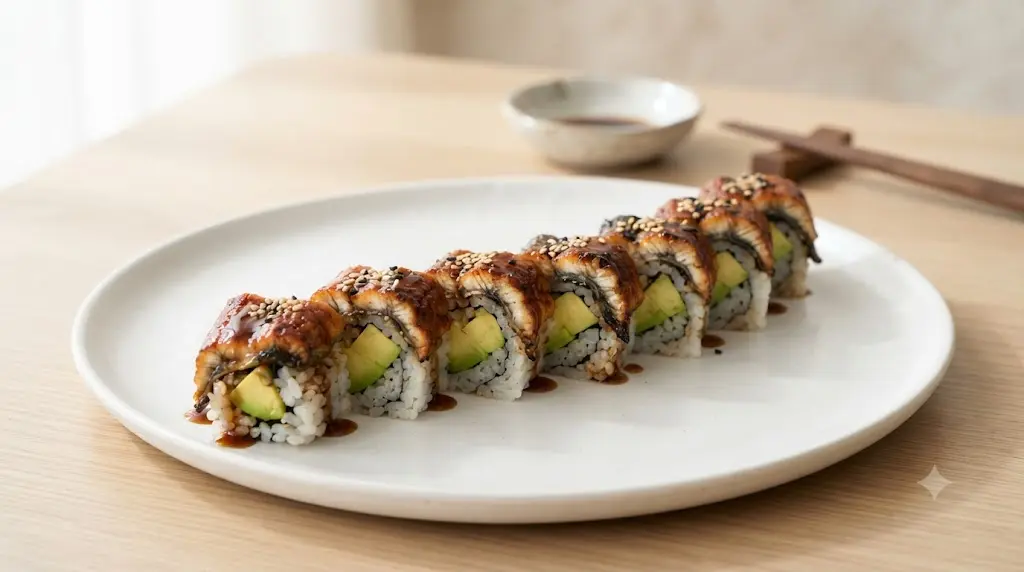
This unagi avocado roll is a simple homemade sushi roll made with tender grilled eel, creamy avocado, seasoned sushi rice, nori, toasted sesame seeds, and a little sweet unagi sauce. The eel has a rich smoky flavor, while the avocado adds a cool, buttery texture that makes the roll feel balanced rather than overly heavy.
If you enjoy sushi but usually order cooked seafood, this is an especially approachable roll to make at home. The unagi is already cooked, so most of the work is preparing the rice, slicing the fillings, and rolling everything tightly enough to hold together.
The key is not to overfill the roll. A thin layer of rice and a modest amount of eel and avocado give you cleaner slices and let each ingredient stand out.
What Is an Unagi Avocado Roll?
An unagi avocado roll is sushi made with cooked freshwater eel and avocado wrapped with nori and seasoned sushi rice.
“Unagi” is the Japanese term commonly used for freshwater eel. In sushi, it is typically served grilled and coated with a sweet-savory glaze. The avocado is not traditional to every unagi preparation, but it is a popular pairing because its mild, creamy texture works naturally with the richer eel.
This version is made as an inside-out roll, also called uramaki, so the seasoned rice sits on the outside of the nori. Sesame seeds give the outside a light nutty finish, while a small amount of unagi sauce adds sweetness and extra depth.
Why You’ll Like This Recipe
- The eel is already cooked, making the recipe less intimidating for beginners.
- Avocado balances the rich eel with a soft, creamy texture.
- The ingredient list is short, so you do not need a fully stocked sushi kitchen.
- The inside-out format looks restaurant-style without requiring advanced sushi skills.
- The recipe is easy to customize with cucumber, sesame, or other sushi fillings.
- The instructions focus on the parts that usually cause problems, especially rice thickness, filling size, rolling pressure, and slicing.
Ingredients for an Unagi Avocado Roll
Sushi Rice
Use Japanese short-grain sushi rice. It becomes sticky enough to hold the roll together while still giving you distinct grains when properly cooked.
The rice should be seasoned before assembling the sushi. Allow it to cool to room temperature rather than using it piping hot, because very hot rice can soften the nori and make assembly harder.
Nori
Use roasted nori sheets. For one standard inside-out roll, half a sheet is usually enough.
Place the rough side upward when spreading the rice so the rice has a little more surface to grip.
Unagi
Use prepared unagi kabayaki, which is cooked and usually already glazed.
Frozen vacuum-packed unagi is convenient for homemade sushi. Warm it according to the package directions, then let it cool slightly before slicing.
Avocado
Choose an avocado that is ripe but still firm.
If the avocado is too hard, it will not have the creamy texture you want. If it is very soft, it can turn into a paste when you press the sushi mat.
Unagi Sauce
Unagi sauce, also called eel sauce, is a sweet and savory glaze commonly served with grilled eel.
You only need a small amount for finishing the roll because the eel itself may already be glazed.
Toasted Sesame Seeds
A light sprinkle of toasted sesame seeds adds nuttiness and a little texture to the rice-covered exterior.
Ingredients
- 1 cup cooked and seasoned sushi rice
- 1 sheet roasted nori, cut in half
- ½ grilled unagi fillet
- ½ ripe but firm avocado
- 1 tablespoon toasted white sesame seeds
- 1–2 tablespoons unagi sauce
- Water for wetting your hands and knife
Equipment
- Bamboo sushi mat
- Plastic wrap
- Sharp chef’s knife
- Cutting board
- Small bowl of water
How to Make an Unagi Avocado Roll
1. Prepare the Sushi Rice
Cook the sushi rice according to the package directions and season it while warm with sushi vinegar.
Gently fold the seasoning through the rice rather than aggressively stirring or crushing the grains.
Spread the rice in a shallow container and allow it to cool until it is comfortable to handle.
The finished rice should be sticky enough to hold together but should not feel wet or mushy.
2. Warm and Slice the Unagi
Warm the prepared unagi according to its package instructions.
You are not cooking raw eel here. Most unagi sold for home sushi is already cooked and glazed, so the goal is simply to warm it and bring back some of its tender texture.
Place it on a cutting board and cut it into long strips that fit across the width of your nori.
3. Slice the Avocado
Cut the avocado in half, remove the pit, and peel it.
Slice the flesh lengthwise into thin strips.
Keep the slices relatively even. Very thick pieces make the roll harder to close, while very thin pieces can disappear into the rice.
4. Prepare the Sushi Mat
Cover your bamboo sushi mat with plastic wrap.
This is particularly helpful when making an inside-out roll because the sticky rice would otherwise cling to the bamboo.
Place half a sheet of nori on the mat with the rough side facing upward.
5. Spread the Rice
Wet your hands lightly with water.
Take enough rice to cover the nori in a thin layer and gently spread it across the surface.
Do not press the rice down aggressively. You want an even layer that stays light rather than a dense sheet of compressed rice.
Sprinkle toasted sesame seeds over the rice.
6. Flip the Nori
Carefully turn the rice-covered nori over.
The rice should now face the plastic-covered bamboo mat, while the nori is facing upward.
This creates the base for an inside-out unagi maki roll.
7. Add the Eel and Avocado
Place the sliced unagi across the center of the nori.
Add the avocado alongside or slightly over the eel, depending on the size of your slices.
Keep the filling compact and avoid creating a large pile in the center. Too much filling is one of the easiest ways to end up with a roll that will not close properly.
8. Roll the Sushi
Lift the edge of the mat closest to you and fold it over the filling.
Use your fingers to keep the eel and avocado from moving as you roll.
Continue rolling forward while applying gentle, even pressure with the mat.
You want the finished roll to be firm enough to hold its shape but not so tightly compressed that the avocado gets crushed.
9. Shape and Slice
Place the finished roll seam-side down.
Use a sharp knife and lightly wet the blade before cutting.
Slice the roll into 8 pieces, cleaning and re-wetting the knife when rice begins sticking to the blade.
A clean knife makes a surprisingly large difference in the appearance of homemade sushi.
10. Add the Sauce
Arrange the sushi pieces on a white plate and drizzle a small amount of unagi sauce over the top.
Start with less sauce and add more at the table if desired. Too much sauce can make the rice wet and overpower the delicate avocado.
The Best Rice-to-Filling Balance
One of the biggest differences between neat homemade sushi and a difficult-to-roll sushi log is the amount of rice and filling.
It can be tempting to add a generous amount of eel and avocado, especially when you want the finished roll to look substantial. But the roll needs enough room for the nori and rice to wrap around the filling.
A thin rice layer gives you a lighter bite and leaves enough space for the eel and avocado to remain noticeable.
If your first roll feels difficult to close, use less filling on the second one rather than adding more pressure.
How to Keep an Unagi Avocado Roll From Falling Apart
If the roll breaks when you slice it, check these areas first:
Too much filling: Reduce the amount of eel or avocado.
Rice is too wet: Let freshly cooked rice cool and avoid using excessively wet rice.
Rice layer is too thick: Spread it more thinly across the nori.
Knife is dull: A sharp, slightly damp knife creates cleaner cuts.
Rolling pressure is inconsistent: Keep the pressure firm and even as you move the mat forward.
Avocado is too soft: Use a firmer ripe avocado that can hold its shape.
These small adjustments usually make a bigger difference than changing the ingredients.
What Does Unagi Taste Like?
Unagi has a rich, savory flavor with a noticeable smoky sweetness when grilled and glazed.
Its texture is soft and tender rather than firm like some raw fish.
That richness is exactly why avocado works so well with it. The avocado does not compete with the eel; instead, it adds a mild creamy texture that softens the stronger flavor.
Sushi rice brings acidity and subtle sweetness, while nori adds a light savory seaweed flavor.
Is an Eel Avocado Roll Cooked?
Yes. A traditional eel sushi roll made with unagi uses cooked freshwater eel.
Prepared unagi is commonly grilled and glazed before being sold or served, so you do not need to treat it like raw sushi fish.
Always follow the package instructions when reheating packaged unagi, and keep refrigerated seafood properly chilled until you are ready to use it.
What Is the Difference Between an Eel Roll and an Unagi Avocado Roll?
An eel roll is a broad description for sushi containing eel, while an unagi avocado roll specifically pairs unagi with avocado.
A simple eel roll may contain only eel, rice, and nori. An unagi avocado roll adds avocado for creaminess and usually finishes the roll with sesame seeds or unagi sauce.
The exact ingredients can vary between sushi restaurants, so the names do not always describe one standardized recipe.
Is an Unagi Maki Roll the Same as an Unagi Avocado Roll?
Not necessarily.
Unagi maki roll describes the rolling style or category of sushi containing unagi, while an unagi avocado roll specifically identifies avocado as one of the fillings.
Some unagi maki rolls use cucumber instead of avocado, while others may contain additional ingredients.
In this recipe, the defining combination is grilled unagi plus avocado.
Are Eel Avocado Rolls Healthy?
An eel avocado roll can be part of a balanced meal, but its nutritional profile depends on the ingredients and serving size.
Eel provides protein, while avocado contributes mostly unsaturated fat and fiber. Sushi rice provides carbohydrates.
The ingredients that can significantly change the overall nutrition are the amount of rice, the portion of eel, and the amount of sweet sauce.
For a lighter version, use a moderate rice layer and a light drizzle of sauce rather than covering the entire roll.
Unagi Avocado Roll Calories
There is no single calorie number that applies to every unagi avocado roll.
Restaurant rolls can differ substantially in rice, eel, avocado, and sauce portions. Even homemade rolls will change depending on the exact amount of each ingredient.
For the most accurate estimate, enter the actual quantities you use into a nutrition calculator and divide the total by the number of pieces.
Avoid treating a generic restaurant calorie number as an exact value for this homemade recipe.
Can You Add Cucumber?
Yes.
Thin cucumber strips add a fresh crunch that contrasts with the soft eel and avocado.
If you use cucumber, remove the watery seeded center and cut the remaining flesh into thin strips. Keep the amount modest so it does not make the roll difficult to close.
Can You Make This Without a Bamboo Mat?
Yes.
A bamboo mat makes the process easier, but you can use a sheet of plastic wrap or parchment paper to help shape the roll.
The important part is controlling the roll as you move forward and applying enough pressure to make the cylinder compact without crushing the filling.
What to Serve With an Unagi Avocado Roll
Serve the roll immediately with any of these simple sides:
- Miso soup
- Edamame
- Pickled ginger
- Wasabi
- Japanese cucumber salad
- Extra unagi sauce
- Light green salad
Pickled ginger is especially useful between different sushi bites because its sharp flavor provides a fresh contrast to the rich eel.
How to Store Leftover Sushi
This roll is best immediately after preparation.
Sushi rice becomes firmer in the refrigerator, while avocado can lose its fresh texture and begin to discolor.
If you do have leftovers, refrigerate them promptly in a tightly sealed container and eat them as soon as practical.
For the best texture, make only the number of rolls you expect to serve.
Common Mistakes to Avoid
Using Too Much Rice
A thick rice layer can make the roll heavy and difficult to close.
Overfilling the Center
More filling does not necessarily produce a better sushi roll. Excess filling usually makes rolling and slicing harder.
Using Overripe Avocado
Very soft avocado can turn mushy under pressure.
Cutting With a Dry Knife
Sticky rice can cling to the blade and pull the roll apart.
Drowning the Roll in Sauce
Unagi already has a rich flavor. A light finishing drizzle is usually enough.
Cutting Immediately With a Dull Knife
A clean, sharp blade helps preserve the cylindrical shape and gives each piece a better presentation.
Unagi Avocado Roll vs. Other Popular Sushi Rolls
Salmon Avocado Roll
A salmon avocado roll combines salmon and avocado with sushi rice and nori. The flavor depends on whether the salmon is served raw or cooked.
Shrimp Tempura Roll
A shrimp tempura roll uses battered and fried shrimp, giving it a crisp texture and richer fried flavor.
Eel Tempura Roll
An eel tempura roll combines eel with a fried preparation, making it heavier and crunchier than this simple unagi avocado version.
Shrimp Avocado Roll
A shrimp avocado roll uses cooked shrimp with avocado for a milder seafood flavor.
Boston Roll
A Boston roll commonly combines cooked shrimp, avocado, cucumber, and sushi rice, although restaurant recipes can differ.
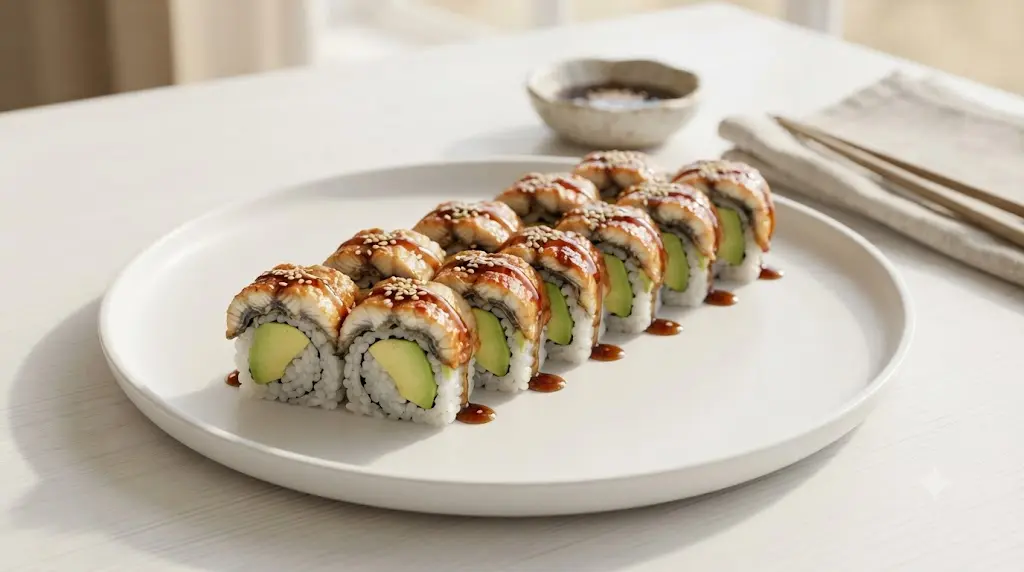
Unagi Avocado Roll
Ingredients
Equipment
Method
- Prepare the sushi rice: Cook and season the sushi rice, then let it cool until it is comfortable to handle.
- Warm the unagi: Gently heat the prepared eel according to the package directions, then cut it into long strips.
- Slice the avocado: Cut the avocado into thin, even strips that are easy to place inside the roll.
- Prepare the sushi mat: Cover the bamboo mat with plastic wrap and place half a sheet of nori on top.
- Spread the rice: Wet your hands and spread a thin, even layer of seasoned sushi rice over the nori.
- Add sesame seeds: Sprinkle the toasted sesame seeds evenly over the rice.
- Flip the nori: Carefully turn the rice-covered nori over so the rice faces the mat and the nori faces upward.
- Add the filling: Place the grilled unagi and avocado strips across the center of the nori.
- Roll the sushi: Lift the mat and roll forward with gentle, even pressure, keeping the filling together as you close the roll.
- Shape the roll: Gently press the finished roll through the mat to create a compact cylinder without crushing the avocado.
- Slice the roll: Wet a sharp knife and cut the unagi avocado roll into 8 pieces, wiping the blade between cuts.
- Finish and serve: Drizzle lightly with unagi sauce and serve immediately.
Notes
Serving Suggestion
Serve with extra unagi sauce, pickled ginger, wasabi, edamame, or miso soup for a simple sushi-style meal.Frequently Asked Questions
What does unagi mean in sushi?
Unagi means freshwater eel and usually refers to cooked grilled eel served in sushi.
What are the ingredients for an unagi roll?
A basic unagi roll uses cooked eel, sushi rice, nori, and usually an eel sauce or glaze.
Are eel avocado rolls healthy?
They can fit into a balanced diet, but calories, carbohydrates, fat, and sodium depend on the portion and amount of sauce.
What is the unhealthiest sushi roll?
There is no universal answer; fried fillings and heavy sauces generally make a roll more calorie-dense.
Is eel avocado roll cooked?
Yes, the unagi used in this type of sushi is cooked before it is rolled.
How many pieces are in an unagi avocado roll?
A standard homemade roll is commonly cut into 6 to 8 pieces, depending on how thick you slice it.
Can I use frozen unagi?
Yes. Prepared frozen unagi is convenient for homemade sushi; thaw and reheat it according to the package instructions.
Can I add cucumber to an unagi avocado roll?
Yes. Thin cucumber strips add crunch and freshness without changing the basic preparation.
What sauce goes with an unagi avocado roll?
Sweet unagi sauce is the classic finishing sauce, although soy sauce can be served separately.