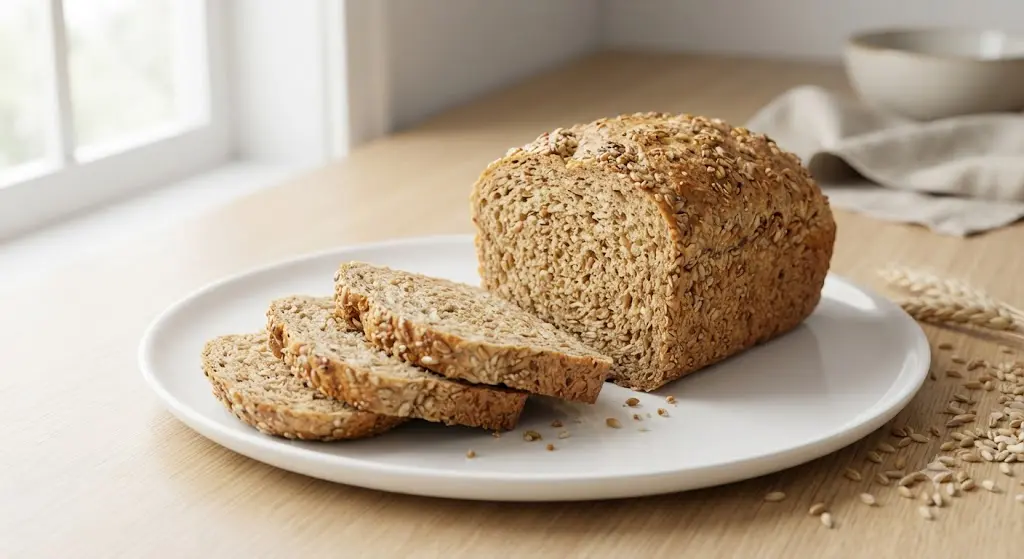
A good bible bread recipe should do more than mention Ezekiel 4:9 and mix together a few grains. It should explain why those ingredients are used, what the finished bread should feel like, and how to actually bake it in a normal home kitchen.
This Ezekiel-inspired loaf is hearty, earthy, lightly nutty, and much more substantial than a soft white sandwich bread. It uses wheat, barley, spelt, millet, lentils, and bean flour, based on the ingredient combination described in Ezekiel 4:9.
The recipe below is designed to be practical. You do not need a grain mill, unusual equipment, or days of preparation.
One important distinction comes first: this is a modern homemade interpretation of the bread described in the Bible, not a claim that it exactly reproduces an ancient loaf. Ezekiel 4:9 gives an ingredient combination, while modern Ezekiel bread recipes add their own methods and proportions.
What Is Bible Bread?
“Bible bread” is not one single standardized recipe.
Bread was a basic food in the biblical world, and different breads could be made with different grains, textures, and preparation methods. Ezekiel 4:9 is especially well known because it names several ingredients together: wheat, barley, beans, lentils, millet, and spelt.
That is why searches such as biblical bread, bible bread, and Ezekiel bread can refer to slightly different recipes.
Some versions are simple flatbreads. Others are modern sandwich loaves inspired by Ezekiel 4:9. The recipe here follows the second approach.
Why This Ezekiel Bread Recipe Is Different
Traditional wheat bread depends heavily on wheat flour for its structure.
This loaf adds smaller amounts of barley, millet, lentils, and bean flour. The result is a denser bread with a deeper grain flavor.
There is also an important modern distinction.
Many commercial Ezekiel breads use sprouted grains and legumes, while Ezekiel 4:9 itself lists ingredients rather than giving a modern sprouting procedure. Food for Life’s Ezekiel 4:9 products, for example, use sprouted grains and legumes including wheat, barley, millet, lentils, soybeans, and spelt.
So you can make an Ezekiel-inspired loaf without having to sprout everything first.
Bible Bread Recipe Ingredients
For one standard loaf, gather:
| Ingredient | Amount |
|---|---|
| Whole wheat flour | 1½ cups |
| Spelt flour | ½ cup |
| Barley flour | ½ cup |
| Millet flour | ¼ cup |
| Lentil flour | 2 tablespoons |
| White bean flour | 2 tablespoons |
| Instant yeast | 2¼ teaspoons |
| Salt | 1½ teaspoons |
| Olive oil | 1 tablespoon |
| Honey | 1 tablespoon |
| Warm water | 1 to 1¼ cups |
Why these proportions work
Wheat and spelt provide the main gluten structure. Barley and millet bring their own flavor and texture, while the smaller amount of legume flour adds to the hearty character without making the dough impossible to handle.
The water is intentionally given as a range.
Whole-grain flours can absorb liquid differently, so blindly pouring in all the water can leave you with a sticky dough that is harder to shape. Start with less and add more only when the dough needs it.
How to Make Ezekiel Bread
1. Combine the flours
Add the whole wheat flour, spelt flour, barley flour, millet flour, lentil flour, and bean flour to a large bowl.
Add the salt and instant yeast.
Whisk or stir everything together until the mixture looks evenly combined.
This is especially useful with the smaller quantities of lentil and bean flour because you do not want them sitting in one area of the loaf.
2. Add the wet ingredients
Make a small well in the center.
Pour in 1 cup of warm water, the olive oil, and honey.
Stir until a rough dough forms.
Add more water a tablespoon at a time only if the dough feels dry or leaves a lot of loose flour in the bowl.
The finished dough should feel soft, slightly tacky, and workable.
It should not feel like a wet batter.
3. Knead the dough
Move the dough onto a lightly floured surface.
Knead for about 8 to 10 minutes.
Do not worry if it does not become as silky as a white bread dough. The extra whole-grain and legume flours change the texture.
A useful kitchen cue is more important than the exact kneading time: the dough should become noticeably more cohesive and elastic instead of breaking apart immediately when stretched.
4. Let it rise
Place the dough into a lightly oiled bowl and cover it.
Let it rise in a warm, draft-free place for about 60 to 90 minutes.
You are looking for visible expansion, not a perfect stopwatch result.
In a cool kitchen, the first rise may take longer. In a warm kitchen, it may happen faster.
5. Shape the loaf
Gently press the air out of the dough.
Shape it into a compact loaf and place it into a greased 8½ × 4½-inch loaf pan.
Cover it again and let it rise for about 30 to 45 minutes.
The dough should look noticeably puffed before it goes into the oven.
6. Bake the Bible Bread
Preheat your oven to 350°F (175°C).
Bake the loaf for approximately 35 to 40 minutes.
The crust should be a rich golden brown and the loaf should feel firm when gently pressed.
If the top is becoming dark before the center is fully baked, loosely cover it with foil for the final part of baking.
Remove the loaf from the pan after baking and place it on a wire rack.
7. Let It Cool Completely
This is not the exciting part, but it matters.
Give the bread time to cool before slicing.
Whole-grain bread can look gummy in the center when cut while hot, even when it is properly baked. Cooling allows the crumb to finish setting.
For clean sandwich slices, use a serrated bread knife rather than pressing down with a straight-edged knife.
What Should Homemade Ezekiel Bread Look and Taste Like?
Do not expect a fluffy bakery-style white loaf.
A properly baked Ezekiel bread recipe should have:
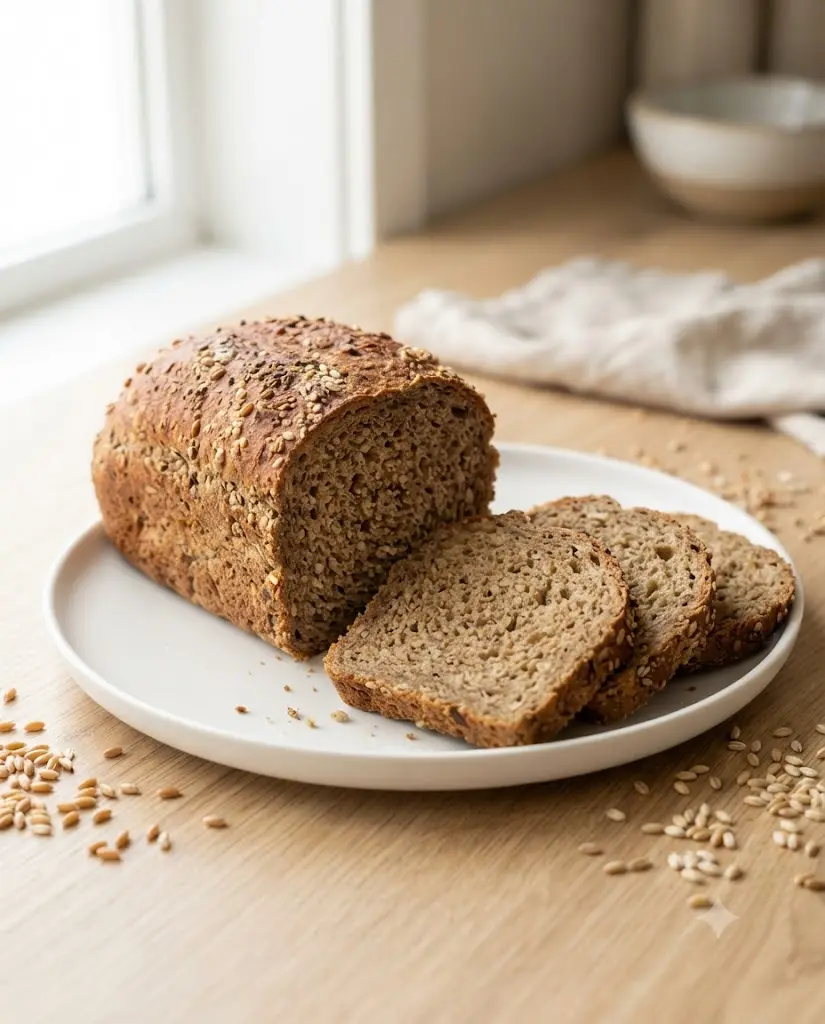
- A firm golden crust
- A dense but tender crumb
- A noticeable whole-grain aroma
- Mild earthy and nutty flavors
- Enough structure for toast and sandwiches
The loaf should feel substantial without being wet or heavy in the center.
The first slice is often a useful test. If the crumb holds together and feels moist without sticking to the knife, the texture is generally where you want it.
Do You Need to Sprout the Grains?
Not for this version.
Sprouted grains are strongly associated with modern Ezekiel bread, but the verse itself does not instruct the reader to sprout the ingredients. Modern recipes use sprouting as a preparation method, while this recipe keeps things simpler by using ready-made flours.
That is useful for home bakers who want the flavor profile without committing to soaking, sprouting, drying, and milling several ingredients.
How to Make Ezekiel Bread Without a Grain Mill
This is one of the easiest ways to make the recipe more practical.
Instead of buying whole grains and milling them yourself, use:
- Whole wheat flour
- Spelt flour
- Barley flour
- Millet flour
- Lentil flour
- Bean flour
You can find many of these in natural-food sections or online.
Fresh-milled flour can produce excellent bread, but a grain mill is not essential for making a satisfying homemade loaf.
That also makes this easy bible bread recipe much more approachable for someone baking it for the first time.
Common Problems and How to Fix Them
The bread is too dense
Check the dough before adding more flour. A very stiff dough can struggle to rise.
Also give the loaf enough time during both rises.
The dough is extremely sticky
Do not immediately dump in a large amount of flour.
Whole-grain dough can be tacky by nature. Lightly oiling your hands and working the dough for another minute or two is often easier than making the loaf overly dry.
The loaf rises very little
The yeast may be old, or the environment may simply be too cool.
Give it more time before deciding the dough has failed.
The center is gummy
The loaf may need a little more oven time, or it may have been sliced while still hot.
Let the bread cool completely before judging the crumb.
The crust becomes too dark
Lower the oven rack slightly or loosely cover the top with foil during the final portion of baking.
The bread crumbles when sliced
Cooling and slicing technique make a big difference.
Wait until completely cool and use a serrated knife with gentle sawing motions.
What Is the Best Way to Eat Bible Bread?
The best use for this bread is probably not complicated.
It works particularly well toasted.
Try it with:
- Fried or scrambled eggs
- Avocado
- Hummus
- Peanut butter and banana
- Cottage cheese and vegetables
- Turkey or chicken
- Butter with a little cinnamon
Because the loaf has a hearty flavor, simple toppings usually work better than covering it with too many ingredients.
Is Ezekiel Bread Actually Healthy?
Ezekiel bread can be a nutrient-dense choice because it is based on whole grains and legumes, and sprouted versions can provide fiber and protein.
But “healthy” does not make it suitable for everyone.
Wheat, barley, and spelt contain gluten, so an Ezekiel-style loaf is not gluten-free. Anyone with celiac disease or a medically diagnosed gluten-related condition should avoid it unless their healthcare professional says otherwise.
For everyday eating, the useful approach is to look at the actual ingredients and choose bread that fits your own dietary needs.
Bible Bread Recipe vs. Modern Ezekiel Bread
It helps to keep these two ideas separate.
| Bible-inspired bread | Modern Ezekiel bread |
|---|---|
| Based on the ingredient list in Ezekiel 4:9 | Often based on the same ingredient concept |
| Preparation is not fully specified in the verse | Recipes provide modern baking methods |
| May be interpreted in different ways | Often made with sprouted grains and legumes |
| Can be a flatbread or loaf depending on interpretation | Usually sold as a modern sliced bread |
| Exact historical recreation is difficult | Designed for modern eating and baking |
This distinction makes the recipe easier to understand and avoids presenting a modern kitchen formula as a guaranteed reconstruction of ancient food.
Can You Store Homemade Ezekiel Bread?
Yes.
Let the loaf cool completely first.
Wrap it well and keep it at room temperature for short-term use.
For longer storage, slice it before freezing. That way, you can remove only the number of slices you need rather than thawing the entire loaf.
Toasting frozen slices is also an easy option.
Why This Is a Practical Bible Bread Recipe
When people search for a traditional bible bread recipe, they often want more than historical information. They want something they can actually make.
That is the purpose of this recipe.
It keeps the recognizable Ezekiel 4:9 ingredient idea while adapting the process to an ordinary kitchen. There is no requirement for a grain mill, no complicated sprouting schedule, and no need for specialty baking equipment.
For readers who want another homemade version with a stronger from-scratch approach, you can also explore our homemade Ezekiel bread recipe.
That internal guide gives readers another way to explore the same bread concept without interrupting this recipe’s simpler workflow.
Bible Bread Recipe
Ingredients
Equipment
Method
- Mix the dry ingredients: Add the whole wheat flour, spelt flour, barley flour, millet flour, lentil flour, bean flour, yeast, and salt to a large bowl. Stir until everything is evenly combined.
- Add the wet ingredients: Pour in 1 cup of warm water, then add the olive oil and honey. Mix until a rough dough forms.
- Adjust the dough: Add the remaining water a little at a time only when needed. The dough should feel soft and slightly tacky, not wet or runny.
- Knead the dough: Transfer the dough to a lightly floured surface and knead for about 8–10 minutes. It should become more cohesive and elastic as you work it.
- Let the dough rise: Place the dough in a lightly oiled bowl, cover it, and leave it in a warm, draft-free place for about 60–90 minutes, or until visibly expanded.
- Shape the loaf: Gently press out excess air and shape the dough into a compact loaf. Place it into a greased 8½ × 4½-inch loaf pan.
- Let it rise again: Cover the pan and allow the dough to rise for about 30–45 minutes. It should look noticeably puffed before baking.
- Preheat the oven: Heat the oven to 350°F (175°C) while the shaped loaf finishes rising.
- Bake the bread: Place the loaf in the oven and bake for 35–40 minutes, until the top is deeply golden and the loaf feels firm.
- Protect the crust if needed: If the top is browning too quickly, loosely cover it with foil during the final part of baking.
- Cool completely: Remove the bread from the pan and place it on a wire rack. Let it cool completely before slicing so the crumb can finish setting.
- Slice and serve: Use a serrated knife and cut gentle slices. Toast the bread for an especially crisp crust and warm, hearty center.
Notes
Baking Notes
Keep the dough softer than you might expect: Whole-grain and legume flours absorb plenty of water, so adding too much extra flour can leave the finished loaf unnecessarily dense. Watch the dough instead of the clock: Rise time changes with room temperature. A visibly expanded dough is a better cue than blindly following the minute count. Do not rush the cooling step: The center can seem gummy when sliced hot even when the loaf is properly baked. Use a serrated knife: The loaf has a hearty crumb, so sawing gently through the crust gives cleaner slices than pressing straight down. Toast leftovers: The denser texture becomes especially pleasant when toasted, making older slices useful instead of wasteful.Recipe Tips
- Use ready-made flours: A grain mill is not necessary for this homemade version.
- Add water gradually: Different whole-grain flours can absorb slightly different amounts of liquid.
- Do not overload the dough with extra flour: A slightly tacky dough usually gives a better result than a stiff one.
- Check the center before slicing: The loaf should feel firm rather than squishy in the middle.
- Cool before storage: Wrapping warm bread can trap excess moisture.
- Freeze sliced bread: Individual slices are easier to thaw and toast when needed.
Storage
Room temperature: Keep the completely cooled loaf tightly wrapped and use within a few days. Freezer: Slice the loaf before freezing and store the slices in an airtight freezer-safe bag. To serve from frozen: Toast individual slices directly from frozen for convenience.Serving Ideas
- Eggs and avocado
- Hummus and sliced vegetables
- Peanut butter and banana
- Turkey or chicken sandwiches
- Cottage cheese with herbs
- Butter with cinnamon
Nutrition Note
Nutrition will vary depending on the exact brands and flour varieties used. This recipe uses whole grains and legume-based flours, but it is not gluten-free because it contains wheat, barley, and spelt.People Also Ask
Is Ezekiel bread actually healthy?
It can be nutrient-dense because it uses whole grains and legumes, but it still contains gluten.
What was biblical bread made of?
Biblical bread varied, but Ezekiel 4:9 specifically names wheat, barley, beans, lentils, millet, and spelt.
What kind of bread was eaten in Bible times?
Wheat and barley were important bread grains, while preparation and texture varied by place and circumstance.
What are the ingredients in Ezekiel 4:9 bread?
Ezekiel 4:9 lists wheat, barley, beans, lentils, millet, and spelt.
Final Thoughts
The most useful bible bread recipe is one that explains both the history behind the food and what actually happens in the kitchen.
Ezekiel 4:9 gives us the memorable combination of wheat, barley, beans, lentils, millet, and spelt. Modern Ezekiel bread takes inspiration from that list but uses modern baking methods, and many versions also use sprouted grains.
For anyone searching how to make Ezekiel bread, the biggest practical lessons are straightforward: keep the dough soft enough to rise, avoid adding excessive flour, watch the dough rather than relying only on the clock, and let the finished loaf cool fully before slicing.
There may not be one single best bible bread recipe for everyone.
There is simply a version that fits the ingredients, equipment, time, and texture you want.
And for a first homemade loaf, this version gives you a solid place to start.