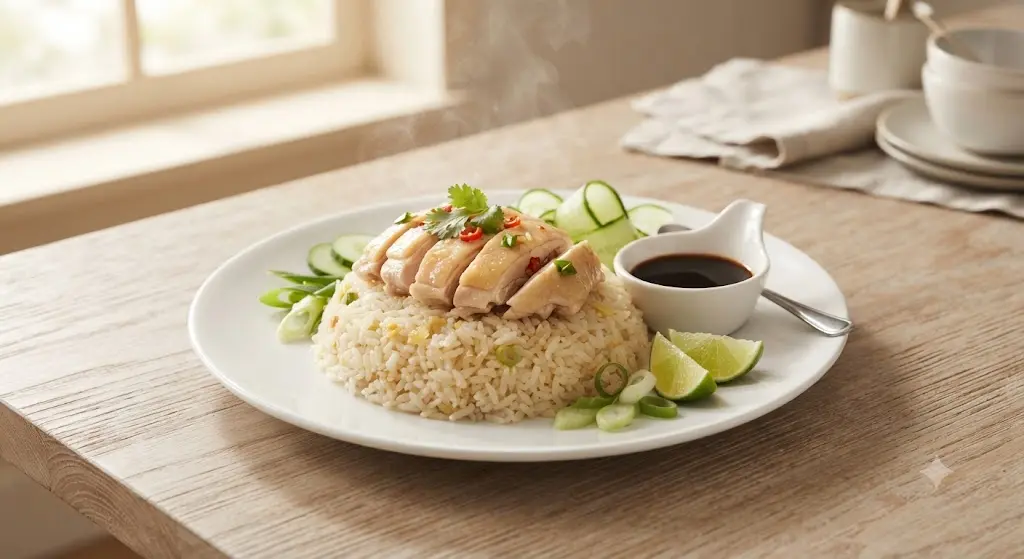
Hainanese chicken thighs are a simple way to make tender chicken and fragrant rice in one pot. The chicken is gently cooked over jasmine rice flavored with fresh ginger, garlic, and scallions, so the juices from the thighs mingle with the rice as everything cooks.
The finished dish is comforting but not complicated: juicy chicken, aromatic rice, crisp cucumber, and a savory soy-ginger sauce come together on one plate.
If you want an hainanese chicken recipe easy enough for a weeknight, this version keeps the cooking process straightforward while preserving the flavors that make Hainanese chicken rice so recognizable.
Why You’ll Like This Hainanese Chicken Thighs Recipe
There are a few reasons this version works particularly well for home cooking.
Chicken thighs are forgiving. Their higher fat content helps them remain juicy during gentle cooking, making them easier to work with than very lean chicken breast.
The rice cooks with the chicken. Instead of preparing plain rice separately, jasmine rice cooks underneath the chicken and picks up flavor from the aromatics and chicken juices.
The aromatics do double duty. Ginger, garlic, and scallions flavor the rice and can also be turned into a quick sauce for serving.
The cooking is mostly hands-off. Once the pot reaches a gentle simmer, you cover it, lower the heat, and let the rice and chicken finish together.
The sauce brightens the plate. Soy sauce brings savory depth, while lime juice cuts through the richness of the chicken and rice.
What Is Hainanese Chicken Rice?
Hainanese chicken rice is a Chinese-origin dish strongly associated with Southeast Asian food culture, particularly Singapore and Malaysia. Traditional preparations generally involve gently poached chicken, rice cooked with chicken stock and chicken fat, aromatic sauces, and fresh vegetables.
This recipe is a home-friendly adaptation, not a claim to reproduce every step of a traditional whole-chicken preparation.
Using chicken thighs makes the dish much more approachable because you can cook a smaller quantity of chicken directly over the rice.
That shortcut also explains why this recipe works well for a regular weeknight dinner.
Why Chicken Thighs Are Ideal
Chicken thighs are especially useful for this recipe because they have more fat and connective tissue than chicken breast.
That extra richness gives the meat a succulent texture and contributes flavor to the rice as it cooks.
You can use either bone-in or boneless thighs.
Bone-in thighs tend to bring more flavor but require additional cooking time. Boneless thighs are quicker and easier to slice after cooking.
Skin-on thighs are also useful if you want a richer result. Skinless thighs work perfectly well when you prefer a lighter dish.
For food safety, cook the chicken until the thickest part reaches 165°F (74°C).
Ingredients
For the Chicken
- 4 chicken thighs
- 1 teaspoon kosher salt
- ¼ teaspoon white pepper
- 1 teaspoon toasted sesame oil
For the Fragrant Rice
- 1½ cups jasmine rice
- 2 tablespoons neutral cooking oil
- 4 scallions, finely chopped
- 1 tablespoon fresh ginger, minced
- 1 tablespoon garlic, minced
- ¼ teaspoon salt
- 2 cups chicken stock or water
For the Ginger-Scallion Soy Sauce
- 2 tablespoons light soy sauce
- 1 tablespoon fresh lime juice
- 1 teaspoon toasted sesame oil
- 1 tablespoon of the cooked ginger-garlic-scallion mixture
- 1 teaspoon finely grated fresh ginger
- Fresh chili, optional
For Serving
- Cucumber, thinly sliced
- Extra scallions
- Lime wedges
- Chili sauce, optional
What Kind of Rice Should You Use?
Jasmine rice is the best choice for this particular version.
Its long grains become fragrant and tender without turning as soft as many short-grain varieties.
Rinse the rice before cooking and drain it thoroughly. Removing excess surface starch helps you get more distinct grains after cooking.
If you only have regular long-grain white rice, it can still work, but you may need to adjust the liquid slightly according to the rice you are using.
How to Make Hainanese Chicken Thighs
Season the Chicken
Pat the chicken thighs dry with paper towels.
Season both sides with salt and white pepper, then rub lightly with sesame oil.
Let the chicken rest for about 10 minutes while you prepare the rice.
This short seasoning time is enough to give the surface a good base of flavor without requiring an overnight marinade.
Rinse the Rice
Place the jasmine rice in a fine-mesh strainer or bowl.
Rinse it under cool water several times until the water becomes noticeably clearer.
Drain thoroughly.
Excess water clinging to the rice can change the final liquid balance, so give it a few minutes to drain before adding it to the pot.
Cook the Aromatics
Heat the neutral oil in a heavy-bottomed pot over medium heat.
Add the scallions, ginger, and garlic.
Cook gently until fragrant, about 1 minute.
Do not let the garlic become dark brown. Burnt garlic can make the entire pot taste bitter.
Remove about one-third of the aromatic mixture and place it in a small bowl.
You will use it later for the finishing sauce.
Toast the Rice
Add the drained jasmine rice to the remaining aromatics.
Stir for about 30 seconds, making sure the grains become coated with the fragrant oil.
You are not trying to brown the rice heavily. The goal is simply to distribute the aromatics and oil before the liquid is added.
Add the Cooking Liquid
Pour in the chicken stock or water and add the salt.
Gently scrape the bottom of the pot to loosen any rice or aromatics that may have stuck.
Bring the liquid to a very gentle simmer.
You do not want a rapid boil.
Add the Chicken
Place the seasoned chicken thighs directly over the rice.
Keep the pieces in a single layer and avoid overlapping them.
Once the liquid begins to bubble gently, cover the pot with a tight-fitting lid.
Reduce the heat to the lowest setting.
Cook Slowly
Cook covered for about 20–25 minutes, depending on the size and whether your thighs are bone-in or boneless.
Avoid opening the lid repeatedly.
The trapped steam is important because it helps cook both the rice and the chicken evenly.
For larger or bone-in thighs, check the chicken temperature before serving and allow additional cooking time if necessary.
Rest Before Opening
Turn off the heat once the rice is tender and the chicken has reached a safe internal temperature.
Keep the lid closed for another 10 minutes.
This is not just a waiting period.
The residual heat allows the rice to finish absorbing moisture and gives the chicken juices time to redistribute.
Skipping this step can leave the rice less evenly cooked.
Make the Sauce
Take the reserved aromatics and mix them with soy sauce, lime juice, sesame oil, and fresh ginger.
Add finely chopped chili if you like heat.
Taste the sauce before adding more salt.
The soy sauce already provides plenty of seasoning, while the lime gives it a fresh contrast.
Slice the Chicken
Transfer the cooked thighs to a cutting board.
Let them rest for a couple of minutes, then slice them into strips or bite-sized pieces.
For bone-in thighs, remove the bones before slicing.
Keep any juices that collect on the cutting board and spoon them over the chicken or rice.
Fluff and Serve
Gently fluff the rice with a fork or rice paddle.
Spoon the fragrant rice onto serving plates and arrange the chicken alongside or on top.
Add cucumber slices, scallions, lime wedges, and the ginger-soy sauce.
Serve immediately while the rice is warm.
The Most Important Cooking Trick
The most important detail in this recipe is low heat after the initial simmer.
If the burner remains too high, the bottom of the rice can scorch before the chicken finishes cooking.
Once the liquid begins to bubble gently, cover the pot and reduce the burner as low as it can comfortably go.
If your electric burner stays hot after you lower the setting, moving the pot to a cooler burner can help prevent the bottom from burning.
How to Tell When the Rice Is Done
The rice should look fluffy rather than watery.
When you gently move a small section aside, there should not be a pool of liquid underneath.
Taste one grain.
It should be tender throughout without being mushy.
If the rice is still firm but the pot is dry, add a small splash of hot stock or water, cover, and cook for a few more minutes.
What If the Rice Is Too Wet?
First, check that the chicken itself is already cooked.
If it is, carefully remove the chicken and return the uncovered pot to very low heat.
Allow excess moisture to evaporate for several minutes.
Avoid vigorous stirring because it can break the rice grains and make them sticky.
Once the texture improves, turn off the heat and let the rice rest briefly.
What If the Rice Is Too Dry?
If the rice is firm and the pot has no remaining liquid, add a small amount of hot chicken stock or water.
Cover immediately and continue cooking over low heat.
Add liquid gradually rather than pouring in a large amount.
Different rice brands absorb liquid differently, so small adjustments are sometimes necessary.
Can You Make an Easy Hainan Chicken Rice Recipe in a Rice Cooker?
Yes.
A rice cooker is one of the easiest ways to simplify this dish.
For better flavor, cook the ginger, garlic, scallions, and rice in a skillet first. Then transfer the aromatic rice to the rice cooker.
Add the chicken thighs on top and use the rice cooker’s normal cooking cycle.
Keep in mind that chicken releases additional moisture while cooking. Filling the cooker to the usual rice-water line without considering the chicken can leave the finished rice too soft.
Current rice-cooker recipes also use chicken thighs directly over jasmine rice and emphasize controlling the liquid because the chicken contributes additional moisture.
Hainanese Chicken Rice Cooker Method
For a simple rice cooker approach:
Prepare the chicken: Season the thighs with salt and white pepper.
Build the aromatics: Sauté ginger, garlic, and scallions in a separate pan.
Toast the rice: Add rinsed jasmine rice and stir briefly.
Transfer: Move the aromatic rice into the rice cooker.
Add chicken: Arrange the thighs in one layer over the rice.
Cook: Run the normal rice-cooking cycle.
Rest: Keep the cooker closed for about 10 minutes after the cycle finishes.
Check: Confirm the chicken has reached 165°F internally.
This method is particularly useful when you want a mostly hands-off hainanese chicken recipe easy enough for busy evenings. Rice-cooker versions using thighs and jasmine rice are also used by other established recipe sources.
Hainanese Chicken Thighs Marinade
You do not need a complicated marinade for this recipe.
A simple mixture of salt, white pepper, and a little sesame oil is enough to season the chicken before cooking.
The important flavors come later from the ginger, garlic, scallions, aromatic rice, and sauce.
If you want deeper seasoning, you can season the chicken several hours ahead and keep it refrigerated until cooking time.
Do not leave raw chicken at room temperature while it marinates.
Hainanese Chicken Breast vs. Chicken Thighs
Chicken breast can absolutely be used, but the cooking approach needs more attention.
Breast meat contains less fat than thighs and can become dry when overcooked.
If you substitute chicken breast, choose pieces of similar thickness and check their internal temperature earlier.
Chicken thighs: juicier, richer, more forgiving.
Chicken breast: leaner, lighter, but easier to overcook.
For a one-pot recipe where the chicken cooks alongside rice, thighs are generally the easier choice.
Can You Use Bone-In Chicken Thighs?
Yes.
Bone-in thighs work particularly well when you want a richer chicken flavor.
The only important change is cooking time.
Large bone-in pieces may need longer than boneless thighs, so do not rely on the recipe timer alone.
Check the thickest part of the meat with a thermometer without touching the bone.
How to Get More Flavor From the Rice
The rice is not just a side dish in Hainanese chicken rice.
It is one of the main components.
For better flavor:
- Rinse the rice before cooking.
- Drain it well.
- Sauté the ginger, garlic, and scallions first.
- Coat the rice in the aromatic oil.
- Use chicken stock when you want a deeper savory flavor.
- Let the rice rest after cooking.
- Fluff gently instead of stirring aggressively.
The combination of aromatic oil, cooking liquid, and chicken juices is what gives the rice its characteristic savory depth.
What to Serve With Hainanese Chicken
The simplest plate needs only a few fresh additions.
Cucumber provides crunch and freshness.
Scallions add a clean onion flavor.
Lime gives acidity.
Chili sauce adds heat.
You can also serve a light chicken broth or blanched greens alongside the chicken and rice.
The goal is balance: rich chicken and rice paired with something fresh, acidic, or spicy.
Hainanese Chicken Near Me: What Does It Usually Come With?
If you search hainanese chicken near me, you may see several versions of the dish.
A typical restaurant plate can include tender chicken, fragrant rice, cucumber, chili sauce, ginger-scallion sauce, and a seasoned soy-based sauce.
The exact presentation varies from restaurant to restaurant because Hainanese chicken rice has developed regional variations across Southeast Asia.
If you are looking specifically for the classic style, check whether the menu describes the dish as Hainanese chicken rice or Singapore-style chicken rice.
Is Hainanese Chicken the Same as Chinese Chicken Rice?
The terms can overlap, but they do not always mean exactly the same thing.
Hainanese chicken rice refers to a particular chicken-and-rice preparation with roots connected to Hainanese Chinese cuisine and strong development in Southeast Asia.
Chinese chicken rice is a broader search phrase that can describe many different Chinese-style chicken-and-rice dishes.
For this recipe, the defining combination is tender chicken, aromatic rice, ginger, garlic, scallions, and accompanying sauces.
How to Store Leftovers
Let the cooked food cool appropriately and refrigerate leftovers in airtight containers.
Store the chicken and rice together or separately depending on how you plan to reheat them.
For the best texture, reheat the rice with a small splash of water.
Make sure the chicken and rice are heated thoroughly before eating.
Keep fresh cucumber and sauce separate so they retain their texture and flavor.
Can You Freeze Hainanese Chicken Rice?
Yes, the cooked chicken and rice can be frozen.
Allow them to cool appropriately before transferring them to freezer-safe containers.
Portioning the rice and chicken into individual servings makes reheating easier.
The cucumber should not be frozen because it loses its crisp texture.
The fresh sauce is also better prepared separately.
Common Mistakes to Avoid
Using too much water
Chicken releases moisture as it cooks, so adding excessive liquid can make the rice soft.
Boiling too aggressively
High heat can scorch the rice before the chicken finishes.
Opening the lid repeatedly
Every time the lid comes off, steam escapes and the cooking environment changes.
Skipping the rice rinse
Excess surface starch can make the finished rice stickier than intended.
Cutting the chicken immediately
A short rest helps retain more of the chicken’s juices.
Guessing chicken doneness
Cooking time varies with thigh size and whether the pieces are bone-in or boneless. Use an instant-read thermometer when possible.
Hainanese Chicken Thighs
Ingredients
Equipment
Method
- Season the chicken: Pat the chicken thighs dry, then season both sides with salt, white pepper, and sesame oil. Let them rest for about 10 minutes.
- Rinse the rice: Rinse the jasmine rice several times until the water becomes clearer. Drain it thoroughly.
- Cook the aromatics: Heat the neutral oil in a heavy-bottomed pot over medium heat. Add the scallions, ginger, and garlic and cook until fragrant without browning the garlic.
- Reserve some aromatics: Transfer about one-third of the cooked ginger, garlic, and scallion mixture to a small bowl for the sauce.
- Toast the rice: Add the drained jasmine rice to the pot and stir for about 30 seconds, coating the grains with the aromatic oil.
- Add the liquid: Pour in the chicken stock or water and add the salt. Bring the liquid to a gentle simmer.
- Add the Hainanese chicken thighs: Arrange the seasoned chicken thighs over the rice in a single layer without overlapping them.
- Cook gently: Cover the pot tightly, reduce the heat to low, and cook for about 20–25 minutes. Avoid repeatedly lifting the lid.
- Check the chicken: Make sure the thickest part of the chicken reaches 165°F (74°C) before serving.
- Rest the rice and chicken: Turn off the heat and keep the pot covered for 10 minutes so the rice can finish steaming and the chicken can rest.
- Make the sauce: Combine the reserved aromatics with soy sauce, lime juice, sesame oil, fresh ginger, and optional chili.
- Slice the chicken: Transfer the cooked chicken to a cutting board, rest briefly, then slice into strips or bite-sized pieces.
- Fluff the rice: Gently fluff the fragrant rice with a fork or rice paddle.
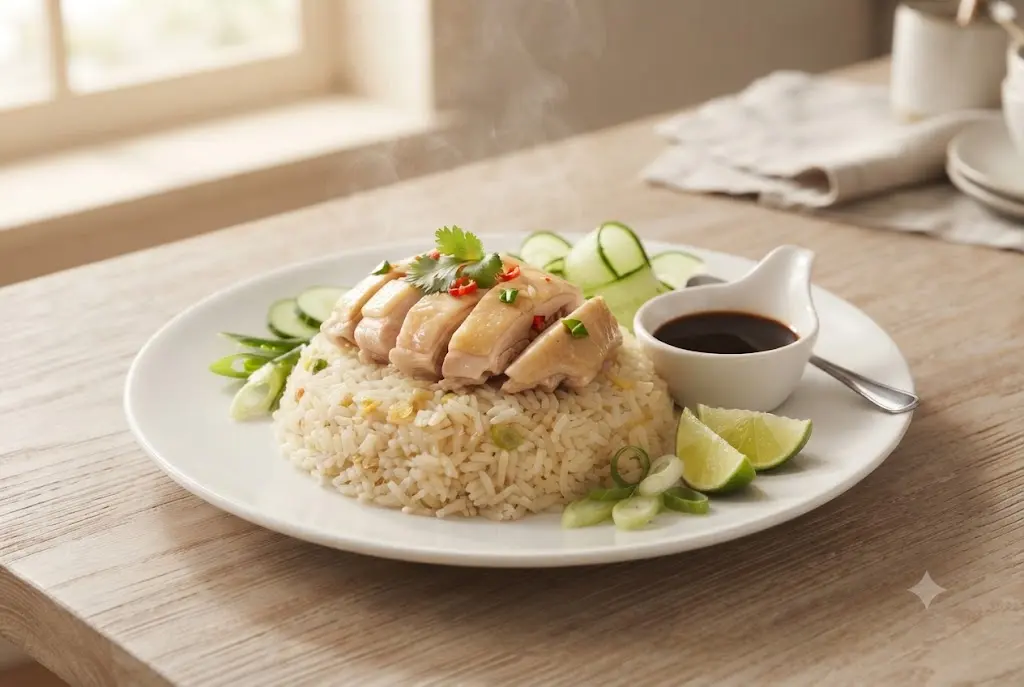
- Serve: Plate the rice with sliced Hainanese chicken thighs, cucumber, scallions, lime wedges, and the soy-ginger sauce.
Notes
Recipe Notes
- Use jasmine rice: It gives the most fragrant and fluffy result.
- Keep the heat low: Gentle cooking prevents the rice from scorching.
- Keep the lid closed: The trapped steam helps cook the rice evenly.
- Bone-in thighs: Allow additional cooking time if using bone-in chicken.
- Chicken safety: Always confirm that the thickest part reaches 165°F (74°C).
- Skinless thighs: Work well if you prefer a lighter version.
- Sauce: Add chili according to your preferred level of heat.
Storage
Store leftover Hainanese chicken thighs and rice in an airtight container in the refrigerator. Reheat the rice with a small splash of water and heat the chicken thoroughly before serving.Frequently Asked Questions
Can I use chicken thighs for Hainanese chicken?
Yes. Chicken thighs are juicy, flavorful, and well suited to gentle one-pot cooking.
What part of chicken is used for Hainanese chicken?
Traditional versions commonly use a whole chicken, while home recipes often use thighs or other chicken pieces.
Is Hainanese chicken healthy for weight loss?
It can fit a balanced diet, but portion size, rice, sauces, and total daily calorie intake matter.
Can Hainanese chicken be cooked with chicken breasts?
Yes. Use chicken breasts carefully because they can dry out faster than thighs.
What rice is best for Hainanese chicken?
Jasmine rice is an excellent choice because it cooks into fragrant, relatively fluffy grains.
Can I make Hainanese chicken in a rice cooker?
Yes. Chicken thighs can cook directly over seasoned rice during a normal rice-cooker cycle.
What is a good Hainanese chicken thighs marinade?
Salt, white pepper, and a little sesame oil provide a simple seasoning base without overpowering the dish.
Can I use skinless chicken thighs?
Yes. Skinless thighs work well, although the rice will have slightly less richness.
Can I use bone-in thighs?
Yes, but allow additional cooking time and check the chicken’s internal temperature.
Is Hainanese chicken spicy?
The chicken and rice themselves are usually mild; chili sauce can be added separately for heat.
People Also Search For
Hainanese chicken thighs recipe
This recipe uses chicken thighs instead of a whole chicken, making it practical for a smaller home meal.
Hainanese chicken recipe
The core method combines gently cooked chicken, aromatic rice, ginger, garlic, scallions, and a savory sauce.
Hainanese chicken thighs marinade
A simple salt, white pepper, and sesame oil seasoning is enough for these thighs.
Hainanese chicken rice recipe
The rice is cooked with aromatics and chicken so it becomes part of the main dish rather than a plain side.
Hainanese chicken breast
Chicken breast can replace thighs, but it needs closer temperature monitoring to avoid drying out.
Hainanese chicken recipe easy
This one-pot approach removes the need to poach and carve a whole chicken.
Hainanese chicken rice cooker
The chicken and seasoned rice can be prepared in a rice cooker for a mostly hands-off version.
Hainanese chicken recipe Panlasang Pinoy
Recipes described as Panlasang Pinoy may adapt Hainanese chicken rice to Filipino home-cooking preferences; the seasonings and preparation can therefore differ from this version.