When you want something warm, filling, and easy to eat without sitting down with a knife and fork, these Alabama Hot Pockets are worth making at home.
The idea is pretty simple: soft homemade dough, a seasoned meat filling, plenty of cheese, and a golden baked outside.
You can make them for dinner, pack them for lunch, or prepare a batch and save a few for later.
This Alabama Hot Pockets recipe easy version keeps the process straightforward. The filling is cooked before it goes into the dough, so you only need to concentrate on getting the pockets sealed properly and baked until golden.
Alabama Hot Pockets Ingredients
For the dough
- 3 cups all-purpose flour
- 1 teaspoon salt
- 1 tablespoon sugar
- 2 teaspoons instant yeast
- 1 cup warm water
- 2 tablespoons olive oil
For the filling
- 1 pound ground beef
- 1 small onion, finely chopped
- 2 garlic cloves, minced
- 1 cup shredded cheddar cheese
- ½ teaspoon paprika
- ½ teaspoon black pepper
- ½ teaspoon salt, or to taste
- 1 tablespoon ketchup or tomato sauce
- 1 tablespoon cooking oil
For the top
- 1 egg, beaten
The ingredient list is intentionally simple. You can add chopped bell pepper, jalapeño, mushrooms, or another vegetable if you have some that need using.
How to Make Alabama Hot Pockets
1. Make the dough
Add flour, salt, sugar, and yeast to a large mixing bowl.
Pour in the warm water and olive oil. Stir until the mixture starts forming a dough.
Turn it onto a lightly floured surface and knead for about 5–7 minutes.
You are looking for a dough that feels soft and elastic rather than wet and sticky.
If it sticks badly to your hands, add a little flour. Go slowly. Adding too much flour is one of the easiest ways to end up with tough pockets.
Place the dough back in the bowl, cover it, and leave it somewhere warm for about an hour.
It does not need to become enormous. You mainly want it to look noticeably puffier.
2. Cook the beef filling
While the dough is resting, make the filling.
Heat the oil in a skillet over medium heat.
Add the onion and cook until it starts to soften. Add the ground beef and break it into small pieces as it cooks.
Once the beef is browned, add the garlic, paprika, black pepper, salt, and ketchup or tomato sauce.
Cook for another minute or two.
The filling should not be swimming in liquid. If it looks wet, keep cooking for another minute until the excess moisture has cooked away.
Turn off the heat and let the mixture cool for a few minutes.
This is an easy step to overlook, but it makes assembling the pockets much easier.
3. Add the cheese
Stir the shredded cheddar into the slightly cooled beef mixture.
You can use mozzarella instead if you prefer a stretchier filling, or combine cheddar and mozzarella.
Do not worry about making the filling perfectly smooth.
A few little pieces of onion and browned beef are exactly what you want.
4. Divide and roll the dough
Once the dough has rested, place it on a lightly floured surface.
Divide it into 6–8 pieces.
Roll each piece into a circle or oval about the size of a small plate.
Try not to roll the center extremely thin.
You need enough dough around the filling to fold it over without tearing.
5. Fill the pockets
Place a few spoonfuls of the beef and cheese mixture in the center.
Do not be tempted to pile the filling all the way to the edges.
Leave about an inch of space around it.
Fold the dough over the filling and press the edges together with your fingers.
Then use a fork to crimp the edge.
If the dough refuses to stick, lightly wet the edge with a little water and press again.
6. Get them ready for the oven
Place the pockets on a parchment-lined baking sheet.
Beat one egg and brush a thin layer over the top of each pocket.
The egg wash is what gives the outside that deeper golden finish.
Make a small slit or two in the top of each pocket.
This gives steam somewhere to escape while they bake.
7. Bake until golden
Bake at 375°F (190°C) for about 20–25 minutes.
Start checking them toward the end rather than relying on the exact minute.
You are looking for a golden surface and fully cooked dough.
Let them sit for a few minutes after coming out of the oven.
The filling will be extremely hot inside.
What Makes This Alabama Hot Pockets Recipe Work?
The recipe is not difficult, but a few small details make a big difference.
Cook the filling first. Raw meat inside the dough makes the cooking time harder to judge.
Keep the filling fairly dry. Too much liquid can make the inside soggy and cause the seams to open.
Do not overfill. A pocket that looks generously stuffed before baking can become impossible to seal.
Seal the edges properly. A fork-crimped edge gives the dough a little extra security.
Do not rush the oven. Put the pockets into a properly preheated oven so the dough starts cooking immediately.
What Are American Hot Pockets?
If you have heard the term Hot Pockets, it usually refers to commercially produced stuffed sandwiches sold frozen and reheated before eating.
Homemade Hot Pockets are different.
You can make the dough yourself, choose the filling, control the amount of cheese, and season everything to your preference.
So while the basic idea is similar—a filled handheld meal—the homemade version gives you much more flexibility.
How to Make Homemade Hot Pockets From Scratch
Making homemade Hot Pockets from scratch really comes down to three parts:
Dough: It needs to be soft enough to roll but strong enough to hold the filling.
Filling: It should be cooked and reasonably dry before going into the dough.
Sealing: You need enough empty dough around the filling to close the pocket properly.
If those three parts are right, the rest is fairly forgiving.
You can also save time by using ready-made pizza dough. It will not have exactly the same texture as the homemade dough in this recipe, but it is a perfectly practical shortcut for a busy evening.
What Kind of Dough Do They Use for Hot Pockets?
There is no single dough you have to use for homemade Hot Pockets.
A simple yeast dough works well when you want a soft, bread-like outside.
Pizza dough is an easy shortcut and gives the pockets a pleasantly chewy texture.
If you want something lighter and flaky, puff pastry is another option.
| Dough | Texture | Time |
|---|---|---|
| Homemade yeast dough | Soft and chewy | More preparation |
| Pizza dough | Chewy | Faster |
| Puff pastry | Light and flaky | Very convenient |
| Refrigerated dough | Soft and simple | Quickest |
For this Alabama Hot Pockets recipe, I prefer the basic yeast dough because it holds the filling well without becoming too heavy.
How to Make the Best Hot Pockets
The best Hot Pockets are not about stuffing as much food as possible into one piece of dough.
In fact, overfilling is one of the easiest ways to ruin them.
Keep the filling away from the edge
You need a clean area of dough for sealing.
Let the filling cool slightly
You do not want piping-hot filling sitting on freshly rolled dough.
Do not make the dough paper-thin
Thin dough can tear when you fold it.
Watch the last few minutes
Once the tops become golden, start checking them.
A few extra minutes can make the outside much darker than you intended.
Rest before eating
Give them several minutes after baking.
Apart from protecting your mouth from the hot filling, this also gives the cheese and juices a chance to settle.
Easy Ways to Change the Filling
Once you are comfortable with the basic recipe, there is no reason to make the same filling every time.
Chicken and cheese
Use cooked shredded chicken with mozzarella or cheddar.
Pepperoni and mozzarella
Add pizza sauce, pepperoni, and mozzarella for a pizza-style pocket.
If you enjoy a little heat on pizza, you can also experiment with Calabrian Chili on Pizza. A small amount of Calabrian chili can bring a fruity, spicy kick to a cheesy filling, so start conservatively rather than adding a large spoonful.
Ham and cheese
Diced ham with cheddar or Swiss cheese makes an easy lunch option.
Taco-style beef
Use the same ground beef base with taco seasoning, cheese, and finely chopped peppers.
Vegetable and cheese
Mushrooms, spinach, peppers, onions, and cheese make a good meat-free filling.
The same rule applies to all of them: do not make the filling too wet.
How to Stop Hot Pockets From Bursting
If your pockets regularly open in the oven, look at the filling first.
You may simply be putting too much inside.
Another common problem is moisture. A watery filling creates steam and pressure inside the pocket while it bakes.
Make sure cooked meat and vegetables have released excess moisture before filling the dough.
Also check the seal.
Press the edges firmly with your fingers before using a fork to crimp them.
If you notice a small tear after filling, patch it with a little piece of dough before baking.
How to Tell When They Are Done
The outside should be golden brown rather than pale.
The dough should look fully baked rather than soft and doughy around the seams.
If you are unsure, carefully open one pocket after allowing it to cool slightly and check the center.
The meat filling should be fully cooked and hot.
Because pocket size and filling amounts can vary, use the cooking time as a guide rather than treating it as an exact rule.
Can You Make Alabama Hot Pockets Ahead?
Yes.
You can prepare the dough and filling ahead of time and assemble the pockets later.
You can also bake a batch, cool them completely, and refrigerate the leftovers in a covered container.
For longer storage, freezing is useful.
Wrap individual pockets well before freezing so they do not dry out.
When reheating, an oven or air fryer generally gives the outside a better texture than a microwave.
If using a microwave, the filling may become hot before the outside regains any crispness, so check carefully before eating.
What to Serve With Alabama Hot Pockets
These are filling on their own, so a lighter side usually works well.
Try:
- Green salad
- Coleslaw
- Roasted vegetables
- Tomato and cucumber salad
- Simple soup
- Fresh fruit
You can also serve a dipping sauce on the side.
Marinara works especially well with pizza-style fillings, while ranch, barbecue sauce, or a spicy tomato dip can work with beef or chicken versions.
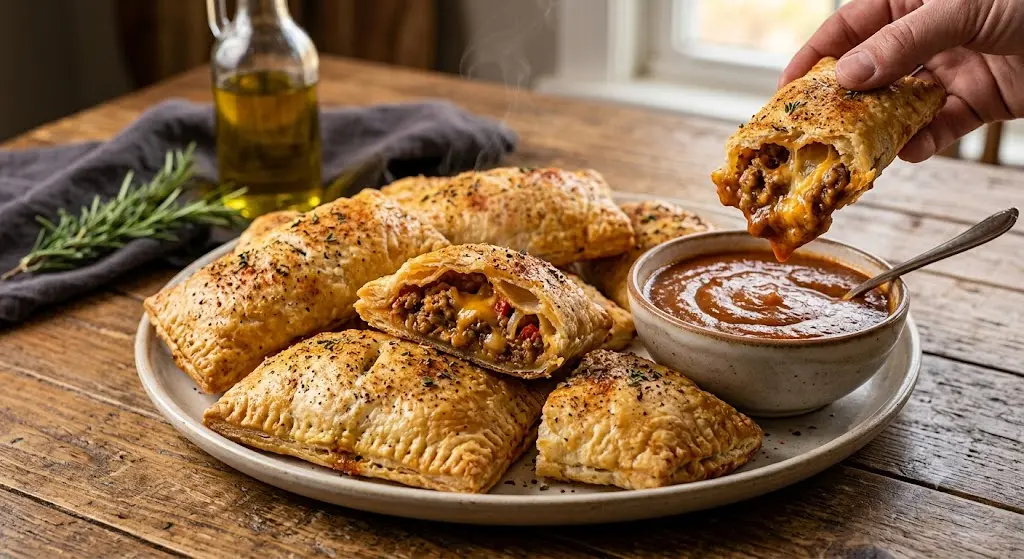
Alabama Hot Pockets Recipe
Ingredients
Equipment
Method
- Make the dough: Combine flour, salt, sugar, and yeast in a large bowl. Add warm water and olive oil. Mix until a dough forms, then knead for 5–7 minutes until soft and elastic.
- Let the dough rise: Place the dough in a lightly oiled bowl, cover, and let it rest in a warm spot for about 1 hour, or until noticeably puffy.
- Cook the beef: Heat oil in a skillet over medium heat. Add onion and cook until softened. Add ground beef and break it apart as it cooks.
- Season the filling: Once the beef is browned, add garlic, paprika, black pepper, salt, and ketchup. Cook for another 1–2 minutes. If the mixture looks watery, continue cooking until most of the excess moisture is gone.
- Add cheese: Remove the skillet from the heat and let the beef mixture cool slightly. Stir in the shredded cheddar cheese.
- Divide the dough: Place the dough on a lightly floured surface and divide it into 6–8 equal pieces.
- Roll the dough: Roll each piece into a small circle or oval. Keep the dough thick enough that it will not tear when filled.
- Fill the pockets: Add a few spoonfuls of the beef and cheese mixture to the center of each piece. Leave space around the edges.
- Seal: Fold the dough over the filling and press the edges firmly together. Crimp the edges with a fork to help keep the filling inside.
- Prepare for baking: Place the pockets on a parchment-lined baking sheet. Brush the tops with beaten egg. Make a small slit on top of each pocket to let steam escape.
- Bake: Bake at 375°F (190°C) for 20–25 minutes, or until the pockets are golden brown and the dough is fully baked.
- Rest and serve: Let the Alabama Hot Pockets rest for a few minutes before serving because the filling will be very hot.
Notes
- Avoid overfilling the dough or the pockets may open while baking.
- Let the cooked filling cool slightly before assembling.
- If the filling is watery, cook it a little longer before adding it to the dough.
- Pizza dough can be used as a shortcut instead of homemade dough.
- Cheddar can be replaced with mozzarella or a cheddar-mozzarella combination.
- For a spicy version, add a small amount of chopped jalapeño or Calabrian chili to the filling.
Frequently Asked Questions
What are American Hot Pockets?
Hot Pockets generally refers to packaged stuffed sandwiches designed to be heated before eating. Homemade versions use the same basic idea of putting a savory filling inside dough, but you can make the dough and filling yourself.
How to make homemade Hot Pockets from scratch?
Prepare a soft dough, cook your filling separately, combine the filling with cheese, roll the dough into individual portions, seal each pocket, brush with egg, and bake until golden.
The biggest things to watch are moisture and overfilling.
What kind of dough do they use for Hot Pockets?
For homemade versions, yeast dough and pizza dough are practical choices. Yeast dough gives a soft, bread-like texture, while pizza dough is convenient and slightly chewier.
Puff pastry works if you want a flaky pocket instead.
How to make the best Hot Pockets?
Use a dough that is soft but not overly sticky, keep the filling fairly dry, avoid overfilling, seal the edges firmly, and bake in a fully preheated oven.
Most importantly, do not rush the filling or try to make the pockets larger than the dough can comfortably hold.
Can I use store-bought pizza dough?
Yes. It is one of the easiest shortcuts.
Let it soften enough to roll without fighting back, then divide and fill it just as you would homemade dough.
Can I freeze homemade Hot Pockets?
Yes. Let baked pockets cool completely, wrap them individually, and freeze them in a suitable airtight container or freezer bag.
Reheat until hot throughout.
Final Thoughts
This Alabama Hot Pockets recipe easy is the kind of recipe that gets better once you make it a couple of times.
The first batch teaches you how much filling your dough can actually hold. The next batch is usually easier to seal, and you start noticing exactly when the beef has cooked down enough and when the tops are ready to come out of the oven.
That is the nice thing about homemade Hot Pockets.
You have a simple base, but plenty of room to make them your own.
Keep the dough soft, keep the filling flavorful but not watery, seal the edges well, and let the oven do the rest.
Once you have the basic method down, you can move from beef and cheddar to chicken, pizza-style fillings, vegetables, or whatever combination makes sense in your kitchen.