Ingredients
Equipment
Method
- Prepare the pork: Pat the pork tenderloin dry and remove the silver skin. Cut each tenderloin into 3–4 large pieces so they are easier to sear and shred later.
- Season the pork: Combine the kosher salt, smoked paprika, garlic powder, onion powder, and black pepper. Rub the seasoning evenly over every piece of pork.
- Sear the pork: Set the Instant Pot to Sauté mode and add the olive oil. Brown the pork on all sides, working in batches if necessary. Transfer the seared pork to a plate.
- Deglaze the pot: Pour the chicken broth and apple cider vinegar into the Instant Pot. Scrape the browned bits from the bottom with a wooden spoon so nothing is stuck before pressure cooking.
- Pressure cook: Return the pork to the pot. Close and lock the lid, set the valve to sealing, and cook on High Pressure for 40 minutes.
- Release the pressure: Allow a 10-minute natural pressure release, then carefully release any remaining pressure before opening the lid.
- Test the texture: Transfer a piece of pork to a bowl and pull it apart with two forks. The pork should separate easily into tender strands. If it is still firm, return it to the cooking liquid and pressure cook for another 5–10 minutes.
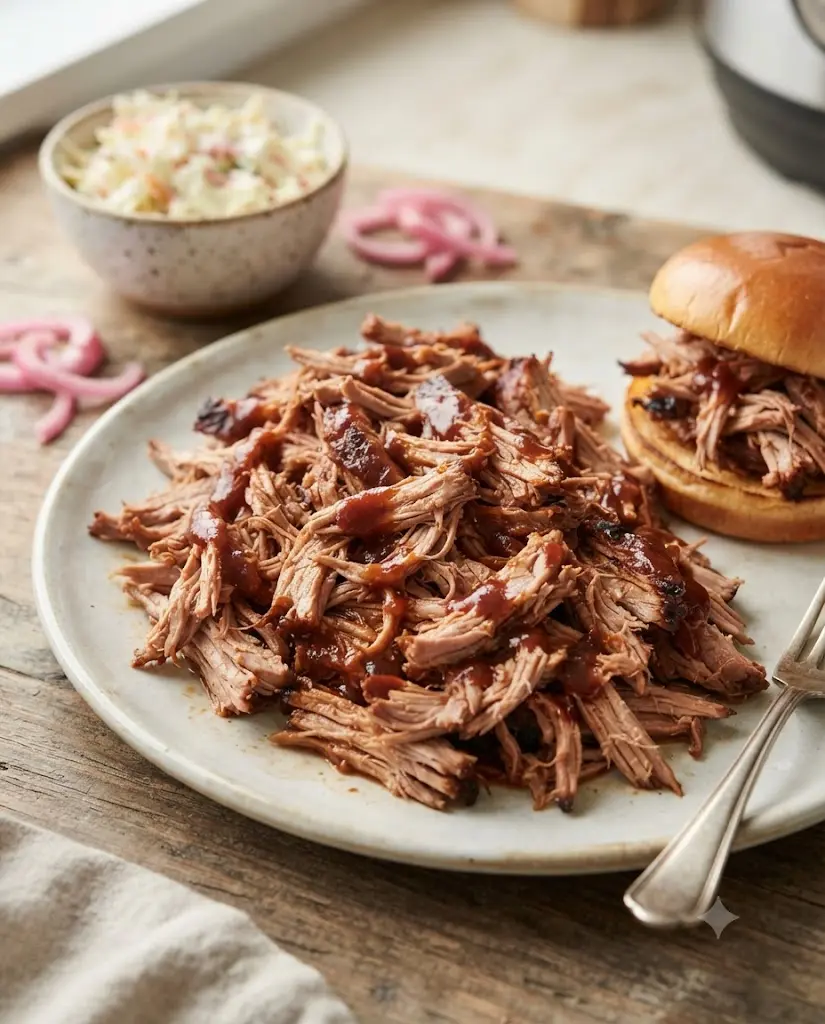
- Shred the pork: Use two forks or meat claws to pull the pork into medium-sized strands. Avoid shredding it too finely because slightly larger pieces retain moisture better.
- Make the BBQ sauce: Turn the Instant Pot back to Sauté mode. Add the brown sugar and 1/2 cup of the BBQ sauce to the cooking liquid.
- Thicken the sauce: Stir the cornstarch and cold water together in a small bowl until smooth. Whisk the slurry into the simmering sauce and cook for 1–2 minutes, until lightly thickened.
- Combine everything: Return the shredded pork to the Instant Pot and toss it with the sauce. Add the remaining BBQ sauce gradually until the pork has the amount of sauciness you prefer.
- Serve warm: Serve the shredded pork on burger buns, tortillas, rice bowls, baked potatoes, nachos, or sliders. Add fresh toppings such as cabbage, pickled onions, avocado, cilantro, or lime.
Notes
For better shredding: Pork tenderloin is leaner than pork shoulder, so it needs enough cooking time to become soft enough to pull apart.
For juicy pork: Keep some of the cooking liquid and mix a few spoonfuls back into the shredded meat if it seems dry.
For thicker BBQ sauce: Let the sauce simmer briefly after adding the cornstarch slurry before returning the pork.
For less sweetness: Start with less BBQ sauce and brown sugar, then add more after tasting.
For meal prep: Divide cooled shredded pork into individual portions with some sauce before refrigerating or freezing.