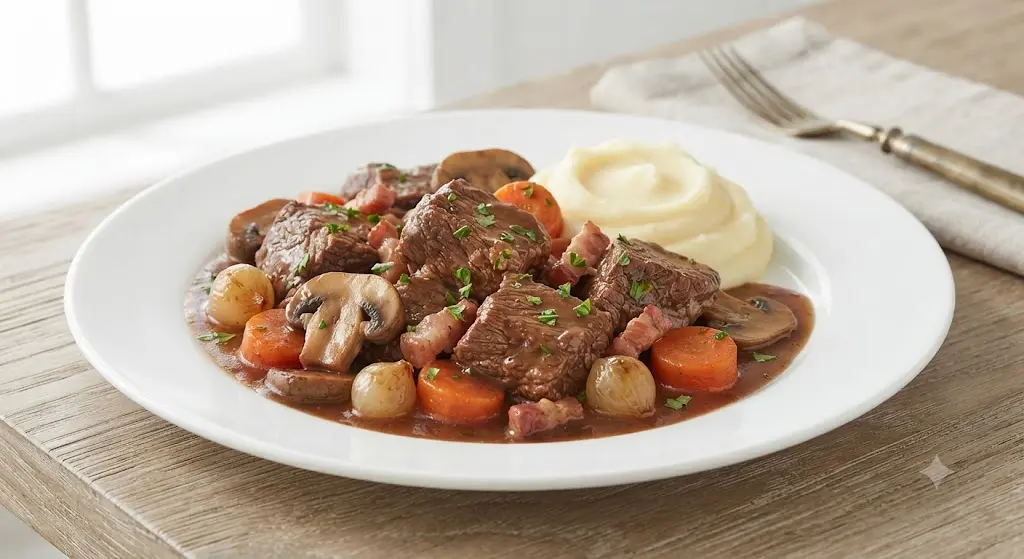
Slow cooker beef bourguignon with red wine is a deeply savory beef stew made with tender chuck roast, mushrooms, carrots, onions, herbs, and a rich red-wine sauce. The slow cooker turns the beef tender over several hours while the wine and broth develop into a flavorful gravy.
This recipe has one important extra step before the slow cooker does its work: brown the beef first. That quick sear gives the stew a much deeper flavor and helps the finished sauce taste like a slow-braised dish rather than an ordinary crock pot stew.
The preparation is straightforward, but a few small choices matter. Use well-marbled chuck, do not overcrowd the pan when browning, and keep the amount of cooking liquid controlled. Those details make a noticeable difference in the final texture.
Why You’ll Like This Recipe
- The beef becomes fork-tender without constant attention.
- Dry red wine gives the sauce a deeper, more complex flavor.
- Mushrooms, carrots, and onions add texture without overpowering the beef.
- Browning the meat creates a stronger savory base.
- The stew can be prepared ahead and reheated easily.
- It works with mashed potatoes, noodles, bread, or rice.
What Is Beef Bourguignon?
Beef bourguignon is a French-style beef stew traditionally associated with Burgundy. Beef is slowly cooked with red wine, vegetables, and aromatics until tender, producing a rich sauce around the meat.
A beef bourguignon slow cooker version keeps that basic idea but moves the long cooking stage into a slow cooker. This makes the dish practical for a busy day because once the ingredients are assembled, the slow cooker handles most of the cooking.
The key is not to treat it like a simple dump-and-go stew. Browning the beef and reducing the wine first adds flavor that the slow cooker alone cannot create in exactly the same way.
Ingredients You Need
Beef
Beef chuck: Use boneless chuck roast cut into roughly 1½-inch pieces. Chuck has enough connective tissue and marbling to stay moist during long cooking.
Bacon: A few slices add savory flavor and provide fat for browning the beef.
Salt and black pepper: Season the beef before searing rather than trying to correct all the seasoning at the end.
Vegetables
Carrots: Cut them into thick pieces so they remain substantial after several hours.
Yellow onion: Adds sweetness and a savory base.
Cremini mushrooms: Their earthy flavor works especially well with beef and red wine.
Pearl onions: They add small, tender bites throughout the stew and make the finished dish look more traditional.
Sauce
Dry red wine: Choose a wine with enough acidity to balance the richness of the beef.
Beef broth: Provides additional savory liquid without making the wine flavor too dominant.
Tomato paste: Adds concentrated savory depth and helps round out the sauce.
Garlic: Gives the stew a warm aromatic base.
Thyme and bay leaves: These herbs provide background flavor during the long cooking period.
Worcestershire sauce: A small amount adds savory complexity without making the dish taste like Worcestershire sauce.
What Red Wine Should You Use?
You do not need an expensive bottle for this recipe.
A dry red such as Pinot Noir is a natural choice for a Burgundy-inspired stew, but other dry reds can work. Choose something you would be comfortable drinking rather than a very sweet wine labeled specifically for cooking.
Avoid using a sweet red wine because its sweetness can become more noticeable as the sauce cooks down.
If you do not want to use wine, you can replace it with additional beef broth, although the finished stew will not have the same wine-driven flavor.
How to Make Slow Cooker Beef Bourguignon
Brown the bacon
Add the chopped bacon to a large skillet over medium heat. Cook until browned and lightly crisp.
Transfer the bacon to the slow cooker, leaving the rendered fat in the skillet.
Sear the beef
Pat the beef dry with paper towels. Season with salt and black pepper.
Add the beef to the hot skillet in batches. Leave enough space between the pieces for them to brown rather than steam.
Brown several sides of the beef, then transfer it to the slow cooker.
The beef does not need to be cooked through at this point. The goal is to build color and flavor.
Cook the aromatics
Add the onion and mushrooms to the same skillet.
Cook until the onion softens and the mushrooms begin to brown. Add the garlic and tomato paste and cook briefly, stirring constantly.
Do not let the garlic burn.
Deglaze with red wine
Pour the red wine into the skillet.
Use a wooden spoon to scrape the browned bits from the bottom of the pan. Let the wine simmer for several minutes so it reduces slightly.
This step is important because the browned bits contain concentrated flavor from the beef and bacon.
Transfer everything to the slow cooker
Add the beef and bacon to the slow cooker.
Pour in the wine mixture and beef broth. Add the carrots, pearl onions, thyme, and bay leaves.
Stir gently so the ingredients are evenly distributed.
Cook until tender
Cover and cook on LOW for 8 to 10 hours, or until the beef is fork-tender.
You can use the HIGH setting when necessary, but LOW cooking gives you more time for the chuck to soften gradually.
The most reliable test is the beef itself. If a fork slides into a piece easily and the meat separates without resistance, it is ready.
Finish the stew
Remove the bay leaves and thyme stems.
Taste the sauce and adjust the salt only after cooking.
If you want a thicker sauce, transfer some of the liquid to a saucepan and simmer it separately until reduced. Stir it back into the stew.
Finish with fresh chopped parsley.
Why Browning the Beef Matters
This is the step I would not skip.
When beef is browned properly, the outside develops a deeper roasted flavor. That flavor then becomes part of the sauce after the wine is added and the pan is deglazed.
If you put raw beef directly into the slow cooker, the recipe can still cook successfully, but you lose some of the browned flavor that makes this dish taste more like a carefully prepared braise.
The trick is to brown in batches. A crowded skillet traps steam around the meat and makes good browning much harder.
How to Get a Thick, Rich Sauce
Slow cookers retain much more moisture than an uncovered skillet or Dutch oven.
That means you should not add extra broth simply because the liquid does not completely cover every ingredient.
The beef and vegetables release additional moisture while cooking.
For a richer sauce:
- Reduce the wine briefly before adding it.
- Do not add unnecessary broth.
- Use tomato paste rather than a large amount of tomato sauce.
- Let the finished liquid reduce separately if needed.
- Taste for salt only after the sauce has finished cooking.
The goal is a sauce that coats the beef rather than a thin soup surrounding it.
When Should You Add the Mushrooms?
There are two good approaches.
For softer mushrooms, add them at the beginning with the other vegetables.
For firmer, more noticeable mushrooms, sauté them separately and add them during the final 30 to 45 minutes.
I prefer the second method when texture matters because mushrooms can become quite soft during an 8- to 10-hour cooking period.
Should Potatoes Go in the Slow Cooker?
Yes, but you do not have to add them.
If you want a one-pot meal, use larger chunks of waxy or all-purpose potatoes. Avoid cutting them too small because they can become very soft during long cooking.
Another option is to serve the stew over mashed potatoes. This keeps the sauce thick and lets the potatoes absorb the gravy without spending hours inside the slow cooker.
Best Ways to Serve It
Mashed potatoes
Creamy mashed potatoes are excellent with the rich wine sauce because they absorb the gravy without competing with the beef.
Egg noodles
Buttered egg noodles provide a simple base for the stew and make the meal especially filling.
Crusty bread
A baguette or other crusty bread is useful for soaking up the sauce.
Rice
Plain white or brown rice works when you want a simple side that does not require extra preparation.
Green vegetables
Green beans, peas, or a simple salad add freshness to an otherwise rich meal.
Easy Beef Bourguignon Slow Cooker Shortcut
If you want an easy beef bourguignon slow cooker dinner, use pre-cut beef stew meat, frozen pearl onions, sliced mushrooms, and baby carrots.
The one shortcut I would still avoid is skipping the beef browning.
You can simplify the chopping and preparation, but spending a few extra minutes developing color on the beef gives the finished stew more depth.
Common Mistakes
Cutting the beef too small
Small pieces can become overly soft after a long cooking period.
Overcrowding the skillet
Crowded beef steams instead of browning.
Adding too much liquid
Because the slow cooker retains moisture, excessive broth can leave the finished sauce thin.
Skipping the wine reduction
Adding wine without giving it a brief simmer can leave the sauce sharper and less concentrated.
Adding too much salt at the beginning
Bacon, broth, Worcestershire sauce, and reduction all affect the final salt level.
Cooking only by the clock
Slow cookers vary. Tenderness is a better final indicator than simply reaching a specific number of hours.
Make-Ahead Instructions
This beef burgundy crock pot recipe works particularly well as a make-ahead dinner.
After cooking, cool the stew and refrigerate it in a covered container.
When chilled, the flavors often taste more integrated, and any excess fat that rises to the surface is easier to remove before reheating.
Reheat gently on the stovetop or in the slow cooker until thoroughly hot.
If the sauce becomes too thick, loosen it with a small amount of beef broth.
How to Store Leftovers
Keep leftover beef bourguignon refrigerated in a covered container and use it within 3 to 4 days.
For longer storage, freeze cooled portions in airtight freezer-safe containers.
Thaw frozen stew in the refrigerator before reheating for more even warming and better texture.
Can You Freeze Beef Bourguignon?
Yes.
Let the stew cool before freezing and divide it into meal-size portions. Leave a little room in the container for expansion.
When ready to eat, thaw it in the refrigerator and reheat gently. If the sauce has thickened considerably, add a small splash of broth while reheating.
Slow Cooker vs. Oven
Both methods can produce tender beef, but they have different advantages.
A slow cooker is convenient because it maintains a low cooking environment for several hours with very little supervision.
An oven-braised version gives you more direct control over evaporation and browning during the cooking process.
For a busy weekday, the slow cooker is particularly practical because the long cooking stage can happen while you are doing other things.
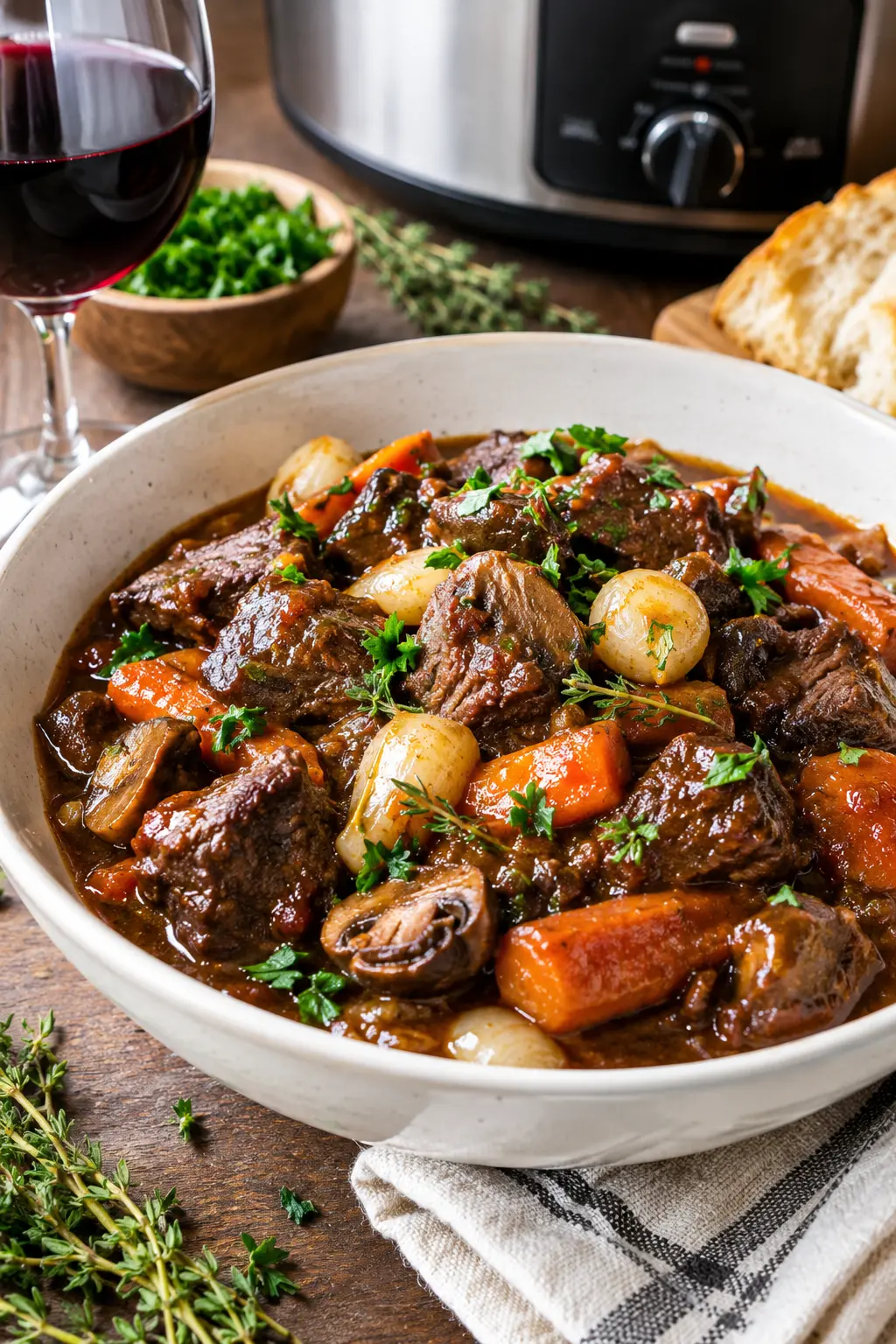
Slow Cooker Beef Bourguignon With Red Wine
Ingredients
Equipment
Method
- Cook the bacon: Cook the chopped bacon in a large skillet over medium heat until browned and lightly crisp. Transfer the bacon to the slow cooker.
- Brown the beef: Pat the beef dry with paper towels and season with salt and black pepper. Brown the beef in batches in the bacon fat, then transfer the browned pieces to the slow cooker.
- Cook the vegetables: Add the onion and mushrooms to the same skillet and cook until they begin to soften and brown. Stir in the garlic and tomato paste and cook briefly.
- Deglaze with wine: Pour the red wine into the skillet and scrape the browned bits from the bottom with a wooden spoon. Let the wine simmer for a few minutes to reduce slightly.
- Combine the ingredients: Pour the wine mixture and beef broth into the slow cooker with the beef and bacon.
- Add the aromatics: Add the carrots, pearl onions, Worcestershire sauce, thyme, and bay leaves. Stir gently to distribute the ingredients.
- Slow cook: Cover and cook on LOW for 8–10 hours, or until the beef is fork-tender and easily separates when pressed with a fork.
- Check the sauce: If the sauce is thinner than you prefer, transfer some of the liquid to a saucepan and simmer until slightly reduced, then return it to the stew.
- Finish the stew: Remove the bay leaves and thyme stems. Taste and adjust the seasoning if needed.
- Garnish and serve: Sprinkle with fresh parsley and serve hot with mashed potatoes, buttered egg noodles, or crusty bread.
Notes
- Best beef: Boneless beef chuck works particularly well because it becomes tender during long, slow cooking.
- Best wine: Choose a dry red wine such as Pinot Noir or another dry red you enjoy drinking.
- For better browning: Work in batches so the beef has enough space in the skillet.
- For thicker sauce: Reduce some of the cooking liquid separately instead of adding excessive flour at the end.
- For firmer mushrooms: Sauté them separately and add them during the final 30–45 minutes.
- For potatoes: Add large potato chunks if you want a one-pot meal, or serve the finished stew over mashed potatoes.
Storage
Refrigerate leftovers in a covered container for 3–4 days. For longer storage, freeze cooled portions in airtight freezer-safe containers.Frequently Asked Questions
What is the best recipe for slow cooker beef bourguignon?
Use beef chuck, dry red wine, mushrooms, carrots, onions, herbs, and slow cooking until the beef is fork-tender.
Is beef bourguignon better in a slow cooker or oven?
Both methods work; the slow cooker emphasizes convenience while the oven gives more control over browning and evaporation.
What is the secret to a rich beef bourguignon?
Brown the beef well, reduce the wine briefly, avoid excess liquid, and cook until the chuck becomes tender.
What are some common beef bourguignon mistakes?
Overcrowding the beef, skipping browning, adding too much liquid, and over-salting are common mistakes.
What beef is best for bourguignon?
Boneless beef chuck is a reliable choice because its connective tissue becomes tender during slow cooking.
What red wine is best for beef bourguignon?
A dry red such as Pinot Noir works well, although several other dry reds can also be used.
Can I make beef bourguignon without wine?
Yes, but replacing the wine with broth will change the flavor and reduce the characteristic wine depth.
Can I add potatoes?
Yes; use large pieces so they hold their shape during the long cooking time.
How long does it last in the refrigerator?
Store it covered in the refrigerator for 3 to 4 days.
Final Tips
The best crock pot beef bourguignon is not complicated, but it rewards a little preparation.
Dry the beef before seasoning it, brown it in batches, scrape every flavorful browned bit from the skillet when adding the wine, and resist the temptation to add more liquid than the recipe needs.
Once those steps are finished, the slow cooker takes over. After several hours, the chuck should be tender enough to cut easily with a fork, the vegetables should be soft but recognizable, and the red-wine sauce should cling to the meat.
Serve it hot with mashed potatoes, noodles, or crusty bread and finish with fresh parsley for a simple contrast to the rich sauce.