This dry chicken adobo recipe is for anyone who likes the deep, savory flavor of classic adobo but wants the chicken served mostly dry instead of sitting in a pool of sauce.
The chicken is first seasoned with soy sauce, vinegar, garlic, bay leaves, and black pepper, then cooked until tender. The liquid is gradually reduced, allowing the chicken to absorb the seasoning and develop browned, slightly caramelized edges.
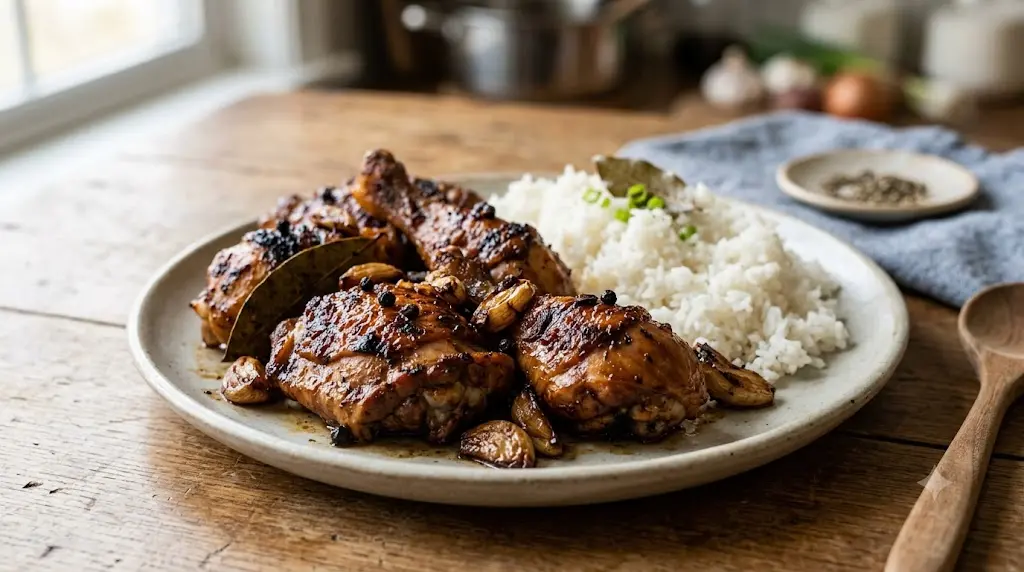
The best part is the final pan stage. Once most of the liquid has cooked away, the chicken gets direct contact with the pan. That is where the dry chicken adobo gets its darker color, concentrated flavor, and slightly crisp edges.
What Is Dry Chicken Adobo?
Dry chicken adobo is a variation of Filipino chicken adobo where the cooking liquid is reduced much further than in a saucier version.
Instead of finishing with plenty of broth-like sauce, the chicken is left coated with a concentrated layer of seasoning.
The basic flavor comes from a few ingredients:
- Chicken
- Soy sauce
- Vinegar
- Garlic
- Black pepper
- Bay leaves
- A little oil
- Water or stock
You can also add a small amount of brown sugar for balance, although traditional versions and family recipes vary.
The key is not adding too many ingredients. Good dry adobo gets much of its character from the combination of salty soy sauce, sharp vinegar, garlic, pepper, and browned chicken.
Ingredients for Dry Chicken Adobo
For about 4 servings, you will need:
| Ingredient | Amount |
|---|---|
| Chicken thighs or drumsticks | 2 lb |
| Soy sauce | ⅓ cup |
| Vinegar | ¼ cup |
| Garlic, crushed | 6–8 cloves |
| Water | ½ cup |
| Bay leaves | 2 |
| Black peppercorns or coarse pepper | 1 tsp |
| Brown sugar | 1–2 tsp, optional |
| Cooking oil | 1 tbsp |
Chicken thighs work particularly well because they stay juicy during the longer cooking time. Bone-in pieces also add plenty of flavor to the cooking liquid.
For a leaner result, boneless chicken can be used, but watch the cooking time because smaller pieces can dry out more quickly.
How to Make Dry Chicken Adobo
Prepare the chicken
Pat the chicken dry with paper towels before cooking.
This small step makes a difference because excess surface moisture can slow down browning.
If using large chicken thighs, you can leave them whole or cut them into smaller portions. Keep the pieces reasonably similar in size so they cook at roughly the same rate.
Make the adobo mixture
Combine the soy sauce, vinegar, crushed garlic, water, bay leaves, and black pepper.
Add the optional brown sugar if you prefer a slightly rounded flavor.
Do not worry if the mixture tastes sharp at this point. The vinegar will mellow as it cooks.
Marinate for better flavor
Place the chicken in the mixture and let it sit for at least 30 minutes.
If you have more time, refrigerating it for a few hours allows the garlic and seasoning to work deeper into the chicken.
For a quick weeknight version, even a short marinade is useful.
Start cooking gently
Place the chicken and marinade in a wide pan.
Bring the mixture to a gentle simmer over medium heat, then reduce the heat enough to maintain steady cooking.
Avoid a violent boil. Aggressive boiling can make the outside of the chicken tighten before the inside is properly tender.
Cover the pan loosely if needed and cook until the chicken is tender and reaches a safe internal temperature.
Let the liquid reduce
This is the important stage for a dry adobo recipe.
Once the chicken is cooked, remove the lid and continue simmering.
The liquid will gradually reduce.
Keep an eye on the pan as it gets thicker. What starts as a thin cooking liquid eventually becomes a concentrated coating around the chicken.
Brown the chicken
When only a small amount of liquid remains, add the oil if the pan looks dry.
Turn the chicken pieces occasionally so different sides can make contact with the hot surface.
Let them brown rather than constantly stirring.
This final pan-frying stage gives the chicken adobo dry texture that separates it from a more traditional saucy version.
The edges should look deeply browned, while the chicken remains moist inside.
The Secret to Great Adobo Flavor
The biggest flavor trick is balance rather than adding more seasoning.
Soy sauce provides salt and umami. Vinegar gives the dish its characteristic sharpness. Garlic adds aroma, while pepper and bay leaves provide depth.
The flavor changes as the liquid reduces.
At the beginning, the vinegar may taste very strong. After simmering, it becomes much softer and blends with the soy sauce and chicken juices.
Do not rush this reduction.
If you turn the heat too high simply to evaporate the liquid faster, the sauce can scorch before the chicken develops the right texture.
What Vinegar Is Best for Chicken Adobo?
White cane vinegar is a common choice for Filipino-style adobo because it provides the clean acidity associated with the dish.
Distilled white vinegar can also work when cane vinegar is unavailable.
Apple cider vinegar gives a slightly different, fruitier flavor, so use it only if you are comfortable with that change.
For an authentic dry chicken adobo recipe, cane vinegar is a useful choice when available.
Chicken Adobo With Oyster Sauce: Should You Add It?
Some home cooks make chicken adobo with oyster sauce for additional sweetness and umami.
It can work, but it changes the flavor profile.
If you want to try it, add a small amount rather than replacing all of the soy sauce.
Because oyster sauce is already salty and concentrated, taste the cooking liquid before adding extra soy sauce.
For a cleaner, more traditional-style flavor, keeping the ingredient list simple is often the better approach.
Common Dry Chicken Adobo Mistakes
Using too much vinegar
A large amount of vinegar can overpower the dish.
Fix: Measure it rather than pouring freely, especially if you are making adobo for the first time.
Boiling too aggressively
Fast boiling can make the chicken tough and cause the liquid to disappear before the meat is tender.
Fix: Keep the cooking liquid at a gentle simmer.
Browning too early
Trying to brown the chicken before it has cooked through can leave you with dark skin and undercooked meat.
Fix: Cook until tender first, then reduce the liquid and brown the chicken at the end.
Walking away during the final reduction
The pan changes quickly once most of the liquid is gone.
Fix: Stay nearby and turn the chicken regularly during the final stage.
Adding too much sugar
Sugar can help balance acidity, but too much can make the adobo overly sweet and cause the pan coating to burn.
Fix: Start with a small amount or leave it out.
Easy Dry Chicken Adobo Recipe Variations
The basic recipe is flexible.
For a sweeter version, add a little more brown sugar.
For a stronger garlic flavor, increase the crushed garlic.
For extra heat, add sliced chili peppers during the cooking process.
You can also use chicken wings or drumsticks, adjusting the cooking time according to the size of the pieces.
If you prefer boneless chicken, cut it into fairly large pieces so it does not become dry during the reduction stage.
What to Serve With Dry Chicken Adobo
Steamed white rice is the easiest pairing because it absorbs the concentrated seasoning from the chicken.
You can also serve it with:
- Garlic rice
- Steamed vegetables
- Cucumber salad
- Pickled vegetables
- Fried or sautéed greens
- A simple tomato salad
Because the chicken has a strong savory flavor, a fresh side can provide a nice contrast.
How to Store and Reheat It
Let leftover chicken cool before placing it in an airtight container and refrigerating it.
When reheating, use a skillet over medium-low heat with a small splash of water if the chicken seems dry.
Cover briefly to warm the center, then uncover the pan so the outside can regain some of its texture.
Avoid overheating the chicken for too long, especially when using boneless pieces.
Dry Chicken Adobo Recipe
Ingredients
Equipment
Method
- Pat the chicken dry with paper towels so the surface is ready for better browning.
- Combine the soy sauce, vinegar, garlic, water, bay leaves, black pepper, and optional brown sugar in a bowl.
- Add the chicken to the marinade and let it rest for at least 30 minutes. Refrigerate it if marinating for longer.
- Transfer the chicken and marinade to a wide pan and bring it to a gentle simmer over medium heat.
- Reduce the heat and cook the chicken gently until tender and safely cooked through.
- Remove the lid and continue simmering so the cooking liquid can reduce and concentrate around the chicken.
- Add the oil when the pan becomes nearly dry and turn the chicken pieces occasionally.
- Brown the chicken on several sides until the edges become deeply colored and the remaining seasoning coats the surface.
- Check the thickest piece with a food thermometer and make sure the chicken reaches a safe internal temperature.
- Rest the chicken briefly before serving so the juices settle.
- Serve the dry chicken adobo hot with steamed rice and a fresh vegetable side if desired.
Notes
- Do not rush the vinegar reduction. Gentle cooking produces a more balanced flavor.
- Watch the pan closely near the end. The concentrated sauce can burn quickly once most of the moisture has disappeared.
- Use chicken thighs for a juicier result. They handle the longer cooking and final browning well.
- Taste before adding extra soy sauce. The reduced cooking liquid becomes more concentrated as it cooks.
- Add oyster sauce sparingly if you want a richer variation.
People Also Ask
What are common adobo recipe mistakes?
Using too much vinegar, boiling too hard, adding too much sugar, and reducing the sauce too quickly are common mistakes.
What’s the secret to great adobo flavor?
Balanced soy sauce, vinegar, garlic, gentle simmering, and proper reduction create the deep flavor.
What is the best recipe for chicken adobo?
A good recipe uses balanced seasoning and cooks the chicken gently before reducing the liquid for concentrated flavor.
What vinegar is best to use for chicken adobo?
Cane vinegar is a traditional choice, while distilled white vinegar is a practical substitute.
Final Thoughts
A good dry chicken adobo recipe does not need a long ingredient list.
The real work happens in the cooking process: let the chicken absorb the soy-vinegar mixture, keep the heat controlled, allow the liquid to reduce naturally, and give the chicken enough time in the pan to develop browned edges.
That final reduction is what makes this dry adobo recipe different from a saucier version.
If you are looking for an easy dry chicken adobo recipe, start with chicken thighs, garlic, soy sauce, vinegar, bay leaves, and pepper. Once you are comfortable with the basic balance, you can adjust sweetness, garlic, heat, or even add a little oyster sauce to suit your taste.
The most important thing is to watch the pan during the final stage. When the liquid has nearly disappeared and the chicken starts picking up deep brown edges, you know the dry chicken adobo is getting where it needs to be.