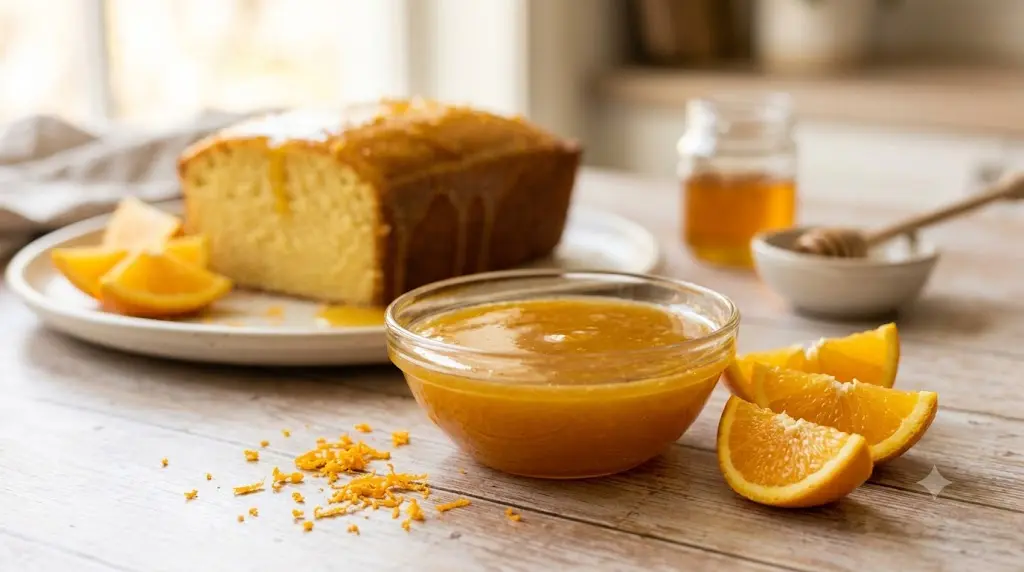
This orange honey glaze recipe is a simple way to give a cake, loaf, muffins, or other baked treats a glossy citrus finish. It combines honey, fresh orange juice, orange zest, almond butter, and vanilla for a glaze that tastes sweet, bright, and lightly nutty.
The mixture takes only a few minutes on the stove. The important part is keeping the heat gentle while the honey and orange juice come together, then letting the finished glaze cool enough to reach the texture you want.
I like this kind of glaze because it does more than make a cake look finished. The orange cuts through the sweetness of the honey, while the almond butter gives the glaze a little more body and a smooth, rich finish.
Why This Honey Orange Glaze Works
A good glaze should not taste like plain sugar poured over a cake.
This honey orange glaze has several flavors working together:
- Honey gives natural sweetness and a smooth texture.
- Fresh orange juice adds brightness and moisture.
- Orange zest brings a stronger citrus aroma.
- Almond butter gives the glaze body and a subtle nutty taste.
- Vanilla rounds everything out.
The result is a soft, citrusy glaze that works particularly well with cakes and other lightly sweet baked goods.
Orange Honey Glaze Ingredients
You only need five ingredients for this version.
| Ingredient | Amount | Why it is used |
|---|---|---|
| Honey | ½ cup | Sweetness and the base of the glaze |
| Fresh orange juice | 3 tablespoons | Citrus flavor and liquid |
| Blanched almond butter | 3 tablespoons | Creamy body and nutty flavor |
| Fresh orange zest | 1 teaspoon | Concentrated orange aroma |
| Pure vanilla extract | 1 teaspoon | Balances the citrus and honey |
Use Fresh Orange If You Can
Fresh orange juice makes a noticeable difference here.
You also get something extra from the peel: orange zest contains concentrated citrus oils, so even a small amount can make the finished glaze smell much more orange-forward.
When zesting, remove only the bright outer layer. Avoid scraping deeply into the white pith because it can taste bitter.
Equipment
- Small saucepan
- Spoon or small whisk
- Fine grater or zester
- Measuring cups and spoons
- Small bowl, if needed
You do not need a mixer or blender for this recipe.
How to Make Orange Honey Glaze
Warm the honey and orange juice
Add the honey and fresh orange juice to a small saucepan.
Set the pan over low heat and stir continuously.
You are not trying to brown the honey. The goal at this stage is simply to warm it enough that the honey loosens and blends smoothly with the orange juice.
The mixture should become fluid and uniform.
Add the remaining ingredients
Once the honey and orange juice are well combined, add the almond butter, orange zest, and vanilla.
Keep stirring.
At first, the almond butter may look slightly separate from the liquid. Continue stirring until the mixture becomes smooth and evenly blended.
This is one of those moments where patience helps. Do not turn the heat up just to make the ingredients combine faster.
Bring the glaze to a boil
Once everything is incorporated, bring the mixture to a brief boil while stirring.
Watch the pan closely because honey-based mixtures can heat quickly.
As soon as the ingredients are well combined and bubbling, reduce the heat.
Simmer briefly
Let the glaze simmer gently for about 5 minutes, stirring regularly.
The mixture will become more cohesive and slightly thicker.
You do not need to cook it until it looks extremely thick in the saucepan. The texture changes again as the glaze cools.
Spread it while warm
Remove the pan from the heat.
For a cake topping or filling, spread the glaze over the baked good while it is still warm.
As it cools, the glaze will become firmer and settle into a smooth coating.
That cooling step is important. If you judge the final consistency only while the glaze is hot, you may think it is too thin and keep cooking it longer than necessary.
How Do You Know the Orange Honey Glaze Is Ready?
Look for a smooth, glossy mixture that coats a spoon lightly.
It should still be spreadable while warm.
If it looks watery even after the short simmer, give it a little more time over low heat.
If it becomes very stiff in the pan, do not panic. A small amount of warm orange juice can loosen it.
The biggest thing to avoid is aggressively boiling the glaze for a long time. Honey can become very hot and the mixture can go from nicely reduced to overly thick surprisingly quickly.
The Best Orange Juice for This Recipe
Freshly squeezed orange juice is my first choice for this type of glaze because you are using orange as the main flavor rather than just adding sweetness.
A ripe, juicy orange gives you both juice and zest from the same fruit.
If using packaged orange juice, choose one with a clean orange flavor and without added flavors that could compete with the honey and vanilla.
How Much Orange Zest Should You Use?
One teaspoon is enough to make the citrus noticeable without making the glaze bitter.
The zest is stronger than the juice in terms of aroma, so you do not need a large amount.
For an especially orange-forward finish, you can add a little more, but keep tasting rather than adding a large amount at once.
Honey Orange Glaze for Cake
This is where the glaze really shines.
A plain cake can sometimes taste a little dry or one-dimensional even when the crumb itself is good. A warm honey orange glaze adds moisture, sweetness, citrus aroma, and a glossy finish.
It works especially well with:
- Orange cake
- Honey cake
- Almond cake
- Wholegrain cake
- Bundt cake
- Loaf cake
- Muffins
- Tea cakes
For the cleanest finish, let the cake cool enough that it will not immediately absorb all of the glaze.
Then spread the warm glaze over the top and allow it to settle.
Should the Cake Be Warm or Cool Before Glazing?
It depends on the finish you want.
A very warm cake will absorb more of the glaze, giving you a softer, more infused result.
A completely cooled cake gives you more control over the glaze sitting on top.
For a visible glossy topping, I prefer letting the baked good cool substantially before spreading the glaze.
If you want more of an infused finish, applying the glaze while the cake is still slightly warm can work well.
Can You Use Orange Honey Glaze as a Cake Filling?
Yes.
The glaze can also be used between layers or as a thin filling for baked goods.
Because it firms as it cools, allow it to reach a spreadable consistency before using it between layers.
Do not spread a very hot glaze over delicate frosting. The heat can soften or melt it.
Orange Honey Glaze for Muffins
This glaze is an easy way to make simple muffins feel more finished.
Bake the muffins as usual and allow them to cool enough to handle.
Then brush or spoon a small amount of warm glaze over the tops.
A light coating is usually enough. You want the orange and honey flavor to complement the muffin rather than completely cover it.
Honey Orange Glaze for Cookies and Pastries
The same glaze can work on simple cookies, sweet rolls, breakfast breads, and pastries.
For smaller baked goods, use less glaze than you would for a whole cake.
A pastry brush makes it easier to apply a thin, even layer.
If the glaze starts becoming too firm while you work, warm it gently rather than overheating it.
Can You Make This Orange Honey Glaze Dairy-Free?
Yes.
The ingredient list itself does not require butter or cream.
That makes this style of orange honey glaze useful when you want a dairy-free topping for baked goods.
Always check the labels of packaged ingredients such as almond butter and vanilla if you are cooking for someone with a specific allergy or dietary restriction.
Is This Orange Honey Glaze Gluten-Free?
The glaze itself does not contain wheat-based ingredients.
However, whether the finished dessert is gluten-free depends on the cake or baked good you put it on and the ingredients used in those products.
If you are preparing food for someone with celiac disease or a serious gluten allergy, check ingredient labels and avoid cross-contact during preparation.
What Does Honey Orange Glaze Taste Like?
The first flavor you notice is usually the honey, followed by fresh citrus.
The orange zest makes the glaze smell more strongly of orange than the juice alone would.
Almond butter adds a mild roasted-nut character and gives the glaze a fuller mouthfeel, while vanilla smooths out the combination.
It is sweet, but the orange keeps it from tasting like a plain honey syrup.
How to Make the Glaze More Orange-Flavored
If you want a stronger citrus character, use fresh zest rather than simply adding more honey or juice.
You can also replace a small amount of the orange juice with additional zest-infused juice, but avoid adding so much liquid that the glaze becomes difficult to set.
For the strongest natural orange aroma, zest the orange immediately before making the glaze.
How to Make It Less Sweet
The easiest way is to keep the honey amount controlled rather than trying to fix the finished glaze afterward.
The orange provides natural acidity and brightness, so fresh juice and zest help balance the sweetness.
For a dessert topping, remember that the cake itself contributes sweetness too.
A thin layer of glaze can be enough.
What If My Glaze Is Too Thick?
This usually happens when the mixture has been cooked too long or has cooled substantially.
Warm it gently.
Then add a very small amount of fresh orange juice and stir.
Add the juice gradually because a little can make a noticeable difference.
Avoid adding a lot at once.
What If My Glaze Is Too Thin?
Give it a little more time over low heat.
Because honey-based mixtures become thicker as they cool, allow the glaze to sit for a few minutes before deciding that it definitely needs more cooking.
If you continue reducing it, stir regularly and watch the consistency closely.
Can You Make Honey Orange Glaze Ahead of Time?
Yes.
Prepare the glaze, let it cool, and transfer it to a clean airtight container.
Refrigerate it until needed.
The glaze will become firmer when chilled, so warm it gently before using.
If it has become too thick, stir in a small amount of orange juice until it reaches the consistency you need.
How to Store Orange Honey Glaze
Store leftover glaze in an airtight container in the refrigerator.
When you want to use it again, warm it gently and stir.
Do not leave a finished glaze sitting at room temperature for an extended period, especially if it has been used with perishable fillings or other ingredients.
For the best quality, make a small batch when you know you will use it within a few days.
Simple Ways to Use This Glaze
This recipe is most naturally suited to baked goods, but there are several ways to use it.
Try it on:
- Orange honey cake
- Almond cake
- Wholegrain loaf
- Muffins
- Sweet rolls
- Breakfast bread
- Bundt cake
- Simple cookies
- Pastries
- Pancakes
For savory foods such as chicken or ham, I would make a separate savory orange-honey sauce rather than changing this dessert-focused glaze. That keeps the vanilla and almond flavors where they belong.
Orange Honey Glaze vs. Orange Glaze
A basic orange glaze often relies on orange juice and powdered sugar.
An orange honey glaze gets its sweetness and body primarily from honey.
That creates a different finish.
| Feature | Orange honey glaze | Traditional orange glaze |
|---|---|---|
| Main sweetener | Honey | Often powdered sugar |
| Main flavor | Honey + orange | Orange + sugar |
| Texture | Smooth and slightly rich | Often lighter and syrupy |
| Flavor | Warm, citrusy, lightly nutty | Bright and sweet |
| Best use | Cakes, loaves, muffins | Cakes, cookies, pastries |
Neither style is universally better. They simply give a different result.
My Tips for a Better Honey Orange Glaze
Keep the heat low at the beginning. Honey does not need aggressive heat to blend with orange juice.
Use fresh zest. It gives the glaze a much stronger orange aroma than juice alone.
Stir while warming. This helps the honey and juice combine evenly.
Do not overcook it. The glaze becomes firmer as it cools.
Spread it while warm. It is easiest to apply before it starts setting.
Let it cool before judging the final texture. A hot glaze will always look thinner than a cooled one.
Use a thin layer first. You can always add more, but removing an overly thick layer from a cake is much harder.
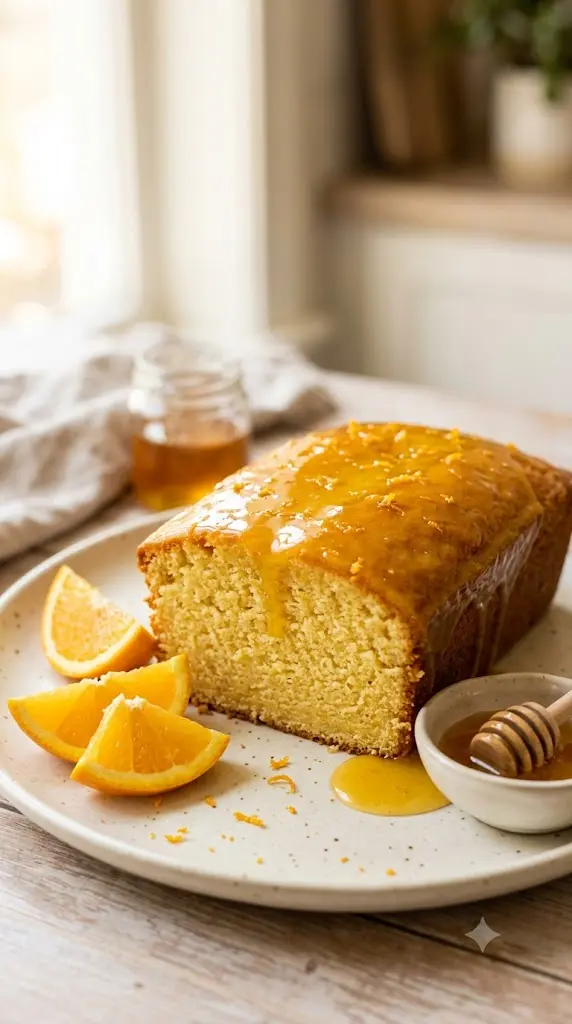
Orange Honey Glaze Recipe
Ingredients
Equipment
Method
- Combine the honey and orange juice: Add both to a small saucepan and warm over low heat, stirring continuously until the honey blends smoothly with the juice.
- Add the remaining ingredients: Stir in the almond butter, orange zest, and vanilla extract until the mixture is evenly combined.
- Bring to a boil: Increase the heat just enough to bring the mixture to a brief boil while continuing to stir.
- Simmer gently: Lower the heat and let the glaze simmer for about 5 minutes, stirring regularly.
- Spread while warm: Remove from the heat and spread the warm honey orange glaze over your baked goods.
- Let it cool: Allow the glaze to cool and set. It will become firmer as it cools.
Notes
- Use fresh orange juice for a brighter citrus flavor.
- Zest only the orange-colored outer peel and avoid the bitter white pith.
- Keep the heat controlled so the honey does not scorch.
- Spread the glaze while warm because it becomes firmer as it cools.
- Use it as a cake topping or filling for baked goods.
Frequently Asked Questions
How to make honey and orange glaze?
Warm honey and orange juice together in a small saucepan over low heat, stirring until the honey blends smoothly. Add orange zest, almond butter, and vanilla, then bring the mixture briefly to a boil. Reduce the heat and simmer for about 5 minutes. Spread the glaze while warm over a cake or other baked good.
What is honey glaze sauce made of?
A basic honey glaze can be made with honey and a liquid such as orange juice. This honey orange glaze also uses almond butter, fresh orange zest, and vanilla for a thicker texture and more developed flavor.
How do you make orange glaze?
For this orange honey glaze recipe, combine honey with fresh orange juice and warm the mixture gently. Add orange zest and the remaining ingredients, then simmer briefly until smooth and slightly thickened. The glaze becomes firmer as it cools.
What are the ingredients in honey orange sauce?
The ingredients depend on how the sauce will be used. For this dessert-focused honey orange sauce, the ingredients are honey, fresh orange juice, blanched almond butter, orange zest, and vanilla extract.
Can I use this honey orange glaze for chicken?
The flavor combination of honey and orange can work well with chicken, but this particular recipe is designed as a sweet glaze for baked goods. Because it contains almond butter and vanilla, a separate savory orange-honey sauce is a better fit for chicken.
Can I use orange honey glaze for cake?
Yes. Cake is one of the best uses for this glaze. Spread it over a cooled or slightly warm cake depending on whether you want more of a topping or an infused finish.
Can I use orange honey glaze for ham?
Honey and orange are commonly used together with ham, but this specific dessert glaze is not the version I would use for ham because of its almond butter and vanilla. For ham, use a savory orange-honey glaze without those dessert-focused ingredients.
Can I use this as an orange honey chicken marinade?
The honey-orange flavor combination can be used in a chicken marinade, but this recipe itself is not designed as a marinade. A chicken marinade should be formulated specifically for raw meat and should not be reused as a finished sauce unless it is thoroughly cooked.
How long does honey orange glaze last?
Keep leftover glaze refrigerated in an airtight container and use it within a few days for the best quality. Warm it gently before spreading if it has firmed up in the refrigerator.
Why did my glaze become hard after cooling?
Honey-based glazes naturally become thicker as they cool. If yours has become too firm, warm it gently and stir in a small amount of orange juice until it becomes spreadable again.
Final Thoughts
A good orange honey glaze recipe does not need a long ingredient list.
The combination of honey, fresh orange juice, orange zest, almond butter, and vanilla is enough to make a cake or other baked good feel much more finished.
The small details matter most: keep the heat gentle, stir while the honey and juice come together, do not overcook the mixture, and spread the glaze while it is still warm.
Then let it cool.
That final cooling time is when the texture really comes together, leaving you with a smooth, citrusy honey orange glaze that adds both flavor and a beautiful finish to your baking.