A good vegetable side dish should be easy to prepare, full of flavor, and simple enough to make on a busy weeknight. This green beans and broccoli recipe brings two everyday vegetables together in one skillet with garlic, fresh ginger, and a savory sauce.
The goal is to keep the vegetables tender without turning them mushy. Green beans need enough time to soften, while broccoli cooks more quickly, so the order in which you add them matters. A little steam helps both vegetables cook evenly without requiring a long list of ingredients.
Serve this broccoli and green beans recipe with rice, noodles, roasted chicken, tofu, or your favorite weeknight dinner. You can also adjust the sauce to make it milder, tangier, or a little spicy.
Why You’ll Love This Recipe
- One-skillet cooking: Prepare the vegetables and sauce in the same pan, keeping cleanup simple.
- Everyday ingredients: Fresh broccoli, green beans, garlic, ginger, and pantry seasonings do most of the work.
- A better vegetable texture: Short bursts of covered cooking help soften the vegetables while preserving some bite.
- Easy to customize: Add sesame seeds, red pepper flakes, or a splash of lemon juice to suit your meal.
- Flexible serving options: Enjoy it as a side dish or combine it with rice and a protein for a more filling meal.
Ingredients That Make the Difference
Broccoli
Choose a firm head with compact green florets and no extensive yellowing. Cut the florets into similar, bite-sized pieces so smaller pieces do not become overly soft before larger ones finish cooking. You can also peel and slice the tender inner stalk.
Green beans
Fresh green beans work particularly well because they retain a pleasant bite when cooked correctly. Trim the stem ends and cut longer beans into manageable pieces. Frozen beans are convenient, but thaw and drain them first for better control over excess moisture.
Garlic and fresh ginger
Garlic adds a savory aroma, while ginger brings a gentle warmth. Add them toward the end of cooking rather than leaving them in a hot pan for too long. This helps prevent burnt garlic and keeps the ginger’s flavor noticeable.
Onion
Thinly sliced red onion adds sweetness and depth. Yellow onion or white onion is also suitable if that is what you have available.
Soy sauce or tamari
Soy sauce provides saltiness and a savory flavor. Use low-sodium soy sauce if you prefer more control over the seasoning. Tamari is another option; check the label if you need a gluten-free ingredient.
Oil, lime, and sesame seeds
A small amount of neutral cooking oil or olive oil helps the onion soften. Fresh lime juice adds brightness at the end, and toasted sesame seeds provide a subtle nutty finish.
How to Get the Best Texture
The biggest challenge when cooking green beans and broccoli together is that they do not soften at exactly the same rate.
Cut the beans into pieces of roughly similar length and keep the broccoli florets relatively small. Start cooking the green beans first, then add the broccoli shortly afterward. Covering the skillet briefly traps steam and helps the vegetables cook through.
Use a large skillet rather than piling everything into a small pan. Crowded vegetables release moisture and may steam heavily instead of developing the lightly sautéed flavor you want.
If the vegetables are still too firm, add a tablespoon or two of water, cover the skillet, and cook for another two or three minutes. If the pan looks watery, uncover it near the end and let the extra moisture evaporate.
How to Make Green Beans and Broccoli in a Skillet
Prepare the vegetables
Wash the broccoli and green beans, then dry them well. Trim the beans and cut them into bite-sized pieces. Separate the broccoli into small, evenly sized florets, and slice the onion thinly.
Soften the onion
Warm a little oil in a large skillet over medium heat. Add the onion and cook for about three minutes, stirring occasionally, until it begins to soften. Reduce the heat if the edges start browning too quickly.
Cook the green beans first
Add the green beans and stir to coat them lightly in the oil. Cook for approximately two to three minutes before adding the broccoli. This head start helps the firmer beans keep pace with the more delicate florets.
Add the broccoli and a little steam
Stir in the broccoli, add a small splash of water, and cover the pan. Cook for approximately five to seven minutes, checking near the end. The vegetables should be tender enough to bite through while still holding their shape.
Cooking time will vary with the thickness of the beans, the size of the florets, and your skillet. Add another splash of water and continue cooking briefly if needed.
Add the aromatics and sauce
Remove the lid and let excess moisture evaporate. Stir in the minced garlic, grated ginger, and soy sauce or tamari. Cook for another one to two minutes, stirring frequently so the garlic does not burn.
Taste a green bean and a broccoli floret before removing the pan from the heat. Adjust the seasoning if necessary.
Finish and serve
Turn off the heat and add a squeeze of lime juice. Sprinkle with sesame seeds if desired, then serve while warm. The vegetables should look bright and lightly coated rather than swimming in sauce.
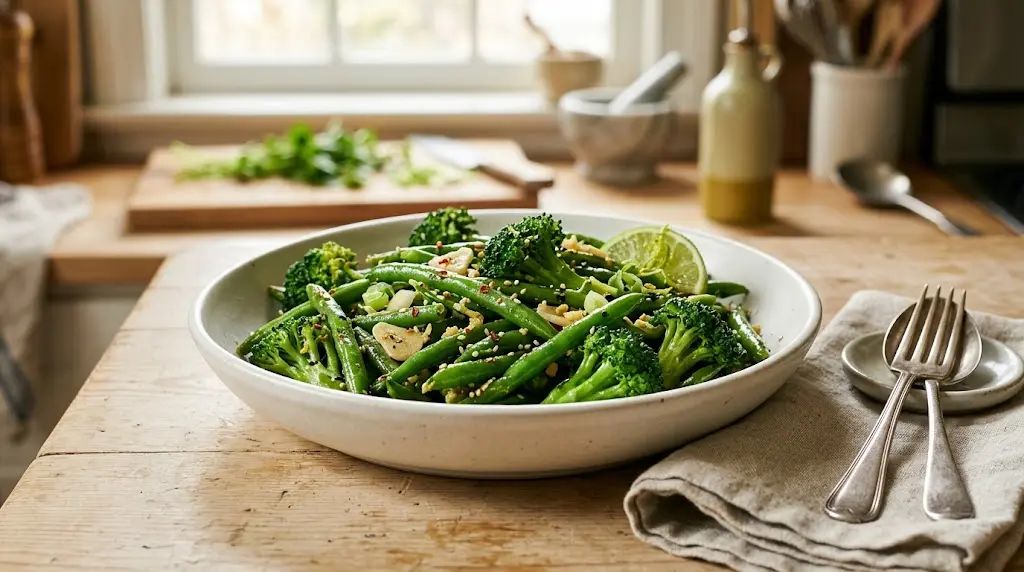
Green Beans and Broccoli Recipe
Ingredients
Equipment
Method
- Prepare the vegetables: Wash and dry the broccoli and green beans. Trim the beans, cut them into bite-sized pieces, and separate the broccoli into evenly sized florets.
- Heat the oil: Warm the olive oil in a large skillet over medium heat.
- Cook the onion: Add the sliced onion and sauté for about 3 minutes, stirring occasionally, until softened.
- Start the green beans: Add the green beans and cook for 2–3 minutes, stirring to coat them in the oil.
- Add the broccoli: Stir in the broccoli florets and 2 tablespoons of water. Cover the skillet and cook for 5–7 minutes, checking occasionally for tenderness.
- Add the aromatics: Remove the lid and allow excess moisture to evaporate. Stir in the minced garlic and grated ginger.
- Season the vegetables: Add the soy sauce or tamari and cook for another 1–2 minutes, stirring frequently to prevent the garlic from burning.
- Finish with lime: Turn off the heat, add lime juice, and taste before adjusting the salt and pepper.
- Garnish and serve: Sprinkle with sesame seeds if desired and serve warm with your favorite main dish.
Notes
- Cut the vegetables evenly to help them cook at a similar rate.
- Add a little more water if the green beans need extra cooking time.
- Use less water with thawed frozen vegetables because they may release additional moisture.
- For a gluten-free version, choose certified gluten-free tamari or another suitable alternative.
- Refrigerate leftovers in an airtight container and use within 3–4 days.
Tips for Consistent Results
- Keep the cuts even: Similar-sized vegetables cook more predictably and are easier to serve.
- Do not skip the green beans’ head start: Adding them first gives them extra time to soften.
- Control the water: Start with a small splash. You can always add more if the vegetables need extra steaming.
- Watch the garlic: It needs only a short time in the pan. Burnt garlic can make the entire dish taste bitter.
- Season gradually: Soy sauce already contains salt, so taste before adding extra.
- Finish with acidity: Lime or lemon juice balances the savory sauce without making the dish complicated.
Fresh vs. Frozen Vegetables
Both fresh and frozen vegetables can work, but the final texture may differ.
| Feature | Fresh vegetables | Frozen vegetables |
|---|---|---|
| Texture | Usually firmer and easier to keep crisp-tender | Can become softer and release more water |
| Preparation | Wash, dry, and trim | Thaw and drain when practical |
| Cooking | Easier to control browning | May need less added water |
| Best use | When texture is the priority | When convenience matters most |
Avoid adding too much water to frozen vegetables. Start with less liquid than you would use for fresh produce, then adjust after checking how much moisture the pan releases.
Easy Variations
Make it spicy
Add a pinch of red pepper flakes or a little chili-garlic sauce when adding the garlic. Start with a small amount and increase it to taste.
Add mushrooms or bell peppers
Thinly sliced mushrooms or bell peppers add variety. Cook firmer vegetables first and add quicker-cooking ingredients later so everything finishes at a similar time.
Make it gluten-free
Use gluten-free tamari or a soy sauce specifically labeled gluten-free. Check any additional sauces and seasonings as well.
Make it a more filling meal
Serve the vegetables over rice or noodles, or pair them with tofu, chicken, or shrimp. For another broccoli preparation with a more pronounced roasted flavor, see our Fiery Broccoli Cava recipe.
Try a different finishing flavor
Lime gives the dish a fresh, bright finish. Lemon is a straightforward substitute, while a small drizzle of toasted sesame oil can provide a deeper, nuttier aroma. Add sesame oil sparingly because its flavor is concentrated.
What to Serve With Broccoli and Green Beans
This side dish fits easily into a weeknight meal. Pair it with steamed rice and grilled chicken, roasted salmon, baked tofu, or a simple noodle bowl.
For a more substantial dinner, serve the vegetables alongside a grain bowl. Our Yard House Steak Bowl recipe is another option when you want vegetables alongside steak, grains, and a savory sauce.
If you are serving several side dishes, keep the seasoning in mind. A strongly seasoned main dish often works best with vegetables that have a lighter garlic-and-soy flavor.
How to Store and Reheat Leftovers
Allow the cooked vegetables to cool, then transfer them to an airtight container and refrigerate within two hours. For best quality, eat the leftovers within three to four days.
Reheat a portion in a skillet over medium heat with a small splash of water. Stir gently until hot throughout. A microwave also works; use short intervals and avoid heating longer than necessary, as the vegetables can become soft.
The dish is best enjoyed fresh if you want the firmest texture. Freezing cooked broccoli and green beans is possible, but thawed leftovers are generally softer, so freezing is not the best choice when texture matters.
Common Mistakes to Avoid
Cooking both vegetables for exactly the same amount of time: Green beans may need a little head start. Add the broccoli after the beans have begun cooking.
Using oversized broccoli florets: Large pieces take longer to soften and can leave the beans overcooked by the time the broccoli is ready.
Adding too much liquid: Excess water dilutes the sauce and makes the vegetables soggy. Use small additions only when needed.
Adding garlic too early: Garlic can brown quickly in a hot skillet. Stir it in near the end of cooking.
Leaving the pan covered too long: Steam helps soften the vegetables, but prolonged covered cooking can make them lose their bite. Check the texture before extending the cooking time.
Frequently Asked Questions
Can I cook broccoli and green beans together?
Yes. Start the green beans first, then add the broccoli. A short covered cooking period helps both vegetables become tender without losing all their texture.
Should I blanch green beans before stir-frying?
No, blanching is optional. Smaller pieces can cook directly in the skillet, while blanching can help when preparing a larger batch ahead of time.
Can I use frozen broccoli and green beans?
Yes. Thaw and drain them when possible, then use less added water. Frozen vegetables may soften more quickly and release additional moisture during cooking.
How do I keep broccoli and green beans crisp?
Cut the vegetables evenly, avoid overcrowding the skillet, and check them before extending the cooking time. Remove them from the heat once they reach your preferred texture.
Is broccoli healthier than green beans?
Both provide fiber, vitamins, and minerals. Their nutritional profiles differ, so including both vegetables in a varied diet is a practical choice.
What sauce goes well with broccoli and green beans?
A simple garlic, ginger, and soy sauce mixture works well. Add lime for brightness or a little chili sauce for extra heat.
Can I make this recipe without soy sauce?
Yes. Use a suitable alternative such as coconut aminos, adjusting the amount to taste because sweetness and saltiness can vary by brand.
How long do cooked green beans and broccoli last?
Refrigerate leftovers in an airtight container and use them within three to four days. Reheat thoroughly and expect the vegetables to soften slightly.
Final Thoughts
This green beans and broccoli recipe is a practical way to turn two everyday vegetables into a flavorful side dish without complicated preparation. The key is to give the green beans a short head start, keep the broccoli pieces even, and use just enough steam to finish cooking.
Once the vegetables reach your preferred texture, garlic, ginger, and a little acidity bring everything together. Serve it fresh with your favorite main dish, or add rice and protein to make it part of a more filling meal.