Breakfast strata Ina Garten is a popular search for anyone looking to make a savory, oven-baked breakfast with bread, eggs, cheese, and flavorful fillings. This style of breakfast casserole is especially useful for weekend brunch, Christmas morning, or feeding a group without preparing individual portions.
The secret to a good breakfast strata is getting the texture right. The bread should absorb the egg mixture without turning mushy, the vegetables should release their excess moisture before baking, and the center should cook through while the top develops a lightly golden finish.
This guide covers an independently developed breakfast strata recipe with bacon, spinach, Parmesan, and a seasoned egg mixture. It also explains how to prepare the casserole overnight, adjust the ingredients, and avoid common problems. It is not a verified official Ina Garten or Barefoot Contessa recipe.
What Is Breakfast Strata?
Breakfast strata is a savory casserole made by layering bread with eggs, milk, cheese, and optional ingredients such as bacon, sausage, spinach, or mushrooms. The bread absorbs the seasoned egg mixture before the casserole goes into the oven.
Unlike scrambled eggs or a traditional omelet, strata is baked in one dish and cut into portions for serving. Its texture should be tender and custardy inside, with flavorful fillings throughout and lightly browned edges.
If you are searching for Ina Garten breakfast strata, strata recipe Ina Garten, or Barefoot Contessa breakfast casserole, this version offers a practical way to prepare a similar style of make-ahead breakfast without claiming to reproduce an unverified official recipe.
Why This Breakfast Strata Works
- Make-ahead preparation: Assemble the casserole the evening before and bake it in the morning.
- Balanced texture: Sturdy bread absorbs the custard while keeping enough structure to hold its shape.
- Flavorful fillings: Bacon, spinach, onion, garlic, and Parmesan provide savory flavor without requiring an elaborate sauce.
- Flexible ingredients: Swap the bacon for cooked sausage, ham, or sautéed vegetables.
- Convenient serving: Bake everything in one dish, then cut it into portions for brunch or a holiday breakfast.
Ingredients for Breakfast Strata
The following ingredients make one 9-by-13-inch casserole. Use the quantities in the recipe card for the complete preparation.
| Ingredient | Amount | Why it matters |
|---|---|---|
| Crusty French bread or sourdough | 12 ounces, cubed | Provides structure and absorbs the custard |
| Large eggs | 9 | Hold the casserole together |
| Whole milk | 2 cups | Creates a tender, creamy interior |
| Bacon | 8 slices | Adds smoky, savory flavor |
| Fresh spinach | 3 packed cups, chopped | Adds color and a mild earthy flavor |
| Onion | ½ cup, chopped | Builds the savory base |
| Garlic | 3 cloves, minced | Adds depth |
| Parmesan cheese | 1½ cups, shredded | Provides a salty, nutty finish |
| Dijon mustard | 1 teaspoon | Adds subtle tang |
| Salt | 1 teaspoon, adjusted to taste | Seasons the custard |
| Black pepper | ¼ teaspoon, or to taste | Adds gentle warmth |
| Butter or cooking spray | As needed | Prevents sticking |
Which Bread Is Best for Strata?
Crusty French bread, sourdough, and artisan loaves are reliable choices because they absorb liquid without collapsing as easily as soft sandwich bread.
Day-old bread is particularly convenient. If your loaf is fresh, cut it into cubes and spread them on a baking sheet to dry for several hours. You can also dry the cubes in a low oven until the surfaces feel drier but have not become deeply browned.
Cutting the bread into roughly 1-inch cubes helps the egg mixture distribute evenly. Very small pieces can become dense, while oversized chunks may remain dry in the center.
Fresh or Frozen Spinach?
Both work. Fresh spinach can be sautéed until wilted, while frozen spinach should be thawed completely and squeezed dry before cooking.
This step matters because excess water can dilute the egg mixture and create wet pockets in the finished casserole. Cook the spinach with the onion and garlic until any remaining liquid has mostly evaporated.
Can You Use a Different Cheese?
Yes. Parmesan provides a pronounced savory flavor, but Gruyère, sharp cheddar, Gouda, and Monterey Jack can also work.
For a balanced result, combine a good melting cheese with a smaller amount of Parmesan. Check the salt level before adding extra seasoning, particularly when using bacon, ham, or a strongly flavored cheese.
How to Make Breakfast Strata Ina Garten Style
Prepare the Bread
Grease a 9-by-13-inch baking dish with butter or cooking spray. Spread the bread cubes evenly across the bottom without compressing them.
If the bread is fresh and soft, allow extra time for drying. This simple preparation helps the cubes retain their shape after absorbing the custard.
Cook the Bacon
Cook the bacon in a skillet until crisp, following the package directions. Transfer it to a paper towel-lined plate and allow it to cool enough to handle.
Leave approximately 1 tablespoon of bacon fat in the skillet, or drain the fat and add a little olive oil. Cut the bacon into bite-size pieces and scatter it over the bread.
Sauté the Onion, Garlic, and Spinach
Add the onion to the skillet and cook over medium heat until softened. Stir in the garlic and cook briefly, taking care not to burn it.
Add the spinach and cook until wilted. If liquid collects in the pan, continue cooking until most of it evaporates. Remove the skillet from the heat and distribute the vegetables over the bread and bacon.
Add the Cheese
Sprinkle the shredded Parmesan evenly over the casserole. Distributing the ingredients in layers helps prevent one section from containing all the bacon or vegetables.
For a different flavor, replace some of the Parmesan with Gruyère or sharp cheddar.
Whisk the Egg Mixture
In a large bowl, whisk together the eggs, milk, Dijon mustard, salt, and black pepper until evenly combined.
Pour the mixture slowly over the bread and fillings. Pay attention to the corners of the baking dish, where dry bread can easily be overlooked.
Gently press any exposed bread cubes into the liquid. Do not crush them; they should remain distinct pieces.
Refrigerate Before Baking
Cover the baking dish and refrigerate for at least 1 hour, preferably overnight.
During this time, the bread absorbs the egg mixture, helping the casserole cook more evenly. For the best results, refrigerate it promptly after assembly rather than leaving raw eggs and milk at room temperature.
Bake Until the Center Is Set
Preheat the oven to 375°F (190°C). Remove the casserole from the refrigerator while the oven heats, keeping the total time at room temperature within safe food-handling limits.
Bake uncovered for about 20 minutes. If the top begins browning too quickly, cover the dish loosely with foil and continue baking for approximately 25–35 minutes.
The total baking time will depend on the depth of the casserole, the starting temperature, and how much moisture the fillings contain. Check the center rather than relying only on the clock.
The egg mixture should be set throughout and reach 160°F (71°C) in the center. If it is still liquid, continue baking and check again.
Let the casserole rest for 5–10 minutes before cutting. This allows the layers to settle and makes serving easier.
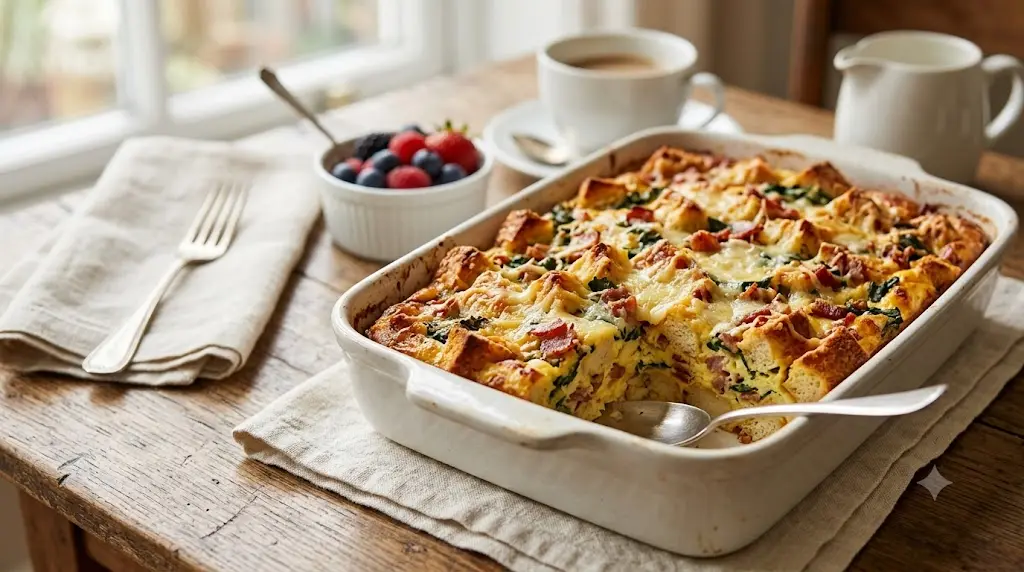
Breakfast Strata Ina Garten
Ingredients
Equipment
Method
- Prepare the bread: Grease a 9-by-13-inch baking dish. Spread the bread cubes evenly across the bottom. If the bread is fresh and soft, dry it briefly before assembling.
- Cook the bacon: Fry the bacon until crisp, following the package directions. Transfer it to a paper towel-lined plate, let it cool slightly, and cut it into bite-size pieces.
- Cook the vegetables: Leave about 1 tablespoon of bacon fat in the skillet, or use a little olive oil. Sauté the onion until softened, add the garlic, and stir in the spinach. Cook until wilted and most excess moisture has evaporated.
- Layer the ingredients: Scatter the bacon and cooked vegetables over the bread. Sprinkle the Parmesan evenly across the dish.
- Mix the custard: Whisk the eggs, milk, Dijon mustard, salt, and black pepper in a large bowl until evenly combined.
- Add the egg mixture: Pour the custard slowly over the bread and fillings. Gently press exposed bread cubes into the liquid without crushing them.
- Chill the casserole: Cover the dish and refrigerate for at least 1 hour, preferably overnight, to allow the bread to absorb the custard.
- Preheat the oven: Heat the oven to 375°F (190°C). Keep the assembled casserole refrigerated until the oven is ready.
- Bake the strata: Bake uncovered for approximately 20 minutes. If the top browns too quickly, cover loosely with foil and continue baking for another 25–35 minutes, checking the center.
- Check for doneness: The center should be set, and a food thermometer should register 160°F (71°C) in the center. Add more baking time if needed.
- Rest and serve: Let the casserole rest for 5–10 minutes before slicing. Serve warm with fresh fruit, roasted breakfast potatoes, or a green salad.
Notes
- Use slightly dry, sturdy bread for the best texture.
- Drain frozen spinach thoroughly if using it instead of fresh spinach.
- Gruyère or sharp cheddar can replace some or all of the Parmesan.
- Refrigerate leftovers within 2 hours and use within 3–4 days.
- Reheat leftovers to 165°F (74°C).
- Cooking time varies with casserole depth and starting temperature.
Summary
This breakfast strata Ina Garten–style casserole combines crusty bread, eggs, bacon, spinach, and cheese for a savory make-ahead breakfast. Prepare it overnight for brunch or a holiday meal, then bake until the center is fully set and serve warm.How to Get the Best Texture Every Time
The most important part of breakfast strata is controlling moisture. Bread needs enough liquid to soften, but excess moisture from vegetables or an overly generous amount of milk can leave the center watery.
| Problem | Likely cause | What to do |
|---|---|---|
| Mushy bread | Very soft bread or too much moisture | Use a sturdy loaf and dry fresh bread first |
| Dry bread in the center | Uneven distribution of the egg mixture | Pour slowly and press exposed cubes gently into the custard |
| Watery casserole | Spinach or mushrooms released excess liquid | Cook the vegetables until most liquid evaporates |
| Rubbery eggs | Overbaking | Check the internal temperature near the end of baking |
| Dark top with an undercooked center | Uneven heat or a deep casserole | Cover loosely with foil and continue baking |
| Casserole falls apart when served | Cutting immediately after baking | Rest for 5–10 minutes before slicing |
One useful distinction is that a creamy center should not be a raw center. The eggs must be fully cooked even when the bread remains soft and tender.
Can You Make Breakfast Strata the Night Before?
Yes. Overnight preparation is one of the main advantages of this breakfast casserole.
Assemble the bread, cooked fillings, cheese, and egg mixture in the baking dish. Cover and refrigerate promptly, then bake the next morning.
For an easier morning, cook the bacon and vegetables ahead of time and refrigerate them separately. Assemble the casserole once the fillings have cooled, or prepare the entire dish the evening before.
A few practical details help:
- Use bread that is slightly dry rather than fresh and fluffy.
- Drain the vegetables well before layering them.
- Keep the assembled casserole refrigerated.
- Allow additional baking time if the center is still cold.
- Use a food thermometer to confirm that the eggs reach 160°F (71°C).
For a Christmas breakfast casserole, these steps make it easier to serve a warm meal without spending the entire morning at the stove.
Breakfast Strata Variations
Sausage Breakfast Strata
Replace the bacon with cooked breakfast sausage. Drain excess grease before adding it to the bread, and adjust the salt to account for the seasoning in the sausage.
Vegetarian Breakfast Strata
Skip the bacon and use sautéed mushrooms, bell peppers, or additional spinach. Cook the vegetables first to remove excess moisture and concentrate their flavor.
Ham and Cheddar Strata
Use diced cooked ham and shredded sharp cheddar for a familiar American breakfast flavor. A little chopped green onion adds freshness without overpowering the other ingredients.
Christmas Breakfast Casserole
For a holiday brunch, prepare the strata the evening before and serve it with fresh fruit, roasted breakfast potatoes, or a simple green salad. The combination works well for a family gathering because the main dish can be baked in one pan.
Gluten-Free Breakfast Strata
Choose a sturdy gluten-free loaf and verify that the other ingredients meet your dietary needs. Gluten-free breads vary in absorbency, so check the bread after soaking and allow enough time for the custard to distribute evenly.
What to Serve With Breakfast Strata
Because this casserole contains eggs, cheese, and often bacon, lighter sides can balance the meal.
- Fresh fruit salad: Berries, melon, grapes, and orange segments add freshness.
- Roasted breakfast potatoes: Serve crisp potatoes for a heartier brunch.
- Green salad: A lightly dressed salad contrasts with the rich casserole.
- Yogurt and berries: A simple side for guests who want something lighter.
- Coffee or orange juice: Familiar drinks that fit a weekend or holiday breakfast.
For a larger gathering, choose two or three sides rather than preparing several heavy dishes. This keeps the menu varied without making the meal unnecessarily complicated.
How to Store and Reheat Breakfast Strata
Allow the casserole to cool slightly, then refrigerate leftovers in shallow, airtight containers within 2 hours of cooking. Keep the refrigerator at 40°F (4°C) or below and use refrigerated leftovers within 3–4 days.
To reheat a larger portion, cover it with foil and warm it in a 325–350°F oven until heated through. Smaller portions can be reheated in the microwave in short intervals.
Reheated egg dishes should reach 165°F (74°C). Avoid repeatedly warming and cooling the entire casserole; reheat only the portion you plan to serve.
Cooked strata can also be frozen in individual portions. For best quality, use frozen portions within 2–3 months and thaw them in the refrigerator before reheating. The texture may be slightly softer after freezing.
If you plan to freeze an unbaked casserole, use a freezer-safe dish, wrap it securely, and thaw it safely in the refrigerator before baking. Do not thaw a raw egg casserole on the counter.
Frequently Asked Questions
What is the best bread for breakfast strata?
Crusty French bread, sourdough, or artisan bread absorbs the egg mixture while retaining enough structure to help prevent a mushy casserole.
Can I make Ina Garten breakfast strata the night before?
Yes. Assemble the casserole, cover it, and refrigerate overnight so the bread absorbs the egg mixture before baking the next morning.
Is breakfast strata the same as a breakfast casserole?
Strata is a type of breakfast casserole traditionally made with layers of bread, eggs, milk, cheese, and optional meat or vegetables.
Can I make breakfast strata without bacon?
Yes. Replace the bacon with sautéed mushrooms, bell peppers, extra spinach, or cooked breakfast sausage alternatives to suit your preferences.
How do I know when breakfast strata is done?
The center should be set, not liquid, and a food thermometer should register 160°F (71°C) in the center before serving.
Can I freeze breakfast strata?
Yes. Freeze cooked portions in airtight containers and use them within two to three months for the best quality. Thaw safely in the refrigerator.
Why is my breakfast strata soggy?
Excess vegetable moisture, soft bread, or an overly wet mixture can cause sogginess. Use sturdy bread and cook the vegetables before assembling.
What is a good Christmas breakfast casserole?
A bread-based strata with eggs, cheese, spinach, and bacon or sausage makes a convenient holiday breakfast because it can be assembled ahead.
Can I use half-and-half instead of milk?
Yes. Half-and-half creates a richer custard. Keep the quantity similar and monitor the casserole carefully to prevent the eggs from overcooking.
What is the difference between strata and quiche?
Strata uses bread as a main ingredient, while quiche typically contains an egg-based filling baked in a pastry crust or prepared without one.
Final Thoughts
A successful breakfast strata depends on a few practical details: choosing sturdy bread, cooking moisture-rich fillings before assembly, allowing enough soaking time, and checking the center for doneness.
This independently developed version is a useful option for weekend brunch or a holiday breakfast, with ingredients that can be adapted to different tastes. Prepare it ahead, pair it with fresh fruit or roasted potatoes, and serve it once the center is fully cooked and the casserole has had a few minutes to rest.