Mulhoe Korean is one of those dishes that makes sense as soon as you taste it. Thin slices of raw fish are combined with crunchy vegetables and a bold, chilled broth made with Korean red pepper paste, vinegar, garlic, and other seasonings. The result is cold, spicy, tangy, slightly sweet, and surprisingly refreshing.
The first thing I noticed when making mulhoe is how much the temperature changes the experience. This is not a warm soup that happens to contain seafood. It is meant to be served very cold, with the crisp vegetables and chilled broth keeping every bite light and refreshing.
If you enjoy Korean seafood, sashimi-style dishes, or bright spicy flavors, mulhwe is worth trying.
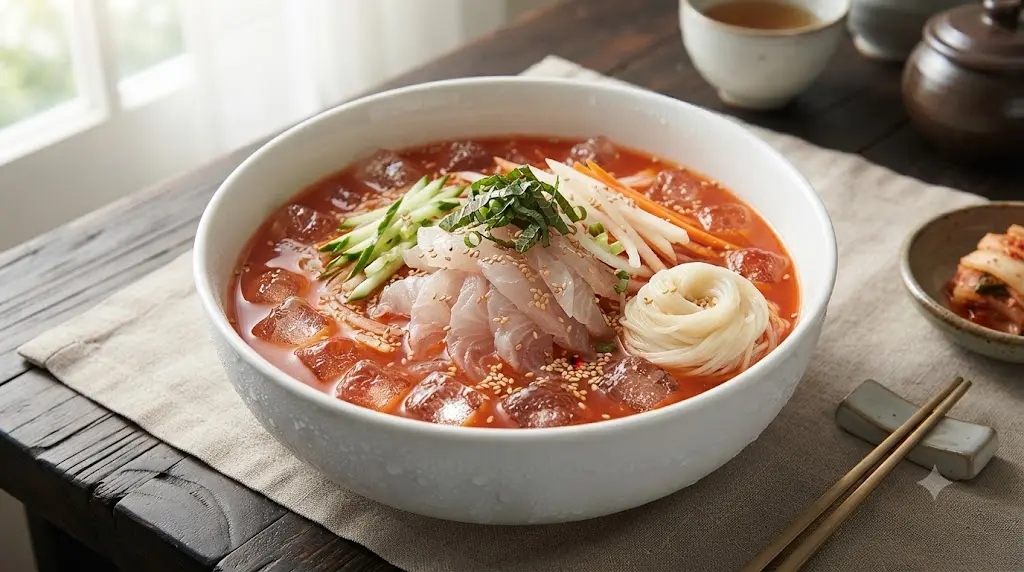
Mulhoe Korean
Ingredients
Equipment
Method
- Chill the fish: Slice the fish into thin strips and keep it refrigerated while preparing the remaining ingredients.
- Prepare the vegetables: Cut the cucumber, Korean pear, carrot, and onion into thin strips so they combine easily with the fish.
- Mix the spicy sauce: Whisk together gochujang, gochugaru, rice vinegar, sugar, soy sauce, minced garlic, and sesame oil until smooth.
- Thin the broth: Gradually add the very cold water to the sauce, stirring until you have a flavorful, pourable broth.
- Chill the broth: Refrigerate the seasoned broth for about 15 minutes so it becomes thoroughly cold.
- Assemble the bowl: Add the chilled vegetables and sliced fish to a large serving bowl.
- Add the cold broth: Pour the chilled spicy broth over the fish and vegetables.
- Finish the mulhoe: Add toasted sesame seeds and a few ice cubes just before serving.
- Serve immediately: Enjoy the mulhoe Korean cold, with cooked somyeon noodles or steamed rice if desired.
Notes
Summary
This mulhoe Korean recipe combines chilled raw fish, crunchy vegetables, and a spicy-tangy Korean broth for a refreshing seafood meal. Serve it immediately while everything is cold, and add noodles or rice if you want a more filling bowl.What Is Mulhoe Korean Food?
Mulhoe Korean food is a chilled Korean raw fish dish traditionally associated with coastal areas. The Korean name is 물회, and the dish combines sliced seafood with vegetables and a seasoned cold broth.
Korea Tourism Organization describes mulhoe as seafood such as flatfish, rockfish, abalone, or sea cucumber served in seasoned cold broth, with vinegar adding the characteristic tang. Different coastal regions have their own versions.
The dish is particularly associated with Korea’s seaside regions, including parts of Gyeongsang-do, Jeju-do, and Gangwon State.
Traditional versions can also vary considerably. Some use noodles, some include rice, and some contain a broader selection of seafood. That regional flexibility is one reason you may see slightly different versions when searching for mul hwe or mulwhe.
What Does Mulhoe Taste Like?
Mulhoe has a flavor combination that is hard to compare with an ordinary soup.
The broth is usually:
- Spicy from gochujang and sometimes gochugaru
- Tangy from vinegar
- Slightly sweet from sugar, fruit, or another sweetener
- Savory from garlic and sesame-based seasonings
- Extremely refreshing when served cold
The raw fish itself should have a clean, delicate flavor rather than overpowering the broth.
I like balancing the sauce before adding the fish. If the vinegar is too strong, the bowl tastes sharp. If there is too much sweetness, the refreshing character disappears. A good mulhoe should have enough spice and acidity to wake up the palate without hiding the seafood.
Mulhoe vs. Mulhwe vs. Mul Hwe
You may see this Korean dish written several ways online.
| Search term | What it refers to |
|---|---|
| Mulhoe | Most common English romanization |
| Mulhwe | Alternate romanization |
| Mul Hwe | Spaced version sometimes used in English |
| Mulwhe | Another spelling variation |
| Mul Hae | Less common English rendering |
The Korean name is 물회. Maangchi also lists moolhoe, mulhwe, and moolhwe as alternate romanizations.
So if you searched for mulhwe, mul hwe, or mulwhe, you are essentially looking for the same Korean cold raw-fish dish.
What Fish Is Best for Mulhoe?
A firm, mild fish works especially well because it needs to hold its texture in a cold, acidic broth.
Common choices include:
- Flounder
- Flatfish
- Rockfish
- Sea bream
- Other appropriate sashimi-grade fish
Korean versions can also use different seafood depending on the region. Korea Tourism Organization notes variations involving flatfish, rockfish, abalone, sea cucumber, and other seafood.
For a home version in the United States, I would focus less on finding one exact species and more on finding properly handled fish intended for raw consumption.
Important Raw Fish Safety
This part matters more than finding the perfect fish.
FDA advises that cooking seafood thoroughly is the safest way to reduce foodborne illness risk. If you choose to eat raw fish, FDA recommends choosing fish that has been appropriately frozen to help control parasites, while also noting that freezing does not eliminate every harmful germ.
Pregnant people, young children, older adults, and people with weakened immune systems are among the groups FDA identifies as being at greater risk from raw or undercooked seafood.
Keep the fish properly refrigerated while preparing it. USDA recommends keeping refrigerators at 40°F or below and keeping raw seafood sealed or securely wrapped to prevent cross-contamination.
Ingredients That Give Mulhoe Its Character
A good mulhoe Korean recipe does not need an enormous ingredient list. The important part is getting the contrast between fish, vegetables, heat, acidity, and cold temperature right.
Fish
Use thinly sliced fish suitable for raw consumption. Firm white fish is particularly easy to work with because it stays pleasantly chewy.
Gochujang
Korean red pepper paste gives the broth its deep savory heat and characteristic Korean flavor.
Gochugaru
Korean red pepper flakes can add another layer of chili flavor without making the sauce depend entirely on gochujang.
Vinegar
Vinegar provides the bright acidity that makes the cold broth taste refreshing rather than heavy.
Garlic
Fresh garlic gives the sauce a sharper savory background.
Vegetables
Thinly sliced cucumber, onion, lettuce, Asian pear, carrot, or other crisp vegetables can work beautifully. Regional recipes vary, so there is room to adjust the vegetable combination.
Sesame
Sesame oil and sesame seeds add nuttiness and round out the sharper flavors.
Ice-Cold Water
The broth should be properly chilled. Ice can be added shortly before serving when you want the bowl especially cold.
How to Make Mulhoe Korean at Home
1. Keep the Fish Cold
Slice the fish into thin, manageable pieces and return it to the refrigerator while preparing everything else.
This small step makes a noticeable difference. You do not want the fish sitting at room temperature while you prepare the sauce and vegetables.
2. Prepare the Vegetables
Cut cucumber and other vegetables into thin matchsticks or similarly thin pieces.
The vegetables should be easy to pick up with chopsticks and small enough to combine with the fish rather than becoming separate salad components.
3. Mix the Spicy Broth
Combine gochujang with vinegar, garlic, and your preferred amount of sweetness.
Add gochugaru if you want more chili flavor. Thin the mixture gradually with very cold water until it becomes pourable but still flavorful.
Taste the broth before adding the fish.
This is the moment to adjust it.
Too sharp? Add a little sweetness.
Too sweet? Add a little vinegar.
Too thick? Add cold water gradually.
Not spicy enough? Add a little gochugaru or gochujang.
4. Chill the Broth
A properly chilled broth makes mul hwe much more refreshing.
If you have time, refrigerate the mixed broth before assembling the dish. You can also use ice immediately before serving, but avoid adding so much that the broth becomes watery.
5. Combine the Vegetables and Fish
Place the chilled vegetables into a large serving bowl and add the sliced fish.
Pour the cold spicy broth over everything.
Gently mix so the sauce reaches the vegetables and fish without breaking the delicate pieces.
6. Finish and Serve Immediately
Add sesame seeds and, if desired, a few ice cubes.
Serve immediately while the fish and broth are thoroughly cold.
Thin noodles can also be served with mulhoe. Noodles are a common addition in some versions, while other regional preparations use rice or focus mainly on fish and vegetables.
My Best Tips for Better Mulhoe
Make the broth first
I prefer preparing the broth before touching the fish. It gives the flavors time to come together and lets you get the seasoning right while the fish remains safely chilled.
Cut everything thin
Thin vegetables blend much better with the fish. Large cucumber chunks can make each bite feel disconnected.
Don’t drown the fish
Mulhoe should be juicy and brothy, but adding an excessive amount of water can weaken the gochujang, vinegar, and garlic flavors.
Taste the broth before adding ice
Ice naturally dilutes the seasoning. The broth should taste slightly stronger before the ice goes in.
Keep the texture fresh
This is not a dish I would prepare hours ahead and leave assembled. The vegetables can lose their crunch and the fish should be handled carefully.
Can You Add Noodles to Mulhoe?
Yes. Thin Korean wheat noodles such as somyeon are a popular way to turn mulhoe into a more substantial meal.
Cook the noodles separately, rinse them thoroughly under cold water, drain them well, and add them when serving.
Maangchi’s version specifically pairs mulhoe with thin noodles, while Pohang-style preparations also have versions where noodles are part of the dish.
If you prefer rice, that works too. Traditional Pohang descriptions include rice as part of the dish, showing how much the preparation can vary by region.
Regional Differences You Should Know
There isn’t one single universal mulhoe recipe.
Pohang-style mulhoe has a particularly strong connection to the city’s coastal food culture. Korea’s official cultural publication describes its development from a simple fishermen’s meal into a well-known regional specialty.
Gangwon and Sokcho versions can look quite different, with chilled broth, ice, noodles, and different combinations of seafood and vegetables.
Some restaurant versions go much further, using ingredients such as abalone, sea cucumber, sea squirt, octopus, and roe.
That means you should not worry if your homemade version does not look exactly like every bowl you see online. The defining idea is the combination of fresh seafood, vegetables, spicy-tangy seasoning, and a very cold serving style.
What to Serve With Mulhoe
Because mulhoe is already bright and strongly seasoned, simple sides work best.
Try it with:
- Steamed rice
- Cold somyeon noodles
- Korean seaweed
- Simple cucumber salad
- Light kimchi
- Roasted sesame seeds
- Extra Asian pear
I especially like noodles when serving this as a complete meal because they soak up the spicy chilled broth without making the dish feel heavy.
Common Mistakes When Making Mulhoe
Using ordinary fish for raw consumption
Do not assume that any fresh fish from a grocery store or seafood counter is suitable to eat raw.
Ask the seller specifically about fish intended for raw consumption and follow safe seafood-handling practices.
Making the broth too watery
The broth should be cold and drinkable, but it should still have enough flavor to coat the fish and vegetables.
Adding too much vinegar
Acidity is important, but too much vinegar can overpower the delicate seafood.
Serving it warm
The cold temperature is part of the identity of the dish. Room-temperature broth changes the entire experience.
Letting the assembled bowl sit
For the best texture and food safety, assemble close to serving time and eat promptly.
Why I Like This Korean Seafood Dish
What makes mulhoe Korean cooking interesting to me is that it does not rely on complicated cooking techniques.
There is no long simmering pot or elaborate frying process. The quality comes from preparation: keeping the seafood cold, slicing the ingredients properly, balancing the sauce, and serving everything at the right temperature.
The first bite gives you several things at once—cool broth, crisp vegetables, tender fish, chili heat, acidity, and a little sweetness.
It feels particularly good on a hot day when a heavy meal sounds unappealing.
And once you understand the basic balance, you can adjust the bowl to your taste without losing what makes mulhoe recognizable.
Frequently Asked Questions
What is mulhoe Korean food?
Mulhoe is a Korean chilled raw fish dish made with thinly sliced seafood, vegetables, and a spicy, tangy broth. It is especially associated with Korea’s coastal regions and is commonly served very cold with ice.
What does mulhoe taste like?
Mulhoe tastes spicy, tangy, slightly sweet, savory, and very refreshing. Gochujang provides the Korean chili flavor, while vinegar adds brightness and cold water or broth gives the dish its cooling character.
What does mulhwe mean?
Mulhwe is an alternate English romanization of the Korean dish 물회. You may also see it written as mulhoe, moolhoe, moolhwe, or mul hwe when searching for Korean cold raw fish soup.
What fish is used in mulhoe?
Mulhoe can be made with different seafood depending on the region. Flatfish and other firm white fish are common choices, while some versions use rockfish, squid, abalone, sea cucumber, or other seafood.
Is mulhoe served hot or cold?
Mulhoe is served cold. The seafood and vegetables are combined with a chilled spicy-tangy broth, and ice may be added just before serving to keep the dish especially refreshing.
Can I make mulhoe without raw fish?
Yes, but it will no longer be traditional raw-fish mulhoe. You can use cooked seafood if you prefer to avoid raw fish, although the texture and overall experience will be different from the classic preparation.
Can you eat mulhoe with noodles?
Yes. Thin Korean noodles are commonly paired with some versions of mulhoe. They make the dish more filling and work particularly well because they absorb the chilled spicy broth.
Is mulhoe the same as ceviche?
They share the idea of serving raw seafood with acidic seasoning, but they are different dishes. Mulhoe is a Korean preparation centered on chilled spicy broth, while ceviche traditions vary across Latin America and generally use citrus as the main acid.
Where did mulhoe originate?
Mulhoe is strongly associated with Korea’s coastal fishing communities. Pohang is particularly well known for its regional style, while different versions are also found across coastal areas including Gangwon and Jeju.
Is mulhoe safe to make at home?
Raw seafood requires extra care. FDA recommends cooking seafood thoroughly as the safest option and advises people choosing raw fish to select appropriately handled fish, including fish that has been previously frozen for parasite control.
Final Thoughts
If you have never tried mulhoe Korean style before, think of it as a meeting point between Korean sashimi, a crisp vegetable salad, and an intensely refreshing cold soup.
The best version is not necessarily the hottest one. It is the one where the spicy, sour, slightly sweet broth supports the fish instead of covering it up.
Keep everything cold, use appropriate raw-consumption seafood, balance the broth before adding ice, and serve it immediately. Those small details make a surprisingly big difference.