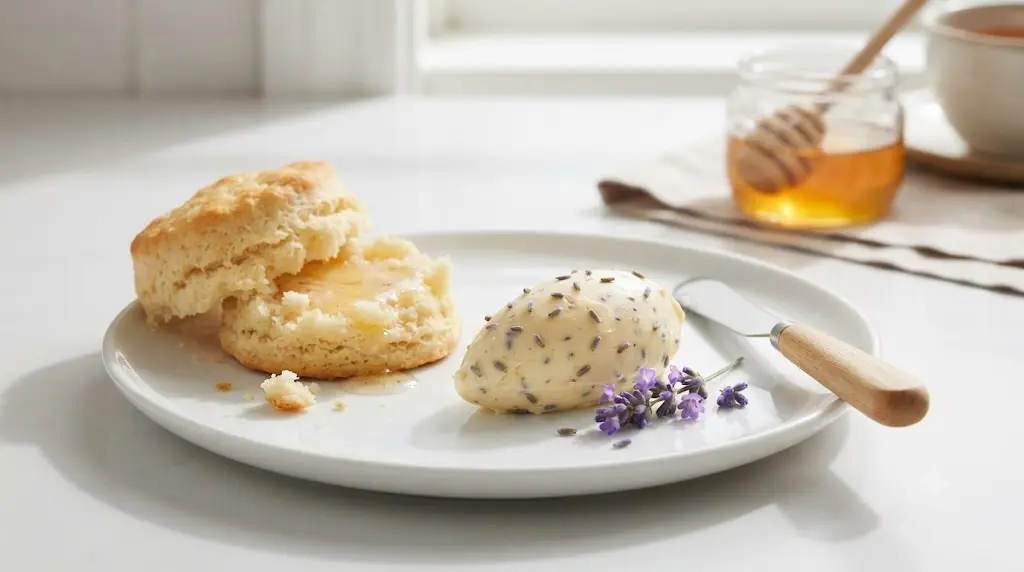
Lavender honey butter is a soft, creamy compound butter made with real butter, culinary lavender, honey, and a small pinch of salt. It has a gentle floral aroma, natural sweetness, and a rich buttery texture that makes warm biscuits, toast, scones, pancakes, waffles, and cornbread feel a little more special.
The key to good lavender honey butter is balance. Lavender is naturally strong, so you only need a small amount to give the butter its characteristic floral flavor. Using culinary-grade lavender and a mild honey keeps the finished spread fragrant rather than bitter or overpowering.
This recipe takes only a few minutes to mix and needs a short chilling period before serving. You can keep it in a small container for spreading or shape it into a butter log and slice off pieces whenever you need them.
Why You’ll Love This Lavender Honey Butter
This recipe is simple enough for an everyday breakfast but distinctive enough for brunch or a holiday table.
- Quick to make: There is no cooking or complicated preparation.
- Balanced flavor: Mild honey softens the floral character of lavender.
- Easy texture: Softened butter blends smoothly with the other ingredients.
- Versatile: Use it on both sweet and lightly savory foods.
- Make-ahead friendly: The flavor becomes more rounded after chilling.
- Customizable: You can adjust the honey, lavender, or salt to your taste.
What Is Lavender Honey Butter?
Lavender honey butter is a type of compound butter. Instead of leaving butter plain, you mix it with flavoring ingredients while it is soft enough to blend.
Here, the main flavor comes from culinary lavender and honey. The butter provides a rich base, while honey contributes sweetness and lavender adds a light floral note. A little salt helps bring the flavors together.
Unlike a flavored butter made with a large amount of herbs or spices, this version works best when the lavender remains subtle. You should notice the floral aroma without it taking over the buttery flavor.
Ingredients You Need
Unsalted Butter
Use good-quality unsalted butter that has been softened to room temperature. Unsalted butter gives you better control over the salt level because honey and lavender already have distinct flavors.
Avoid melting the butter. It should be soft enough to press easily with a spoon but still hold its shape.
Culinary Lavender
Use dried culinary lavender intended for food. A small amount is enough because lavender has a concentrated floral aroma.
For this recipe, finely crushing the dried buds helps distribute their flavor throughout the butter. If the pieces are large, the floral taste can become uneven from bite to bite.
Honey
A mild, light-colored honey works particularly well. Clover, mild wildflower, or another delicate honey lets the lavender remain noticeable instead of covering it with a stronger honey flavor.
You can use slightly more or less depending on how sweet you want the butter.
Fine Salt
A small pinch of salt keeps the butter from tasting one-dimensionally sweet and helps sharpen the floral notes.
If your butter is already salted, start without additional salt and taste before adding any.
How to Make Lavender Honey Butter
Soften the Butter Properly
Leave the butter at room temperature until it is soft enough to mix easily. Do not microwave it until melted.
Properly softened butter creates a smooth finished texture and helps the honey distribute evenly.
Prepare the Lavender
Place the dried culinary lavender in a small bowl and lightly crush it with your fingers, the back of a spoon, or a mortar and pestle.
You are not trying to turn it into powder. Breaking the buds slightly releases their aroma and makes them easier to distribute through the butter.
Mix the Butter
Add the softened butter, crushed lavender, honey, and salt to a mixing bowl.
Use a fork, spatula, or hand mixer on low speed to blend everything until the honey is evenly incorporated and the lavender is distributed throughout the butter.
Taste Before Chilling
Taste a tiny amount before shaping the butter.
The flavor should be buttery first, followed by gentle honey sweetness and a noticeable but restrained lavender aroma. If it tastes too floral, mix in a little more plain butter. If it needs more sweetness, add a small amount of honey.
Shape and Chill
Transfer the butter to parchment paper and shape it into a compact log.
Twist both ends of the parchment and refrigerate until firm, usually about 30 to 60 minutes. You can also place the finished butter in a covered container if you prefer a spreadable texture.
Chilling gives the lavender time to mingle with the butter and honey, so the flavor becomes more cohesive.
How to Make Lavender Butter Without Honey
If you want the floral flavor without added sweetness, you can easily turn this recipe into a basic lavender butter.
Simply combine softened unsalted butter with a small amount of finely crushed culinary lavender and a pinch of salt. Mix until evenly distributed, then chill.
This version works especially well with roasted vegetables, warm dinner rolls, potatoes, or lightly sweet baked goods.
If you are specifically wondering how to make lavender butter, the most important steps are using culinary lavender, keeping the butter softened rather than melted, and starting with a small amount of lavender.
Tips for the Best Lavender Flavor
Use Culinary Lavender
Not every lavender product is intended for cooking. Choose lavender specifically labeled for culinary use.
English lavender varieties such as Lavandula angustifolia are commonly used in culinary preparations. Always follow the labeling on the product you purchase.
Start With Less Lavender
It is much easier to increase lavender than to correct a butter that tastes overwhelmingly floral.
For a small batch, begin with the amount in the recipe and taste before adding more.
Choose a Mild Honey
A strongly flavored honey can dominate the delicate floral character of the butter. A light honey gives you a cleaner combination of sweetness and lavender.
Don’t Melt the Butter
Melted butter can make the honey separate and can leave you with a greasy rather than creamy mixture.
Soft butter is the right consistency for compound butter.
Let It Rest
Freshly mixed butter tastes good, but chilling gives the lavender time to spread through the mixture.
For the most developed flavor, make it ahead and let it rest in the refrigerator before serving.
What Does Lavender Honey Butter Taste Like?
The first flavor is rich and buttery, followed by the sweetness of honey and a soft floral finish from the lavender.
It should not taste like perfume or soap. If the lavender dominates everything else, there is probably too much lavender for the amount of butter.
The best version has enough lavender to make you immediately recognize the flavor while still tasting like delicious butter.
What to Serve With Lavender Honey Butter
There are plenty of ways to use this butter beyond ordinary toast.
Warm Biscuits
Split a warm biscuit and let a slice of lavender honey butter melt into the center.
Scones
The floral sweetness works naturally with lightly sweet scones, especially plain, vanilla, lemon, or berry varieties.
Pancakes and Waffles
Add a small spoonful to hot pancakes or waffles and let it melt before serving.
Toast and English Muffins
Spread it over toasted bread or an English muffin for a quick breakfast.
Cornbread
Honey and cornbread already work well together, and the lavender adds a subtle aromatic twist.
Banana Bread
A thin layer on warm banana bread creates a sweet, buttery finish without requiring additional toppings.
Dinner Rolls
For a sweet-savory contrast, serve a small amount alongside freshly baked rolls.
Roasted Vegetables
Use the unsweetened lavender butter variation with roasted carrots, sweet potatoes, or other mild vegetables.
Can You Use Fresh Lavender?
Yes, but dried culinary lavender is convenient because its flavor is concentrated and easy to measure.
If using fresh culinary lavender, remove any tough stems and finely chop the edible portion before mixing. Because fresh lavender contains more moisture and varies in intensity, start with a small amount and adjust after tasting.
The important point is not simply whether the lavender is fresh or dried. It should be appropriate for culinary use.
How to Store Lavender Honey Butter
Place the finished butter in an airtight container or wrap the shaped butter log tightly in parchment and refrigerate.
For the best quality, use refrigerated lavender honey butter within about one week. If you want to keep it longer, freeze it in a well-wrapped log or small portions.
To serve frozen butter, transfer it to the refrigerator and allow it to soften gradually.
Do not leave the butter sitting at room temperature for extended periods.
Can You Freeze Lavender Honey Butter?
Yes. Freezing is useful when you make a larger batch.
Shape the butter into a log, wrap it tightly, and place it in a freezer-safe container or bag. You can also portion it into small pieces before freezing.
Thaw the amount you need in the refrigerator, then allow it to soften slightly before serving.
Common Mistakes to Avoid
Using Too Much Lavender
This is the most common flavor problem. Lavender is powerful, and excessive amounts can make the butter taste harsh or overly floral.
Using Non-Culinary Lavender
Decorative lavender is not automatically suitable for food. Use a product specifically intended for culinary use.
Adding Honey to Melted Butter
Warm, melted butter makes the mixture more difficult to keep creamy. Start with properly softened butter instead.
Choosing Very Strong Honey
A bold honey can cover the delicate lavender aroma. A mild honey gives a more balanced result.
Serving It Too Cold
Straight-from-the-refrigerator butter can be difficult to spread and may not release its full aroma. Let a small portion soften briefly before serving.
Flavor Variations
Lemon Lavender Honey Butter
Add a small amount of finely grated lemon zest for a brighter, citrusy version. Lemon works particularly well when serving the butter with scones, pancakes, or tea cakes.
Vanilla Lavender Butter
A small amount of vanilla can make the butter taste more dessert-like. This is especially good with waffles and sweet breakfast breads.
Orange Lavender Honey Butter
Orange zest adds citrus aroma and gives the floral lavender a brighter contrast. Use a light hand so the orange does not overpower the honey.
Salted Lavender Honey Butter
For a stronger sweet-and-salty contrast, use salted butter or add a slightly larger pinch of fine sea salt.
Is Lavender Honey Butter Good for Baking?
It can be used as a flavored finishing butter, but it is not always a direct one-to-one replacement for plain butter in baked recipes.
The added honey changes the sweetness and moisture of a recipe, so replacing all of the butter in cakes, cookies, or pastries can change the final texture.
It is better suited as a spread, finishing ingredient, or flavor component unless a recipe specifically calls for honey butter.
A Simple Serving Idea
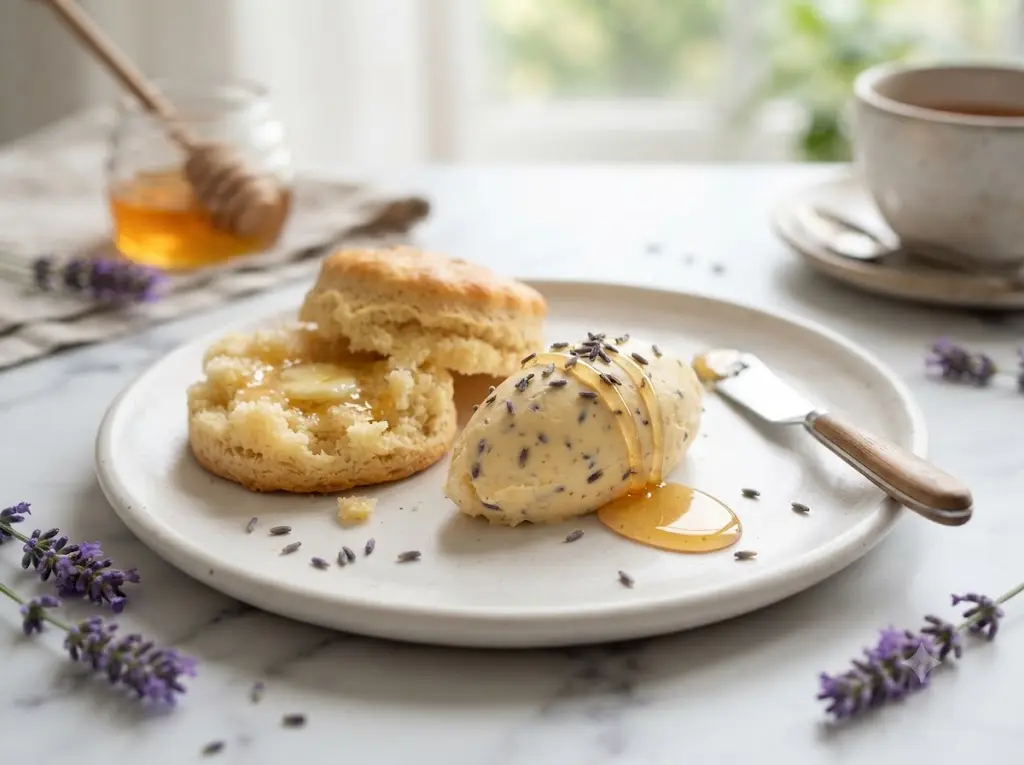
For an easy brunch presentation, place the chilled butter on a small white plate and garnish with a few culinary lavender buds.
Serve it beside warm biscuits or scones with a small dish of honey.
The butter softens as it sits, making it easy for guests to spread while the floral aroma becomes more noticeable.
Recipe Notes
- Use culinary lavender, not decorative lavender.
- Keep the butter softened but not melted.
- A mild honey gives the cleanest flavor.
- Start with a modest amount of lavender.
- Chill the butter before slicing or serving.
- Let individual portions soften slightly before spreading.
- Adjust sweetness only after the lavender and honey are fully mixed.
Lavender Honey Butter Recipe
Ingredients
Equipment
Method
- Soften the butter: Let the butter come to room temperature until soft but not melted.
- Crush the lavender: Lightly crush the culinary lavender buds with a mortar and pestle or the back of a spoon.
- Combine: Add softened butter, crushed lavender, honey, and salt to a bowl.
- Mix: Stir with a spatula or fork until the honey and lavender are evenly distributed and the butter looks creamy.
- Taste: Check the balance and add a little more honey or plain butter if needed.
- Shape: Spoon the mixture onto parchment paper and form it into a compact log.
- Chill: Wrap tightly and refrigerate for 30–60 minutes, or until firm enough to slice.
- Serve: Let individual portions soften slightly before spreading over warm biscuits, toast, scones, pancakes, waffles, or cornbread.
Notes
Frequently Asked Questions
Do lavender and honey go together?
Yes. Honey provides gentle sweetness that complements lavender’s floral character.
How do you make lavender butter?
Mix softened butter with culinary lavender and a pinch of salt, then chill until firm.
Is honey with lavender good for you?
Honey and lavender are foods with different nutritional properties, but this recipe is primarily a flavorful butter spread rather than a health-focused food.
What is the best butter to use for honey butter?
Unsalted butter is the easiest choice because it lets you control the final salt level.
Can I use dried lavender for lavender honey butter?
Yes. Dried culinary lavender is convenient and gives concentrated floral flavor.
How much lavender should I use?
Start with a small amount because lavender is potent and can quickly overpower the butter.
Why does my lavender butter taste soapy?
Too much lavender or an unsuitable lavender variety can create an unpleasant, soap-like flavor.
How long does lavender honey butter last?
For best quality, keep it tightly covered in the refrigerator and use it within about one week.
Can lavender honey butter be frozen?
Yes. Wrap it tightly and freeze it in a log or individual portions.
What can I put lavender honey butter on?
Try it on biscuits, scones, toast, pancakes, waffles, cornbread, muffins, or warm rolls.
Can I make this recipe without honey?
Yes. Omit the honey and make a simple lavender butter with softened butter, culinary lavender, and salt.
What is culinary lavender?
Culinary lavender is lavender sold and labeled for food use, rather than decorative or ornamental use.
Final Thoughts
Lavender honey butter is a simple way to turn ordinary softened butter into a fragrant spread with very little effort. The combination works because each ingredient has a clear role: butter provides richness, honey adds sweetness, lavender brings floral aroma, and salt keeps the flavor balanced.
The biggest trick is restraint. Use culinary lavender in a modest amount, choose a mild honey, and give the finished butter time to chill. Once you have the basic method, you can adapt it with lemon, orange, vanilla, or a little extra salt depending on what you are serving.
For breakfast, brunch, afternoon tea, or a basket of warm homemade bread, this is an easy compound butter worth keeping in the refrigerator.