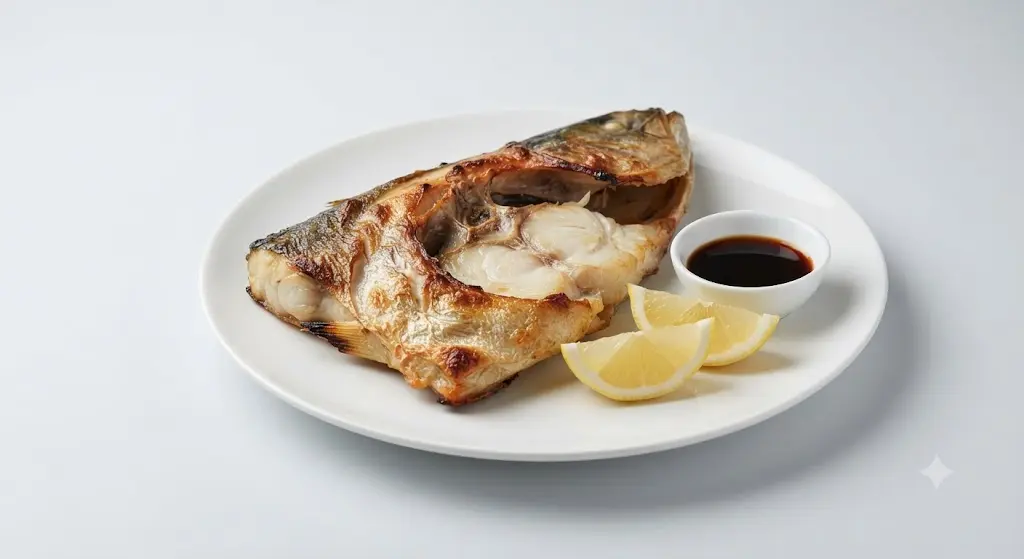
Baked hamachi is a simple way to cook hamachi kama, the rich yellowtail collar, until the meat is tender, juicy, and lightly browned. You only need a few ingredients because this cut already has plenty of natural flavor and fat.
The easiest approach is to bake the hamachi collar at 425°F until the thickest part is cooked through, then use the broiler for a short finish if you want more color on the surface. A lemon wedge and a little soy sauce or ponzu are enough to serve it.
This hamachi kama recipe is especially useful if you have never cooked yellowtail collar before and want an oven method rather than grilling.
What Is Hamachi Kama?
Hamachi kama is the collar portion of yellowtail, located around the fish’s head and pectoral-fin area. Unlike a conventional fillet, it contains bones and several pockets of meat.
That unusual shape is part of what makes the cut appealing. The meat around the collar is naturally rich, and cooking it with the bone intact helps preserve its moisture.
In English, you will commonly see it called yellowtail collar or hamachi collar.
Hamachi is also commonly associated with yellowtail in Japanese cuisine. The exact fish sold under the hamachi name can vary by market and production method, so checking the package or asking the seafood seller is useful when buying it.
Why Bake Hamachi Collar?
Grilling and broiling are popular ways to prepare yellowtail collar because they give the outside a nicely browned finish. But baking is convenient when you want more controlled oven heat.
A 425°F oven is also a practical temperature for the cut. Just One Cookbook, for example, gives an oven-baking method at 425°F and notes that cooking time depends on the thickness of the fish.
For an especially browned surface, you can finish the cooked collar briefly under the broiler.
The important thing is not to judge the fish by time alone. Collars vary in size and thickness, so start checking the thickest part toward the end of the cooking period.
Ingredients
For this baked hamachi recipe, keep the seasoning simple:
- 2 hamachi kama pieces
- ½ teaspoon kosher salt
- 1 teaspoon neutral oil
- ¼ teaspoon black pepper
- 1 lemon, cut into wedges
- 1 tablespoon soy sauce
- 1 tablespoon ponzu, optional
- Sliced green onion, optional
You do not need a heavy marinade. The collar itself provides much of the richness.
How to Make Baked Hamachi
Thaw the Hamachi
If your hamachi kama is frozen, thaw it completely before cooking.
For the best texture, thaw it in the refrigerator. If you need it sooner, use a safe cold-water thawing method rather than leaving the fish at room temperature.
Once thawed, remove it from its packaging and pat it thoroughly dry with paper towels.
Dry the Surface
This small step makes a noticeable difference.
The collar’s surface should be as dry as possible before seasoning. Excess water can create steam in the oven and make it harder for the skin to brown.
Pay particular attention to the skin and the thicker areas of the collar.
Season the Collar
Place the hamachi collar skin-side down on a foil-lined baking sheet or rack.
Lightly brush it with oil, then season with salt and black pepper.
You can keep the seasoning this simple. Lemon and soy sauce can be added after cooking, allowing you to control how much acidity and salt reach each bite.
Bake at 425°F
Preheat your oven to 425°F (218°C).
Place the baking sheet on the middle rack and bake the hamachi for approximately 10–16 minutes, depending on its thickness.
A published hamachi-kama baking method uses 425°F for about 10–12 minutes and recommends judging the cooking time by fish thickness rather than using one fixed time for every piece.
You do not normally need to flip the collar.
Check the Thickest Part
Start checking the fish near the end of the estimated cooking time.
The flesh should be opaque and should separate easily when tested with a fork. For a precise food-safety check, fish should reach 145°F (63°C) internally.
If your collar is particularly thick, it may need additional time.
Broil for a Golden Finish
This step is optional but useful if you want the surface more browned.
Once the fish is cooked through, switch the oven to broil and place the collar under the broiler for about 1–3 minutes.
Watch it closely.
The purpose is to brown and lightly crisp the surface, not to cook the fish for several additional minutes.
Broiling is traditionally common for hamachi kama, and established recipes use high direct heat to create a browned, lightly blistered exterior.
Serve Immediately
Transfer the cooked collar to a plate.
Add lemon wedges and serve soy sauce or ponzu on the side. A little green onion is optional.
Because hamachi kama contains bones, use a fork or chopsticks to pull the meat away from the collar as you eat.
Look around both sides of the bones because some of the most tender pieces can remain tucked into the structure of the collar.
How to Tell When Hamachi Is Done
The best indicators are appearance, texture, and internal temperature.
The thickest meat should no longer look translucent. It should separate easily with a fork, while the surface should have some browning.
If you own an instant-read thermometer, checking the thickest portion is more reliable than depending on a recipe’s exact number of minutes.
This matters especially with hamachi collar recipe variations because the size of collars sold at seafood markets can differ considerably.
Should You Bake or Broil Hamachi Kama?
Both methods work, but they give you slightly different results.
Baking is convenient when you want the oven to cook the collar steadily. It is particularly useful for a thicker piece.
Broiling exposes the fish to much stronger direct heat and is better for developing surface browning quickly.
A useful compromise is to bake first and broil briefly at the end. This gives you more control over the interior while still allowing the outside to develop additional color.
Traditional hamachi-kama recipes frequently use broiling, while oven baking at 425°F is also an established method.
What Does Hamachi Collar Taste Like?
A properly cooked hamachi collar is rich, tender, and moist.
The meat near the bones can have a particularly buttery texture because the collar contains naturally fatty muscle. The browned exterior adds a slightly roasted flavor.
Lemon is useful because its acidity cuts through the richness. Soy sauce or ponzu adds a salty, savory contrast.
You do not need to cover the fish with a strong sauce.
What to Serve With Baked Hamachi
Since the collar is rich, simple sides work particularly well.
Try serving it with:
- Steamed white rice
- Miso soup
- Japanese cucumber salad
- Edamame
- Pickled vegetables
- Shredded daikon
- Seaweed salad
- Lemon
- Ponzu
A bowl of rice and a fresh vegetable side can turn the collar into a complete meal without competing with the fish.
How to Eat Hamachi Kama
Eating hamachi kama is slightly different from eating a normal fillet.
Start with the larger pieces of meat on the outside. Then use your fork or chopsticks to work around the bones.
Turn the collar over and check the underside as well. Because the meat follows the shape of the collar, some portions are hidden from view.
Be careful of small bones while eating.
Can You Use Frozen Hamachi Kama?
Yes. Frozen hamachi kama can work very well as long as it has been properly stored and thawed safely.
Japanese and Korean markets commonly carry yellowtail collars, and frozen packages can be easier to find than fresh collars.
After thawing, pat the fish dry before seasoning. That is particularly important when you want a nicely browned surface.
Where to Buy Hamachi Collar
When shopping, look for hamachi kama, hamachi collar, or yellowtail collar.
If a seafood counter does not recognize “hamachi kama,” asking specifically for yellowtail collar can help.
Japanese markets are a common place to find the cut, and some Korean grocery stores and seafood markets also carry it.
The pieces may be fresh or frozen and can vary considerably in size.
Hamachi Kama vs. Buri Kama
You may also see the term buri kama when searching for yellowtail collar.
Both terms refer to the collar cut, but hamachi and buri are Japanese names associated with different growth stages of yellowtail. Market terminology can also vary.
For the cooking method, the important point is that you are working with a rich yellowtail collar rather than a boneless fillet.
Hamachi Kama in Chinese
If you are searching for hamachi kama in Chinese, terminology can vary between seafood sellers and markets.
When shopping, it can be more useful to show the seller the Japanese term hamachi kama or use the English term yellowtail collar rather than depending on one translated name.
The cut itself is more important than the exact translation.
Hamachi Collar Price
The price of a hamachi collar depends on factors such as the source of the fish, size, whether it is fresh or frozen, and the seafood market selling it.
Collars are sometimes sold individually or by weight.
Because prices change by location and season, it is better to check your local seafood market for the current price instead of relying on an old price mentioned in a recipe.
Common Problems When Baking Hamachi
The Skin Is Not Browning
The surface may have too much moisture.
Pat the collar dry before seasoning and use the short broiler finish after the fish is cooked.
The Fish Looks Dry
It may have been cooked longer than necessary.
Because collar thickness varies, start checking earlier rather than automatically extending the recipe’s cooking time.
The Outside Is Brown but the Center Is Not Done
The broiler may have been used too early.
Cook the collar through with regular oven heat first, then use the broiler only for the final browning.
The Fish Sticks to the Foil
Lightly oil the foil or use a wire rack.
Some recipes also crinkle the foil before placing the fish on it to reduce the amount of skin directly touching the surface.
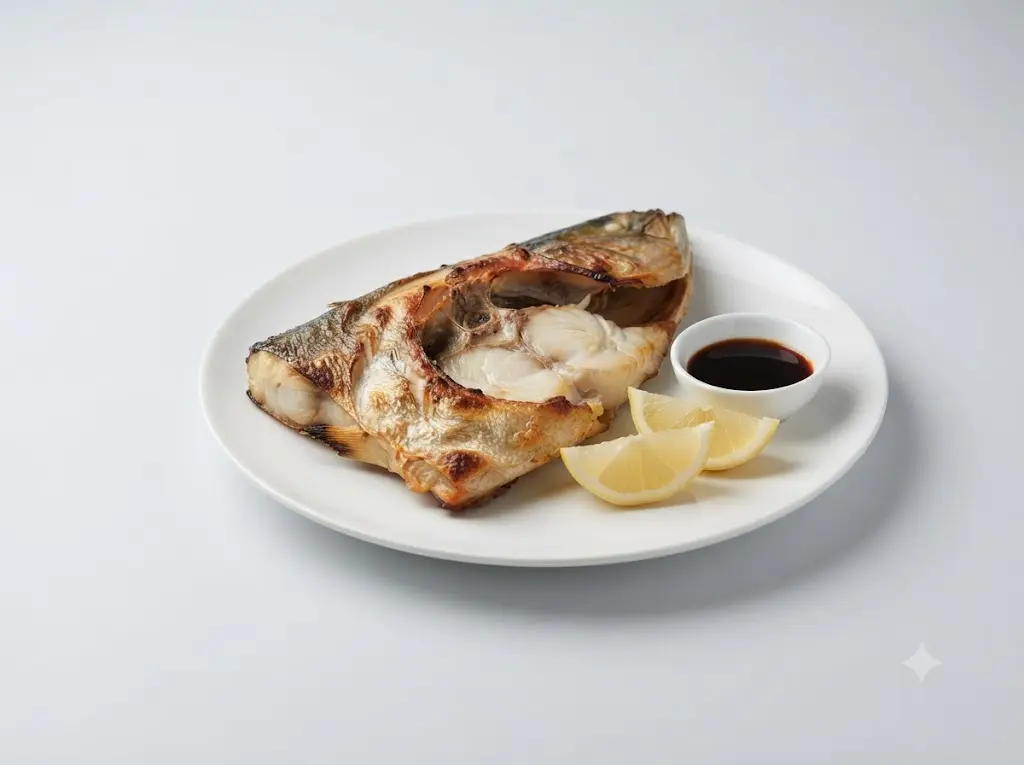
Baked Hamachi Kama
Ingredients
Equipment
Method
- Prepare the hamachi: If frozen, thaw the hamachi kama completely, preferably in the refrigerator. Remove it from the package.
- Pat it dry: Use paper towels to thoroughly dry the hamachi collar, especially the skin, so it browns better in the oven.
- Season the fish: Place the collars skin-side down on a lightly oiled, foil-lined baking sheet. Brush with oil and season with kosher salt and black pepper.
- Preheat the oven: Heat the oven to 425°F (218°C).
- Bake the hamachi: Place the baking sheet on the middle rack and bake the baked hamachi for approximately 10–16 minutes, depending on the thickness of each collar.
- Check for doneness: The thickest part should look opaque and flake easily. For food safety, check that the fish reaches 145°F (63°C) internally.
- Broil for color: If you want a more browned surface, switch to broil and cook for 1–3 minutes, watching closely.
- Serve immediately: Transfer the hamachi kama to a plate and serve with lemon wedges, soy sauce, or ponzu. Add sliced green onion if desired.
Notes
Frequently Asked Questions
What kind of fish is hamachi?
Hamachi is a Japanese name commonly used for yellowtail, a rich fish with firm, flavorful meat.
How is hamachi different from tuna?
Hamachi is yellowtail, while tuna belongs to a different fish group and has a generally meatier texture.
Why is hamachi so expensive?
Price depends on factors such as species, source, farming or fishing method, freshness, size, and demand.
Can yellowtail be cooked?
Yes. Yellowtail can be baked, broiled, grilled, pan-seared, and prepared in other cooked dishes.
What is hamachi kama?
Hamachi kama is the collar cut from yellowtail, located near the head and pectoral-fin area.
Is hamachi kama the same as yellowtail collar?
Yes. Hamachi kama is commonly translated as yellowtail collar.
How do you cook hamachi collar in the oven?
Bake it at 425°F until opaque and flaky, then optionally broil it briefly for additional browning.
Do you flip hamachi kama when baking?
Usually no; it can be baked skin-side down without flipping.
What sauce goes with hamachi kama?
Lemon, soy sauce, ponzu, or a simple citrus-soy sauce all work well.
Can hamachi kama be frozen?
Yes. Frozen hamachi kama is commonly sold and should be thawed safely before cooking.