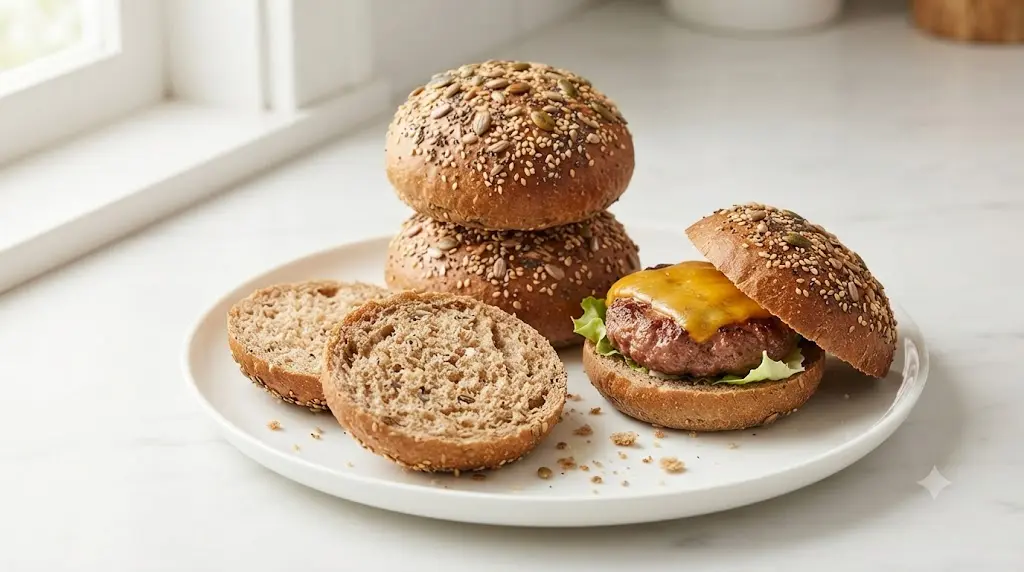
If you love the flavor of rye bread but still want a soft bun that can hold a juicy burger, these rye burger buns are a great middle ground. The dough combines rye flour with bread flour, so you get the earthy taste of rye without making the buns overly dense.
The tops are finished with a simple mixture of sesame, sunflower, pumpkin, and poppy seeds. The result is a soft, lightly chewy rye bun with a nutty seeded crust that works beautifully with beef burgers, chicken, pulled pork, veggie patties, and grilled sandwiches.
The most important part of this recipe is the flour balance. Rye contributes flavor and color, but wheat flour provides the gluten structure needed for a light, properly shaped hamburger bun. Rye-heavy doughs can behave differently from ordinary wheat dough, so keeping the dough soft and avoiding unnecessary extra flour makes a noticeable difference.
Why You’ll Love These Rye Burger Buns
- Soft enough for burgers: The wheat-and-rye combination keeps the crumb tender.
- Real rye flavor: Rye flour adds an earthy, slightly nutty character.
- Easy seeded topping: A few everyday seeds give the buns a bakery-style finish.
- Good burger structure: The buns are sturdy enough for sauces and juicy fillings.
- Freezer friendly: You can bake them ahead and freeze extras.
- Flexible recipe: Use lighter rye for a mild flavor or part dark rye for a deeper color.
These are not meant to be a heavy, compact rye loaf shaped like a burger bun. The goal is a bun that still feels like a hamburger bun while giving your burger more flavor.
What Makes a Good Rye Hamburger Bun?
A good rye hamburger bun needs to do two things at once: taste like rye and behave like a proper burger bun.
Too little rye and you may barely notice the flavor. Too much rye can make the dough more difficult to develop and may give you a tighter crumb. A wheat-and-rye blend is therefore a practical approach for a soft homemade bun.
The dough should feel soft and slightly tacky before the first rise. Adding large amounts of flour just because the dough sticks to your hands can leave you with dry buns.
The finished buns should have a lightly browned exterior, a tender center, and enough strength to hold a burger without collapsing.
Ingredients
For the Rye Burger Buns
- 300 g bread flour
- 120 g medium or light rye flour
- 7 g active dry yeast
- 25 g honey
- 7 g fine salt
- 180 ml warm milk
- 60 ml warm water
- 30 g olive oil
- 1 large egg
For the Seeded Topping
- 1 tablespoon sesame seeds
- 1 tablespoon sunflower seeds
- 1 tablespoon pumpkin seeds, finely chopped
- 1 teaspoon poppy seeds
- 1 tablespoon milk or water for brushing
This combination gives you a balanced seeded bun rather than covering the surface so heavily that the seeds fall off when you eat the burger.
Equipment
- Large mixing bowl
- Kitchen scale
- Baking sheet
- Parchment paper
- Pastry brush
- Clean kitchen towel
- Wire cooling rack
A kitchen scale is particularly useful for dividing the dough evenly. Similar professional and home bun recipes also use weighed portions to produce consistent buns.
How to Make Rye Burger Buns
Activate the Yeast
Add the warm milk, warm water, and honey to a small bowl. Sprinkle the yeast over the liquid and leave it for about 5 minutes.
A little foam on the surface indicates that the yeast is active. If nothing happens and the yeast is old, it is better to replace it before continuing.
Mix the Dough
Add the bread flour, rye flour, and salt to a large bowl.
Pour in the yeast mixture, then add the egg and olive oil. Mix until the ingredients form a rough, soft dough.
Do not try to make the dough completely dry at this stage. Rye dough can feel stickier than a standard white-bread dough.
Knead the Dough
Knead the dough for about 8 minutes by hand, or use a mixer with a dough hook until the dough becomes smoother and more elastic.
It may still feel slightly tacky, which is fine.
If it is sticking excessively to the work surface, lightly oil your hands or add a very small amount of flour. Avoid repeatedly adding flour during kneading because that can shift the dough toward a firmer, drier texture.
First Rise
Place the dough in a lightly oiled bowl and cover it.
Leave it somewhere warm for about 60 to 90 minutes, or until it has become noticeably larger and airy.
Do not rely only on the clock. Yeast activity changes with room temperature, so the appearance of the dough is the better guide.
Shape the Buns
Turn the risen dough onto a lightly floured surface and gently press out some of the larger air pockets.
Divide it into 8 equal pieces.
Shape each piece into a smooth ball by pulling the edges underneath and gently tightening the surface.
Place the balls on a parchment-lined baking sheet.
Now gently press each one down with your palm. This small step matters because a tall round dough ball can bake more like a dinner roll than a burger bun.
Aim for a wider, slightly flattened shape.
Second Rise
Cover the shaped buns loosely with a clean towel.
Let them rise for approximately 35 to 50 minutes.
They should look noticeably puffy and relaxed. Avoid letting them become excessively inflated, because over-proofed buns can lose some of their structure during baking.
While the buns are finishing their second rise, preheat your oven to 375°F (190°C).
Add the Seeds
Lightly brush each bun with milk or water.
Mix the sesame, sunflower, pumpkin, and poppy seeds together and sprinkle them over the tops.
Press the seeds very gently with your fingertips so they adhere to the surface.
If you want a simpler classic appearance, use only sesame seeds. If you want more texture and a Nordic-style look, the mixed seed topping works especially well. Seed toppings are also commonly used on soft hamburger buns to add flavor and crunch.
Bake the Rye Burger Buns
Place the baking sheet in the preheated oven.
Bake for approximately 17 to 21 minutes, or until the buns are golden brown and feel set on top.
Start checking toward the earlier end of the baking range because ovens vary.
Move the baked buns to a wire rack and let them cool completely before cutting.
The interior continues to set while cooling, so slicing immediately can make the crumb appear gummy or compressed.
How to Keep Rye Buns Soft
The texture of homemade rye buns depends on several small details.
Keep the dough soft. Adding too much flour is one of the easiest ways to end up with firm buns.
Do not overbake. Once the buns are properly browned and cooked through, take them out.
Give the dough enough proofing time. A rushed rise can produce heavier buns.
Shape gently. You want enough surface tension to help the buns hold their shape, but you do not need to aggressively squeeze all the air out.
Cool before storing. Trapping warm buns in a sealed bag can create unwanted condensation.
Should You Use Light or Dark Rye Flour?
For a softer and milder rye bun, medium or light rye flour is a good starting point.
Dark rye flour gives a stronger rye character and a deeper color. You can replace part of the rye flour with dark rye if you prefer that style.
I would not change the entire recipe to dark rye on your first attempt. A moderate substitution lets you increase the flavor without making the buns unnecessarily heavy.
If you are specifically looking for dark rye hamburger buns, gradually increasing the dark rye portion is an easier way to find the flavor and texture you prefer.
How to Make Seeded Burger Buns
The easiest way to make seeded burger buns is to brush the shaped dough with milk or water immediately before adding the seeds.
Try different combinations depending on the burger:
- Sesame seeds for a classic burger
- Sunflower seeds for a mild nutty crunch
- Pumpkin seeds for a heartier topping
- Poppy seeds for a delicate crunch
- Caraway seeds for a stronger rye-style flavor
- Flax seeds for additional texture
Keep larger seeds chopped or use them sparingly so the topping does not become difficult to bite through.
What Goes Well With Rye Buns?
Rye has a slightly earthy flavor, so it works particularly well with fillings that have enough savory or acidic contrast.
Try these combinations:
Classic beef burger: Beef patty, Swiss cheese, lettuce, pickles, mustard, and caramelized onions.
Mushroom burger: Grilled mushrooms, Swiss cheese, arugula, and garlic sauce.
Chicken burger: Crispy chicken, lettuce, pickles, and a creamy mustard sauce.
Pulled pork: Pulled pork, crunchy slaw, and barbecue sauce.
Breakfast burger: Fried egg, cheddar, caramelized onions, and a little hot sauce.
The bun should support the filling rather than compete with it, which is why the moderate rye flavor in this recipe works with both strongly seasoned and simple burgers.
How to Toast Rye Burger Buns
Toasting gives the cut side a light crispness and makes the bun more resistant to moisture from sauces.
Slice the cooled bun horizontally.
Place it cut-side down on a dry skillet or lightly buttered pan over medium heat for about 1 to 2 minutes.
Remove it when the surface is lightly golden.
For very juicy burgers, toasting is especially useful because the crisp surface creates a better barrier between the bun and the filling.
Can You Make These Ahead?
Yes.
Bake the buns completely, let them cool, and store them in an airtight bag or container.
For the best longer-term storage, freeze them rather than keeping them at room temperature for several days.
Slice them before freezing if you usually use them for burgers. Then you can take out only the number you need.
Allow the buns to thaw at room temperature and toast them before assembling your burger.
Common Problems and Easy Fixes
The dough feels too sticky
Give it a few more minutes of kneading first. If it remains excessively sticky, lightly oil your hands instead of immediately adding lots of flour.
The buns are dense
The dough may have needed more proofing time, or the yeast may not have been active enough. Rye can also make the crumb naturally more substantial than a plain white bun.
The buns spread too much
The dough may have been over-proofed or insufficiently shaped. Make sure the shaped dough has enough surface tension and watch the second rise closely.
The seeds fall off
The surface was probably too dry. Brush the buns lightly with milk or water immediately before adding the seeds and press them gently into place.
The buns are dry
Check the baking time first. Excess flour during kneading can also reduce the moisture available to the finished crumb.
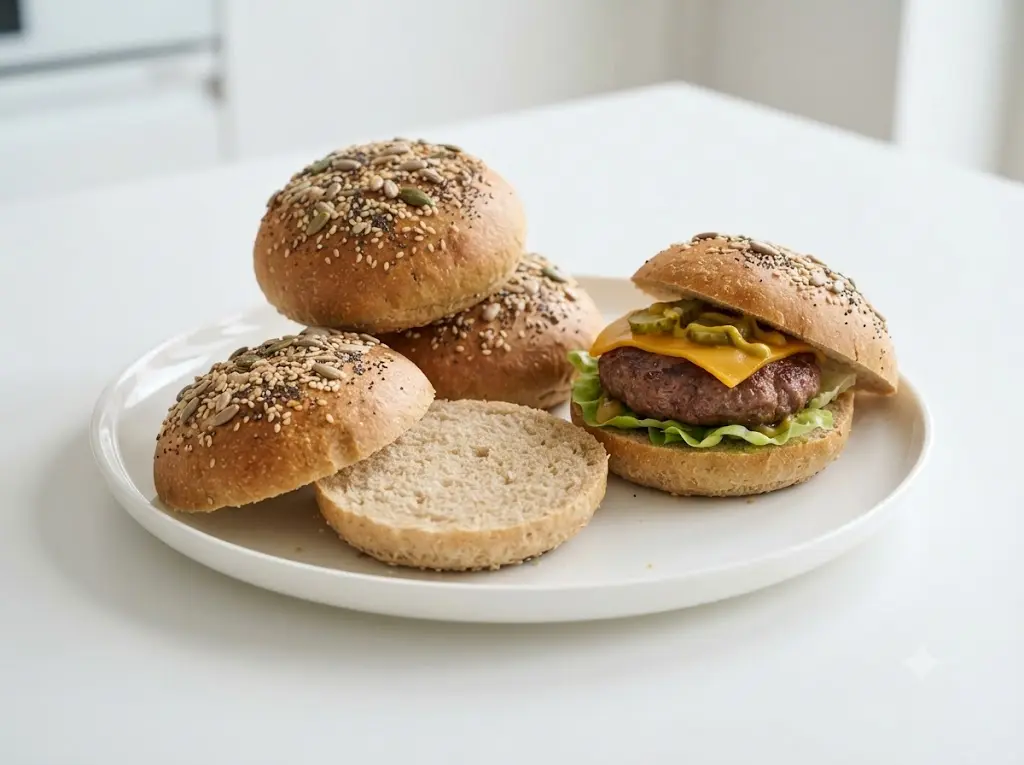
Rye Burger Buns
Ingredients
Equipment
Method
- Activate the yeast: Combine the warm milk, warm water, honey, and yeast in a small bowl. Let the mixture stand for about 5 minutes.
- Mix the dough: Add the bread flour, rye flour, and salt to a large bowl. Pour in the yeast mixture, then add the egg and olive oil. Mix until a soft dough forms.
- Knead the dough: Knead for about 8 minutes until the dough becomes smoother and more elastic. Keep the dough slightly soft instead of adding excessive flour.
- First rise: Place the dough in a lightly oiled bowl, cover it, and let it rise for 60–90 minutes until noticeably puffy.
- Divide the dough: Transfer the dough to a lightly floured surface and divide it into 8 equal portions.
- Shape the buns: Shape each portion into a smooth ball, then gently flatten it with your palm to create a wider hamburger-bun shape.
- Second rise: Cover the shaped buns and let them rise for 35–50 minutes until visibly puffy.
- Prepare the topping: Mix the sesame, sunflower, pumpkin, and poppy seeds in a small bowl.
- Add the seeds: Lightly brush each bun with milk or water, then sprinkle the mixed seeds evenly over the tops.
- Bake the rye burger buns: Bake at 375°F (190°C) for 17–21 minutes, or until the buns are golden brown and firm on top.
- Cool completely: Transfer the baked buns to a wire rack and allow them to cool completely before slicing.
Notes
- Keep the dough slightly soft for a more tender bun.
- Avoid adding too much flour while kneading.
- Medium or light rye flour gives a milder flavor and softer texture.
- Part of the rye flour can be replaced with dark rye for a deeper color and stronger flavor.
- Toast the sliced buns for 1–2 minutes before building a juicy burger.
- Cool the buns completely before storing or freezing.
Serving
Slice the rye burger buns and toast the cut sides before filling them with a beef patty, Swiss cheese, lettuce, pickles, mustard, and caramelized onions. They also work well with chicken burgers, mushroom burgers, pulled pork, and veggie patties.Storage
Store completely cooled buns in an airtight container for 2–3 days at room temperature. For longer storage, place the cooled buns in a sealed freezer bag and freeze them. Slice them before freezing if you want individual buns ready for quick burger nights.Frequently Asked Questions
Is rye bread the healthiest bread?
Rye can be a nutritious bread choice, particularly when made with whole-grain rye, but overall nutrition depends on the complete ingredient list and serving size.
What is the healthiest hamburger bun to eat?
A whole-grain bun with a useful amount of fiber and moderate added sugar can be a practical choice; compare nutrition labels when buying packaged buns.
Why is rye bread hard to find?
Rye is less widely used than wheat in many American breads, so rye products can have fewer choices in some supermarkets.
Which supermarket sells the best rye bread?
Availability varies by location, so compare the rye content, whole-grain ingredients, fiber, and added sugar of products available in your local stores.
Where to buy rye hamburger buns?
Look at specialty bakeries, larger supermarkets, European-style bakeries, and online grocery stores, or make them at home with this recipe.
Can I make rye hamburger buns without a stand mixer?
Yes. These buns can be kneaded by hand; a stand mixer simply makes the process easier.
Can I use dark rye flour?
Yes. Replace part of the medium rye flour with dark rye for a deeper color and stronger rye flavor.
Are rye buns good for burgers?
Yes. Their earthy flavor pairs especially well with beef, mushrooms, strong cheese, mustard, pickles, and caramelized onions.
How do I make easy rye hamburger buns?
Use a wheat-and-rye dough, allow both rises to finish properly, shape the buns slightly flat, then bake until golden and set.
Can I freeze rye buns?
Yes. Cool them completely, seal them well, and freeze them for convenient future use.
Final Thoughts
The best rye burger buns do not need to be heavy to taste like rye. By combining a moderate amount of rye flour with bread flour, you get the flavor and color you want while keeping the bun soft enough for a proper burger.
The mixed seeds add another layer of texture without making the recipe complicated. Toast one before serving and pair it with a juicy beef patty, melted cheese, pickles, mustard, or your favorite burger toppings.
If you have been searching for rye hamburger buns, rye buns, seeded burger buns, or an easy rye hamburger buns recipe, this version gives you one base recipe that can cover all of those uses without turning the bun into a dense rye loaf.
I really liked how helpful and straightforward this Rye Burger Buns recipe is. The clear instructions make homemade buns feel much easier to try.
This Rye Burger Buns recipe has a lovely homemade feel. I especially appreciated the practical details and simple guidance for getting a good texture.