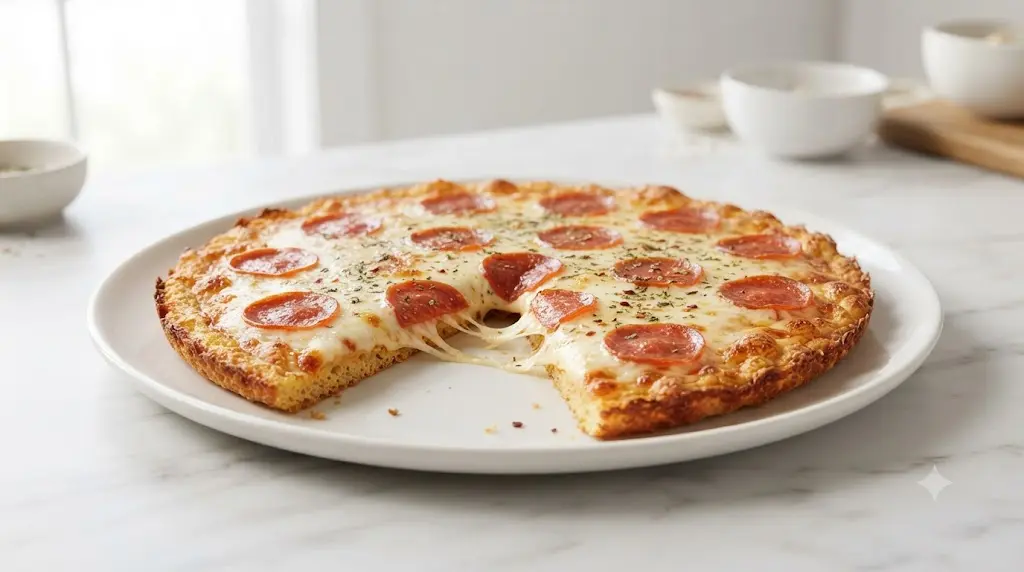
This Carbquik pizza crust is the kind of recipe to keep around when you want pizza without making a complicated yeast dough.
The dough comes together with Carbquik, water, and olive oil, then gets a short pre-bake before the toppings go on. That extra pre-bake is important because it gives the crust a head start before sauce and cheese add moisture.
The finished crust is thin, lightly crisp around the edges, and tender enough in the center to fold or pick up, especially when you avoid piling on too many wet toppings.
If you have tried Carbquik before and found the dough either too dry or too soft, the water is the part worth paying attention to. Start with less, mix, and add only what the dough actually needs.
Why This Carbquik Pizza Crust Works
The main reason I like this style of carbquick pizza crust is that there is very little preparation between craving pizza and getting the crust into the oven.
You are not waiting for yeast to activate, and there is no long kneading process.
The basic dough uses:
- Carbquik baking mix
- Warm water
- Olive oil
- A little seasoning, if you want it
Carbquik-based pizza crust recipes commonly use a simple dough-and-prebake method. One published version, for example, combines 1½ cups Carbquik with water and olive oil, spreads the dough into a pizza pan, and pre-bakes before adding toppings.
My version keeps that useful idea but puts more attention on dough consistency, crust thickness, and preventing a soggy center.
Carbquik Pizza Crust Ingredients
You only need a handful of ingredients.
| Ingredient | Amount | Purpose |
|---|---|---|
| Carbquik | 1½ cups | Main dry mix |
| Warm water | ⅓ cup to ½ cup | Brings the dough together |
| Olive oil | 2 tablespoons | Adds tenderness and helps browning |
| Italian seasoning | ½ teaspoon | Optional flavor |
| Garlic powder | ¼ teaspoon | Optional savory flavor |
| Salt | ¼ teaspoon | Optional; adjust to your toppings |
Important: Do not dump the full amount of water in immediately. Carbquik can absorb moisture differently depending on how it is measured and the conditions in your kitchen.
Start with ⅓ cup, mix, and add water a teaspoon or tablespoon at a time only if the dough still looks dry.
How to Make Carbquik Pizza Crust
1. Heat the oven first
Preheat your oven to 425°F.
Line a pizza pan or baking sheet with parchment paper and lightly grease it.
Getting the oven fully hot before the crust goes in helps the dough start baking immediately instead of sitting in a cooling oven.
2. Mix the dry ingredients
Add the Carbquik, Italian seasoning, garlic powder, and salt to a mixing bowl.
Give everything a quick stir.
This spreads the seasoning through the mix before water makes the dough harder to stir.
3. Add the water gradually
Pour in about ⅓ cup warm water and stir with a fork or wooden spoon.
The mixture should start coming together into a soft dough.
If you still see a lot of dry Carbquik at the bottom of the bowl, add a little more water.
Do not chase a perfectly smooth dough.
Once it holds together and can be pressed into a ball without crumbling apart, stop adding water.
4. Add the olive oil
Work in the olive oil until the dough looks evenly moistened.
The finished dough should feel soft but manageable.
If it is wet enough to smear all over your fingers, you added too much liquid. Sprinkle in a little Carbquik and gently work it through.
If it breaks apart when you press it, add a small amount of water.
That simple adjustment is more useful than following a rigid water measurement every time.
5. Shape the dough
Place the dough on the prepared parchment.
Press it outward with your fingers or use another sheet of parchment on top and roll it gently.
Aim for about ¼-inch thickness.
Do not make the middle dramatically thinner than the edges. An uneven crust can leave you with a crisp rim and a soft center.
For a more traditional pizza shape, leave the outer edge slightly thicker.
6. Make small holes in the surface
Use a fork to lightly prick the center of the dough.
You do not need to cover every inch.
A few holes help release trapped steam and can reduce large bubbles while the crust pre-bakes.
7. Pre-bake the crust
Bake the plain crust for about 8–10 minutes, or until it has started to set and the surface looks dry.
You are not trying to make it completely brown yet.
The crust will finish cooking after the toppings are added.
8. Add sauce and toppings
Remove the crust from the oven.
Spread a thin layer of pizza sauce over the surface, leaving a small border around the edge.
Add mozzarella and your favorite toppings.
This is where restraint helps.
A heavy layer of sauce, fresh vegetables, greasy meat, and cheese can add enough moisture and weight to make almost any thin crust struggle.
9. Finish baking
Return the pizza to the oven for approximately 8–12 minutes.
Watch the cheese and edges rather than relying only on the clock.
The pizza is ready when the cheese is melted and the crust has developed the amount of browning you like.
Let it sit for about 3–5 minutes before slicing.
That short rest makes the crust easier to cut and handle.
Also Read: Carbquik Waffle Recipe
The Most Important Trick for Better Carbquik Waffles… Wait, Pizza Crust
One easy mistake with recipes using Carbquik is treating the mix exactly like ordinary wheat flour.
That can lead to a dough that feels wrong.
Carbquik is a prepared baking mix based on Carbalose flour and includes other ingredients such as baking powder, buttermilk powder, egg white powder, fats, and seasonings depending on the product formulation. Product information also lists wheat, soy, eggs, and milk among its allergens.
So you generally do not need to start adding extra baking powder just because you are making pizza dough.
Instead, focus on the consistency of the dough.
How to Get a Crispier Carbquik Pizza Crust
If your first carb quick pizza dough comes out softer than you want, make these changes next time:
Roll it thinner.
A thinner crust loses moisture more quickly and develops more edge crispness.
Use less sauce.
Too much sauce is one of the easiest ways to make the center soft.
Pre-bake longer.
Give the plain crust another 1–2 minutes if it still looks very pale and moist.
Use a hot baking surface.
A preheated pizza pan or baking sheet can help the bottom brown more effectively.
Do not overload it.
More toppings do not necessarily make better pizza.
Why Is My Carbquik Pizza Crust Soggy?
Usually, the problem is moisture rather than the Carbquik itself.
The most common causes are:
- Too much water in the dough
- Too much pizza sauce
- Thick crust
- Heavy toppings
- Insufficient pre-baking
- Very wet vegetables
If you are using mushrooms, fresh tomatoes, spinach, or other moisture-rich toppings, consider cooking or draining them first.
That small step can make a noticeable difference.
Can You Make Carbquik Pizza Dough With Yeast?
Yes, people do make yeast-based versions of Carbquik pizza dough with yeast, but it changes the character of the recipe.
A yeast dough requires additional liquid, yeast, and usually some resting time. Community recipes show versions that use yeast and allow the dough to rise before baking.
For this recipe, I would skip the yeast.
The point is speed.
If you want a more traditional chewy, risen pizza crust, a dedicated yeast-based dough is a better starting point. If you want something you can mix and bake without waiting for a rise, the no-yeast method is much more convenient.
Can Carbquik Be Used in Place of Flour?
Not as a simple one-to-one replacement in every recipe.
Carbquik is a prepared baking mix rather than plain flour, so its ingredients and behavior are different from ordinary all-purpose flour. It already contains components used for baking, which means blindly replacing flour with Carbquik can change texture and hydration.
For pizza crust, use a recipe developed around Carbquik rather than converting a standard flour recipe yourself.
What Is the Best Low-Carb Pizza Crust?
There is no single crust that works best for everyone.
If you want speed and minimal preparation, a Carbquik pizza crust is convenient.
If you want a very stretchy, traditional texture, another dough may suit you better.
If you avoid nuts, Carbquik can also be useful compared with recipes built around almond flour.
The important thing is matching the crust to what you actually want to eat.
Carbquik Pizza Crust Without Almond Flour
This recipe does not require almond flour.
That is useful if you are searching for a Carbquik pizza crust recipe because you specifically want to avoid nut-based crust recipes.
You also do not need to add mozzarella to the dough itself.
Keeping the base simple makes it easier to control the texture.
What About Carbquik Pizza Crust Reviews?
Reviews and personal experiences with Carbquik crust can vary considerably.
Some home cooks like the convenience and low-carb profile, while others prefer a more traditional pizza texture. Community discussions show both positive experiences and criticism, which is a good reminder that texture expectations matter.
I would judge this crust on what it is designed to do:
quick, simple, low-carb-style pizza without making a full traditional dough.
If you expect it to behave exactly like a long-fermented pizza dough, you may be disappointed.
Topping Ideas for Carbquik Pizza
Once the crust is baked, you can keep the toppings simple.
Classic
Pizza sauce, mozzarella, pepperoni, and Italian seasoning.
Chicken Alfredo Style
A thin layer of Alfredo sauce, cooked chicken, mozzarella, and a little Parmesan.
Buffalo Chicken
Buffalo sauce, cooked chicken, mozzarella, and a light drizzle of buffalo sauce after baking.
Vegetable
Mozzarella, mushrooms, peppers, onions, and spinach.
For vegetables with lots of water, cook them briefly first so they do not release excess moisture onto the crust.
Can You Make a Smaller Carbquik Pizza Crust?
Yes.
For a personal pizza, halve the ingredients and shape the dough into a smaller round.
The important part is maintaining roughly the same thickness rather than trying to guess a new cooking time.
Start checking earlier because a smaller crust can brown faster.
How to Store Leftover Carbquik Pizza
Let the pizza cool before storing it.
Place leftover slices in an airtight container and refrigerate them.
For the best texture, reheat the slices in an oven, toaster oven, or air fryer rather than relying only on the microwave.
The microwave is convenient, but it tends to soften the crust.
Carbquik Pizza Crust Recipe
Ingredients
Equipment
Method
- Preheat the oven to 425°F. Place the rack in the middle position and allow the oven to fully heat before baking the crust.
- Combine the dry ingredients. Add Carbquik, Italian seasoning, garlic powder, and salt to a mixing bowl. Stir until the seasoning is evenly distributed.
- Add the water and olive oil. Pour in the warm water and olive oil, then mix with a fork until a rough dough begins to form.
- Check the dough before adding more water. It should hold together when pressed but should not feel wet or cling heavily to your fingers. If it looks dry and crumbly, add water 1 tablespoon at a time.
- Bring the dough together gently. Knead or press it just until there are no obvious dry patches. Avoid working it excessively, because the goal is a soft, workable pizza dough rather than a heavily kneaded bread dough.
- Roll the dough between parchment sheets. Place the dough between two sheets of parchment and roll it into roughly a 12-inch circle. Keep the center slightly thicker than the outer edge if you want a more substantial crust.
- Transfer the crust to the pan. Remove the top parchment and place the dough on a lightly prepared pizza pan or baking sheet. Smooth any cracked edges with your fingers.
- Prick the center with a fork. Make several small holes across the middle, leaving the outer edge mostly untouched. This helps reduce large air pockets while the crust bakes.
- Par-bake the crust for 6–8 minutes. The surface should look set but should not be deeply browned yet.
- Add your toppings lightly. Spread a thin layer of pizza sauce first, then add cheese and your preferred toppings. Avoid piling on too much sauce or wet topping because excess moisture can soften the center.
- Bake again for 10–14 minutes. Continue until the cheese is melted and the edges of the crust are lightly browned.
- Rest before slicing. Let the pizza sit for about 3–5 minutes. This gives the crust time to firm slightly, making the slices easier to lift.
Notes
Recipe Tips
For a crisper crust: Roll the dough fairly thin and avoid heavy, watery toppings. For a softer crust: Keep the center slightly thicker and avoid extending the second bake too far. If the dough feels sticky: Let it sit for a minute before adding more Carbquik; hydration can settle as the mix absorbs the liquid. If the dough cracks: Press the crack together with slightly damp fingertips instead of adding lots of extra water. For better browning: Make sure the oven is completely preheated before the crust goes in.Topping Ideas
Keep the toppings balanced so the crust remains the star of the pizza.- Mozzarella + pepperoni + Italian seasoning
- Chicken + buffalo sauce + mozzarella
- Mushrooms + peppers + mozzarella
- Sausage + onion + peppers
- Spinach + mushrooms + cheese
- Tomato + mozzarella + basil
Storage
Let the baked crust or leftover pizza cool completely before refrigerating. Store leftovers in an airtight container and use within a few days for the best texture. You can also prepare the plain crust ahead of time, cool it, and refrigerate it before adding toppings and finishing the pizza.Recipe Summary
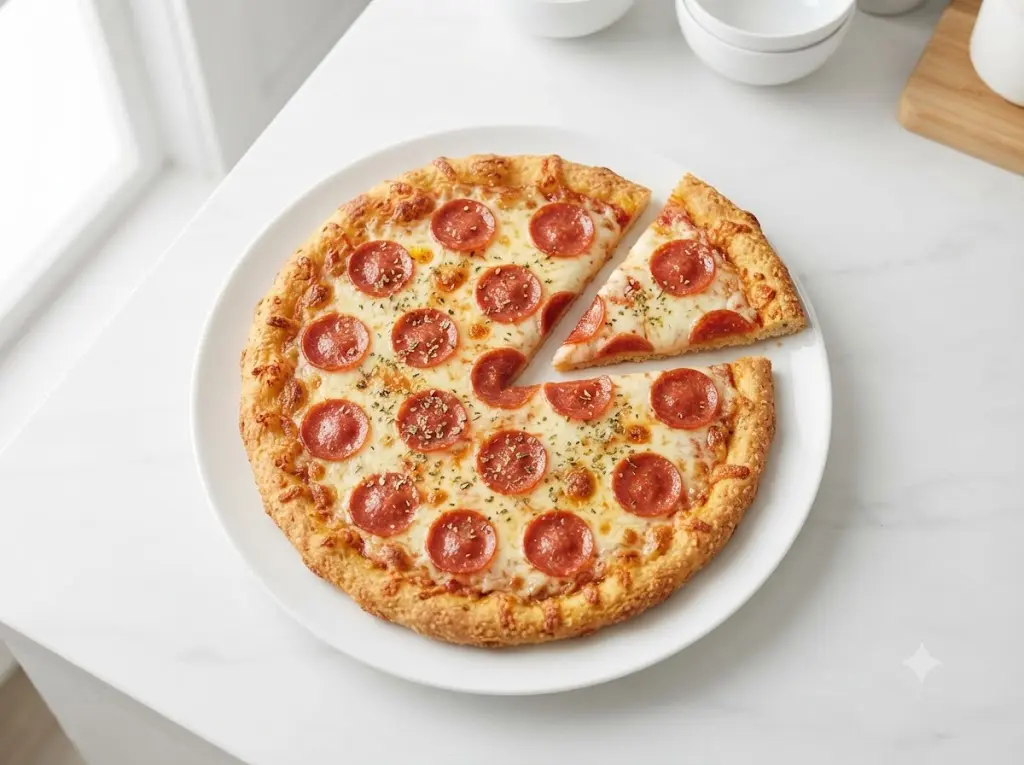
This Carbquik pizza crust is designed for a quick homemade pizza with a lightly crisp edge and tender center. The dough needs only a short mix, and par-baking helps it stay firmer once sauce, cheese, and toppings are added.FAQ —
Can Carbquik be used in place of flour?
Not universally; Carbquik is a prepared baking mix, so use a recipe designed specifically for it.
What is the best low-carb pizza crust?
It depends on whether you prioritize convenience, crispness, chewiness, or avoiding specific ingredients.
How do I make Carbquik pie crust?
A pie crust needs a different fat-and-water method; Carbquik has published pie-crust recipes using cold water and fat.
Is there a keto pizza crust that doesn’t contain almond flour?
Yes; Carbquik-based crust is one option that does not require almond flour.
Can I make Carbquik pizza crust with yeast?
Yes, but yeast changes the recipe and adds rising time.
Can I make Carbquik pizza crust without heavy cream?
Yes; this version uses water and olive oil instead of heavy cream.
What is the best Carbquik pizza crust recipe?
For a quick crust, look for a recipe with controlled hydration and a short pre-bake before toppings.
Can I use almond flour with Carbquik?
You can find recipes combining them, but almond flour is not necessary for this crust.
What is a butternut squash pizza crust?
It is a vegetable-based crust made primarily from butternut squash rather than Carbquik.
What is Bobby-approved pizza crust?
The phrase refers to recipes or content associated with Bobby Flay-style pizza preferences, rather than a specific Carbquik formulation.
What is sheet pan no crust pizza?
It is a pizza-style meal baked directly in a pan without a traditional dough crust.
Final Thoughts
This Carbquik pizza crust is not trying to imitate every characteristic of traditional pizzeria dough.
Its strength is different: it is quick, uncomplicated, and easy to customize.
The biggest improvement you can make is paying attention to the dough rather than treating the water measurement as absolute. Add the liquid gradually, keep the crust reasonably thin, pre-bake it before adding wet toppings, and avoid turning the pizza into a mountain of sauce and cheese.
Once you get that balance right, carbquick pizza crust becomes a useful option for a quick homemade pizza night.
And if you are looking for a simple carb quick pizza dough without almond flour or a long yeast rise, this method gives you a practical place to start.
I’ve been curious about making pizza with Carbquik, so this Carbquik Pizza Crust recipe was a really useful find. The instructions are easy to follow and practical.
What I liked about this Carbquik Pizza Crust recipe is how clearly everything is explained. It gives a good starting point for anyone wanting to try something different from traditional dough.